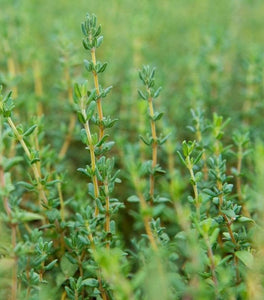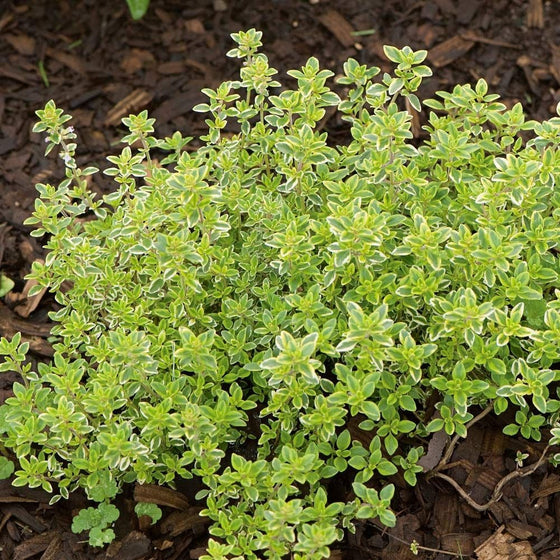
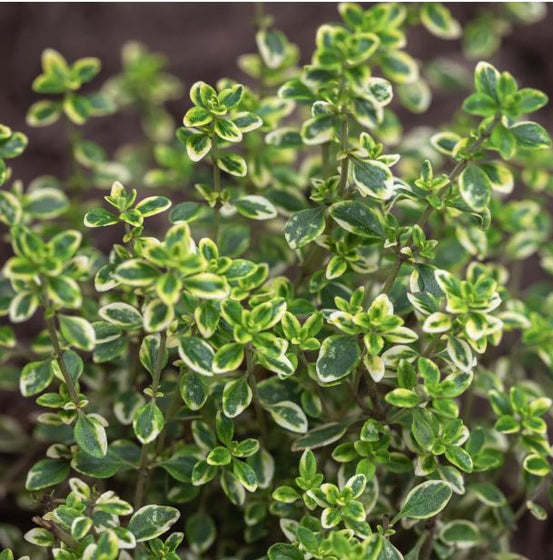


Images Depict Mature Plants
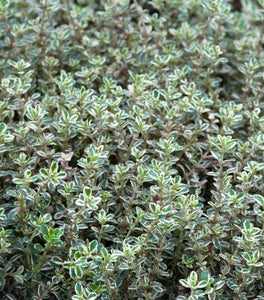
Variegated Lemon Thyme
Thymus x citriodorus 'Variegata'
Variegated Lemon Thyme is one of those herbs that looks good enough for the front of a planter but still earns its keep in the kitchen. The lemon-scented foliage is great for cooking, the variegation brightens sunny containers, and the plant handles dry conditions once established. It is a smart pick for gardeners who want edible, deer-resistant, pollinator-friendly color in a small space.

15% OFF SITEWIDE SALE
Use Code 'PRIMETIME15' At Checkout
📦 Free shipping on orders over $99.
Delay shipping by leaving us a message at Checkout.
Share:Recommended Add-Ons


A Lemon-Scented Variegated Thyme for Kitchen Gardens and Sunny Containers
Bright Variegated Foliage with Fresh Lemon Fragrance
Variegated Lemon Thyme is a beautiful edible ornamental herb grown for its citrus-scented foliage, compact habit, and bright variegated leaves. Its small aromatic leaves carry a fresh lemon-thyme fragrance that makes the plant useful in the kitchen while adding color and texture to sunny containers, herb gardens, raised beds, and patio plantings.
Unlike plain green culinary thyme, Variegated Lemon Thyme brings extra visual interest even when it is not in bloom. The cream, yellow, or pale-edged variegation brightens mixed herb planters and helps the plant stand out near rosemary, lavender, sage, oregano, and other Mediterranean-style herbs. It is a practical herb with real ornamental value.
Delicate Thyme Flowers for Pollinators and Seasonal Charm
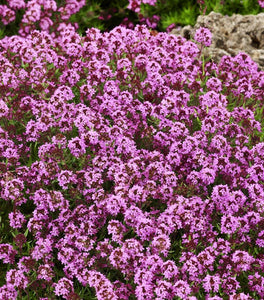
In late spring to summer, Variegated Lemon Thyme may produce small lavender, pinkish, or pale flowers above its fragrant foliage. The flowers are delicate but add a charming seasonal touch to the plant and help attract bees and other beneficial pollinators to the garden.
For culinary use, leaves can be harvested throughout the growing season. The lemony foliage is especially useful with fish, poultry, roasted vegetables, marinades, salad dressings, herb butters, and light summer recipes. The plant’s ornamental foliage remains attractive before and after bloom, making it useful even when flowers are absent.
Perfect for Containers, Edging, Raised Beds, and Rock Gardens
Variegated Lemon Thyme is a smart choice for sunny containers near the kitchen, raised herb beds, rock gardens, border edges, trough planters, and Mediterranean-style plantings. Its compact habit makes it easy to tuck into small spaces, while its variegated foliage adds contrast among darker green herbs and flowering perennials.
This thyme can also be used as a light ornamental edging plant where drainage is excellent. It is best for decorative coverage and harvesting rather than heavy foot traffic. In containers, it pairs especially well with herbs that prefer sun and fast-draining soil, creating a beautiful and useful patio planting.
Deer Resistant, Drought Tolerant, and Pollinator Friendly
Variegated Lemon Thyme is drought-tolerant once established and performs best in sunny locations with well-drained soil. Like many Mediterranean herbs, it prefers slightly dry conditions over wet, heavy soil. This makes it a practical choice for low-water herb gardens, rock gardens, and containers that do not stay soggy.
The aromatic foliage is generally considered deer resistant, though deer browsing can vary with local pressure. When in flower, this thyme helps support bees and beneficial insects. For gardeners who want a plant that looks good, smells good, supports pollinators, and earns its place in the kitchen, Variegated Lemon Thyme is an excellent choice.
Easy Care with Sun, Drainage, and Light Trimming
Plant Variegated Lemon Thyme in full sun for the strongest growth, best variegation, and most fragrant foliage. It can tolerate very light shade, but too much shade may reduce vigor and make the foliage less colorful. Excellent drainage is essential, especially in winter or in humid climates.
Water regularly after planting until the roots establish, then allow the soil to dry somewhat between waterings. Avoid overfertilizing, which can lead to soft growth and weaker flavor. Trim lightly after flowering or whenever stems become leggy, and avoid cutting deeply into old woody growth, as it may not regrow well.
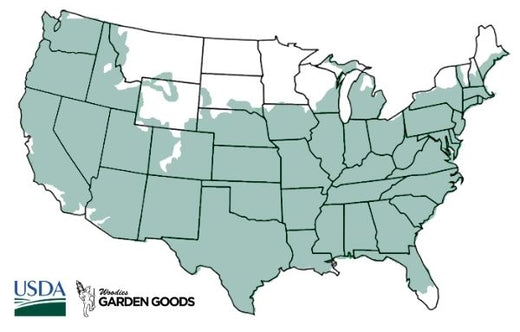
| Hardiness Zone: | 5-9 |
|---|---|
| Mature Height: | 4 to 12 Inches |
| Mature Width: | 12 to 16 Inches |
| Sunlight: | Full sun; tolerates very light shade, with best color and fragrance in full sun |
| Soil | Light, sandy, rocky, gravelly, or well-drained soil; prefers neutral to alkaline conditions |
| Water | Water regularly after planting; drought tolerant once established |
| Bloom Time / Color | Late spring to summer; small lavender, pinkish, or pale flowers |
| Ornamental Features | Variegated aromatic foliage, lemon fragrance, compact habit, delicate flowers, culinary harvest value |
| Wildlife Value | Attracts bees and beneficial pollinators when in bloom |
| Resistance | Generally deer resistant; drought tolerant once established; dislikes wet soil and poor drainage |
| Landscape Uses | Herb gardens, kitchen gardens, containers, raised beds, edging, rock gardens, Mediterranean gardens, pollinator-friendly plantings |
How to Care for Variegated Lemon Thyme
Before you buy a Variegated Lemon Thyme, make sure to read about the recommended care instructions to keep this plant healthy and thriving.
-v1781118534011.png?92x91)
How should I plant Variegated Lemon Thyme?
Plant Variegated Lemon Thyme in a sunny location with excellent drainage. Choose a spot that receives at least 6 hours of direct sun each day for the strongest fragrance, best growth, and brightest foliage color. Avoid low areas where water collects, especially in winter. Dig a hole just wide enough for the root ball and set the plant so the crown sits level with the surrounding soil. Backfill gently and water well to settle the roots. In containers, use a pot with drainage holes and a fast-draining potting mix.
-v1781118564172.png?89x84)
How often should I water Variegated Lemon Thyme after planting?
Water Variegated Lemon Thyme thoroughly after planting, then keep the soil lightly moist while the roots establish. During the first few weeks, check the soil regularly and water when the top inch or two begins to dry. Once established, Variegated Lemon Thyme is drought tolerant and prefers slightly dry conditions. Avoid frequent watering or soggy soil, especially in containers. Overwatering can weaken the plant and lead to root problems.
-v1781118582363.png?90x89)
When should I fertilize Variegated Lemon Thyme?
Variegated Lemon Thyme usually needs little fertilizer. In average garden soil, lean conditions often produce compact growth and better aromatic foliage. If growing in a container or very poor soil, apply a light feeding in spring with a mild balanced fertilizer or refresh the top layer with compost. Avoid heavy fertilizing, which can encourage soft growth and reduce the strong lemon-thyme fragrance.

When and how should I prune Variegated Lemon Thyme?
Prune Variegated Lemon Thyme lightly after flowering or whenever the plant becomes leggy. Trim the soft green growth to keep the plant compact and full, but avoid cutting deeply into old woody stems that may not regrow well. Regular harvesting also helps shape the plant. In early spring, remove any winter-damaged stems and lightly trim to encourage fresh growth. If the plant becomes woody over time, replace or refresh it with younger growth for the best appearance and harvest quality.