

Images Depict Mature Plants
Angelina Sedum
Sedum rupestre 'Angelina'
Angelina Sedum is one of the best low-growing sedums when you need bright foliage color in a hot, sunny spot. The golden-chartreuse color is the real reason to plant it, especially around stone, gravel, containers, and dry border edges. I like it paired with Dragon’s Blood Sedum, hens and chicks, lavender, catmint, salvia, ornamental grasses, and other full-sun perennials. Give it sun, drainage, and less water than a typical perennial, and it will reward you with a tough carpet of color.

15% OFF SITEWIDE SALE
Use Code 'PRIMETIME15' At Checkout
📦 Free shipping on orders over $99.
Delay shipping by leaving us a message at Checkout.
Share:



Golden Creeping Sedum for Sunny Groundcover, Containers, and Rock Gardens
A Bright Golden Stonecrop for Full Sun.
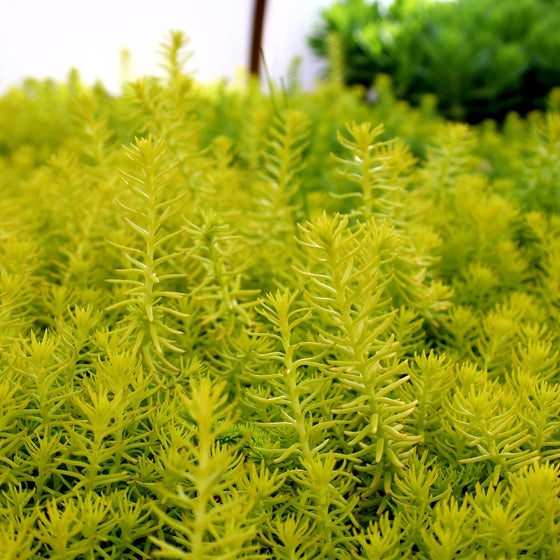
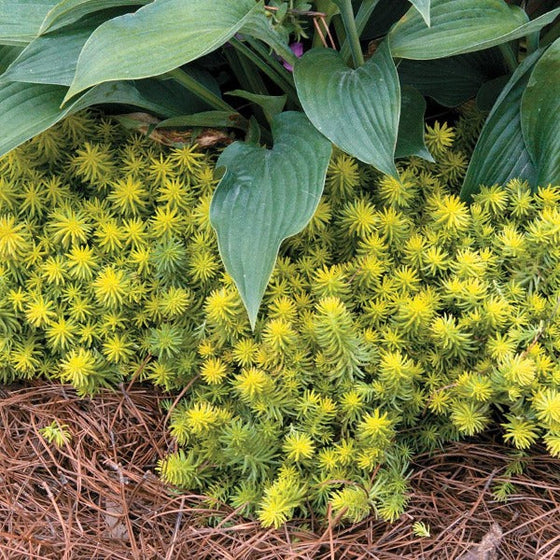
Angelina Sedum is a low-growing stonecrop with vivid chartreuse to golden-yellow foliage and an easy groundcover habit. The narrow, needle-like succulent leaves create a bright carpet of color that stands out in sunny beds, rock gardens, containers, wall edges, and dry borders. Use it where you want a low plant that adds color even before it flowers.
Colorful Foliage with Seasonal Interest.
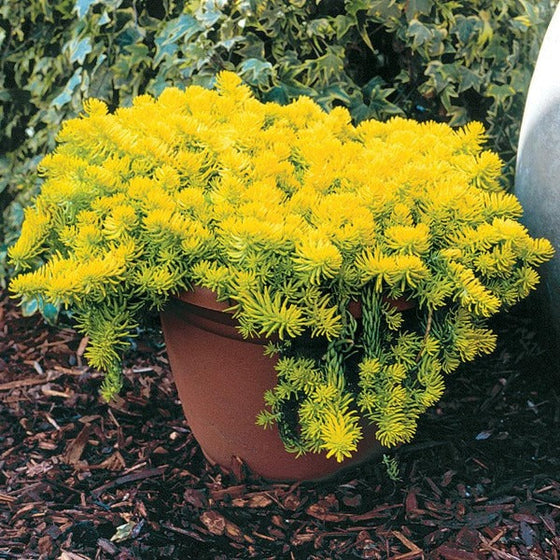
The foliage is the main show. In full sun, Angelina Sedum glows yellow to chartreuse through the growing season and may take on orange, amber, or bronze tones in cooler weather. This makes it especially useful near stone, gravel, pavers, dark mulch, and mixed container plantings where its foliage color can brighten the entire design.
Low-Growing Habit for Groundcover and Containers.
Angelina Sedum forms a spreading mat that works well along border fronts, between stones, over walls, on slopes, and in mixed containers. It can soften hard edges without creating a tall or bulky look. Plant it in groups for a colorful groundcover effect, or use it as a bright spiller around taller sun-loving perennials and shrubs.
Yellow Flowers for Pollinators.
In summer, Angelina Sedum can produce small star-shaped yellow flowers above the foliage. The blooms attract bees, butterflies, and other beneficial pollinators, adding habitat value to this already useful groundcover. Even when flowering is light, the foliage provides dependable color and texture through much of the season.
Drought-tolerant and Easy to Grow.
Once established, Angelina Sedum is drought-tolerant and performs well in sunny, dry, well-drained sites. Its succulent leaves store moisture, helping it handle hot, exposed areas better than many traditional groundcovers. Plant it in full sun with sandy, gravelly, lean, or average well-drained soil. Avoid overwatering, heavy fertilizer, and soggy winter conditions, which can weaken sedum and lead to rot.
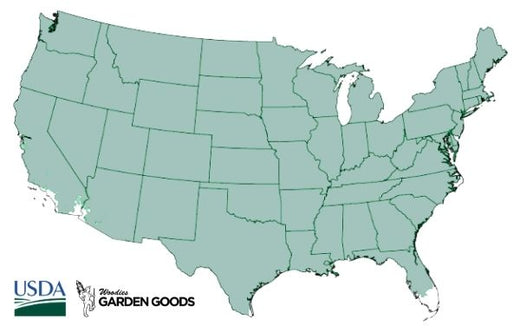
| Hardiness Zone: | 3-9 |
|---|---|
| Mature Height: | 3 to 6 Inches |
| Mature Width: | 12 to 24 Inches |
| Sunlight: | Full sun; tolerates light part shade with less intense foliage color |
| Soil | Lean, sandy, gravelly, average, or well-drained soil |
| Water Requirements: | Low once established; water regularly during establishment |
| Bloom Time / Color | Summer; small star-shaped yellow flowers |
| Foliage | Semi-evergreen to evergreen in mild climates; may bronze or die back in colder areas |
| Ornamental Features | Golden foliage, creeping mat habit, yellow flowers, colorful seasonal foliage |
| Wildlife Value | Attracts bees, butterflies, and other pollinators during bloom |
| Resistance | Drought tolerant once established, heat tolerant, low maintenance; deer resistance can vary |
| Landscape Uses | Groundcover, rock gardens, slopes, border fronts, walkway edges, containers, wall edges, gravel gardens, curbside beds, green roof-style plantings, low-water landscapes |
How to Care for Angelina Sedum
Be sure to read our planting instructions to ensure a healthy and happy Angelina Sedum for years to come!
-v1781102032164.png?92x91)
How should I plant Angelina Sedum?
Plant Angelina Sedum in full sun with well-drained soil. Choose a site that receives at least 6 hours of direct sun per day for the brightest golden foliage, strongest growth, and best flowering. Light part shade is tolerated, but foliage color may be greener and less intense. Dig a hole just deep enough to keep the crown level with the surrounding soil. Backfill gently and water thoroughly after planting. Space plants about 12 to 18 inches apart if you want them to knit together into a colorful groundcover mat.
-v1781102051119.png?89x84)
How often should I water Angelina Sedum after planting?
Water Angelina Sedum deeply after planting and keep the soil lightly moist while roots establish. During the first growing season, water when the top few inches of soil become dry, especially during hot, windy, or dry weather. Once established, Angelina Sedum is drought tolerant and usually needs little supplemental water. Avoid frequent shallow watering and never allow the plant to sit in soggy soil. Overwatering is one of the most common causes of poor sedum performance.
-v1781102067913.png?90x89)
When should I fertilize Angelina Sedum?
Angelina Sedum usually does not need fertilizer in average garden soil. If growth is weak, a light layer of compost in spring is usually enough. Avoid heavy feeding, especially with high-nitrogen fertilizer. Rich soil and too much fertilizer can encourage soft growth and reduce the tight, colorful mat that makes this sedum valuable as a groundcover.

When and how should I prune Angelina Sedum?
Angelina Sedum needs very little pruning. Trim away winter-damaged or tired growth in early spring as new growth begins. Light trimming can also be done after flowering if you want a neater edge. If the planting spreads beyond its intended space, simply cut or pull small sections and replant them where you want more coverage. Stem cuttings root easily in well-drained soil, making Angelina Sedum simple to refresh or expand.