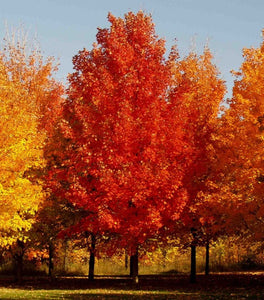
Images Depict Mature Plants
Flame Amur Maple
Acer tataricum subsp. ginnala 'Flame'
Flame Amur Maple is one of those smaller maples that can put on a remarkable fall-color display. The leaves turn an intense fiery red, and the red winged seeds provide additional interest earlier in the season. I particularly like its smaller size and the flexibility of growing it as a multi-stemmed specimen or training it into a small ornamental tree.
$102.36 with code WEEKEND20 at checkout Save $25.59
📦 Free shipping on orders over $99.
Delay shipping by leaving us a message at Checkout.
Share:


A Cold-Hardy Ornamental Maple with Brilliant Flame-Red Fall Color
Brilliant Red Fall Foliage That Lights Up the Landscape
Flame Amur Maple is a beautiful small ornamental maple prized for its brilliant autumn foliage and adaptable landscape form. Botanically known as Acer tataricum subsp. ginnala ‘Flame’, this cold-hardy selection produces attractive green leaves throughout summer before transforming into vivid shades of scarlet, crimson, orange-red, and fiery red as temperatures cool. Few features make a garden more memorable than a maple displaying intense autumn color, and Flame was specifically selected for that exceptional seasonal effect.
Unlike larger shade maples that can overwhelm residential landscapes, Flame Amur Maple develops into a relatively small tree or large ornamental shrub. Its rounded, spreading habit creates an attractive presence in open lawn spaces, mixed shrub borders, and as a suitable specimen planting. For homeowners looking for a compact fall-color tree that provides the familiar beauty of maple foliage without the enormous canopy of a mature shade tree, Flame Amur Maple offers distinctive ornamental appeal where its planting is locally appropriate.
A Small Maple Tree with Attractive Multi-Stemmed Growth
One of the most appealing characteristics of Flame Amur Maple is its flexible growth habit. It naturally develops as a large, multi-stemmed shrub or small tree with branches that form a rounded, often spreading canopy. Mature plants commonly reach approximately 15 to 20 feet tall and wide, making this selection much smaller than traditional Red Maples, Sugar Maples, and many other shade trees.
Flame Amur Maple can be maintained as a multi-stem specimen to emphasize its natural character or selectively trained into a single-trunk ornamental tree while young. Its relatively modest size makes it useful near patios, in larger foundation landscapes, and as a seasonal focal point where adequate room is available. Provide sufficient space for the spreading branches and avoid placing the tree too close to buildings, overhead utilities, or narrow walkways. In regions where the species is invasive or discouraged, choose a locally appropriate alternative instead.
Red Winged Seeds Add Another Season of Color
Flame Amur Maple offers ornamental interest before its autumn leaf display begins. In spring, clusters of small creamy-white to yellowish-white flowers appear as the foliage develops. Although the individual blossoms are subtle rather than showy, they may provide a light fragrance and attract visiting insects, adding interest to the tree early in the growing season.
After flowering, paired winged fruits called samaras develop along the branches. These distinctive maple seeds may turn bright red in summer before gradually maturing to brown, adding color against the green foliage. This ornamental seed display is attractive, but it is also an important planting consideration.
Cold-Hardy Performance for Northern Landscapes
Flame Amur Maple is especially well suited to cool and cold climates where winter hardiness is an important consideration. It is commonly listed for USDA Zones 3 to 8, with its strongest performance generally occurring in regions with colder winters and relatively moderate summer temperatures. Established plants can tolerate a range of soil conditions and are more adaptable to occasional drought and wind than many more demanding ornamental trees.
For the best fall color and an attractive canopy, plant Flame Amur Maple in full sun to light partial shade with well-drained soil. Regular watering during the first growing season supports healthy root establishment, while established trees generally require less supplemental moisture. Its adaptable growth habit makes it useful in managed ornamental landscapes, but its vigorous seed production means it should not be planted near sensitive natural areas or anywhere local guidance advises against its use.
A Versatile Fall-Color Accent for Appropriate Garden Sites
Flame Amur Maple can create an attractive seasonal focal point wherever its growth and seed production can be managed responsibly. Its rounded canopy works beautifully as a specimen in an open lawn, while the naturally multi-stemmed habit provides an interesting alternative to traditional single-trunk ornamental trees. During summer, green foliage and red winged seeds create a softer appearance before the brilliant autumn transformation.
In suitable locations, pair Flame Amur Maple with compact evergreen shrubs, ornamental grasses, and perennial plantings to create contrast throughout the growing season. Dark green evergreens provide an attractive background for the fiery fall color, while lower-growing plants help soften the base of the tree.
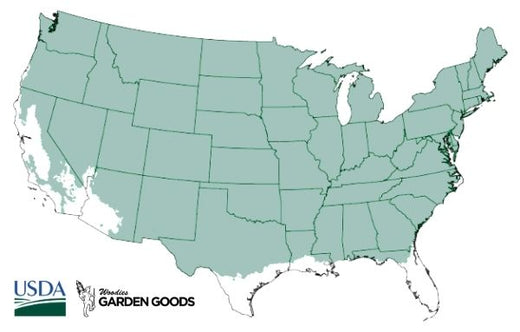
| Hardiness Zone: | 3-8 |
|---|---|
| Mature Height: | 15 to 20 feet |
| Mature Width: | 15 to 20 Feet |
| Sunlight: | Full sun to partial shade |
| Soil Condition | Average, moist but well-drained soil; tolerates clay, loam, sand, and varied soil pH |
| Water Requirements: | Regular during establishment; tolerates occasional drought once established |
| Bloom Time / Color | Spring; small creamy-white to yellowish-white flowers |
| Ornamental Features | Brilliant red fall foliage; red winged seeds; rounded canopy; multi-stem form |
| Wildlife Value | Flowers may attract insects; seeds may be eaten by wildlife |
| Resistance (deer/disease/drought/etc.) | Cold hardy; adaptable; drought tolerant once established |
| Landscape Uses: | Specimen tree; managed ornamental planting; large shrub border; seasonal screen; patio-area accent where space permits |
How to Care for Flame Amur Maple
Be sure to read our planting instructions to ensure a healthy and happy Flame Amur Maple for years to come!

How should I plant Flame Amur Maple?
Plant Flame Amur Maple in full sun to part shade with well-drained soil. Choose a location with enough room for the tree or large shrub to mature without crowding buildings, sidewalks, driveways, overhead wires, or other trees. Full sun usually produces the strongest fall color. Dig a hole about twice as wide as the root ball and just as deep. Set the root flare slightly above the surrounding soil line, backfill with native soil, and water thoroughly. Apply mulch around the root zone, keeping mulch away from the trunk or main stems.

How often should I water Flame Amur Maple after planting?
Water Flame Amur Maple deeply after planting, then keep the root zone evenly moist while the tree establishes. During the first growing season, water when the top few inches of soil begin to dry, especially during heat, wind, or drought. Once established, Flame Amur Maple has some drought tolerance, but it still performs best with occasional deep watering during extended dry periods. Avoid frequent shallow watering, which encourages weak surface roots.

When should I fertilize Flame Amur Maple?
Fertilize Flame Amur Maple in early spring only if growth is weak or soil fertility is low. A balanced slow-release tree and shrub fertilizer or a compost topdressing can support healthy growth. Avoid heavy fertilizing, especially with high-nitrogen products. Too much fertilizer can encourage excessive soft growth and may not improve fall color. If leaves appear yellow with green veins, especially in alkaline soils, test the soil before treating for possible iron chlorosis.

When and how should I prune Flame Amur Maple?
Prune Flame Amur Maple in late winter or early spring while the tree is dormant. Remove dead, damaged, crossing, or poorly placed branches. If you want a single-trunk tree, select one strong leader early and remove competing stems gradually. For a multi-stem ornamental form, maintain several well-spaced main stems and thin congested growth as needed. Avoid heavy pruning late in the growing season, and do not remove more than necessary in a single year.