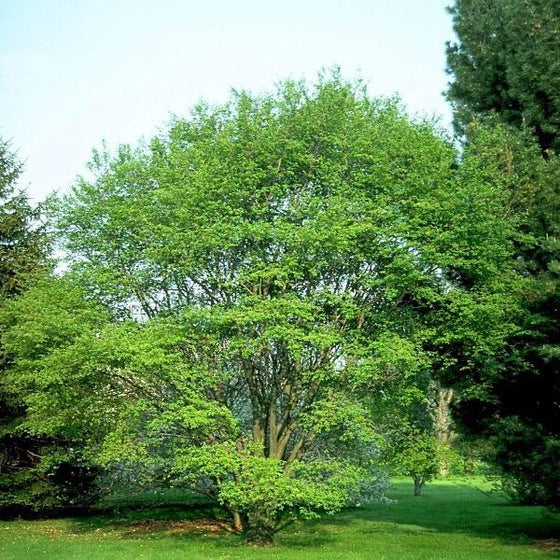


Images Depict Mature Plants
Allegheny Serviceberry Tree
Amelanchier laevis
Allegheny Serviceberry is one of those native trees that gives a lot back for the space it takes. You get white flowers early, berries the birds will race you for, strong fall color, and smooth gray bark after the leaves drop. I would use it where customers want a natural-looking small tree with real ecological value, especially along woodland edges, in front yards, or in edible landscapes. Just give it moisture, drainage, and enough sun if fruit and fall color matter most.

15% OFF SITEWIDE SALE
Use Code 'PRIMETIME15' At Checkout
📦 Free shipping on orders over $99.
Delay shipping by leaving us a message at Checkout.
Share:


Allegheny Serviceberry Tree Brings Native Flowers, Fruit, Fall Color, and Wildlife Value
A Native Small Tree With Four-Season Beauty
Allegheny Serviceberry Tree is a graceful native small tree or large multi-stemmed shrub with spring flowers, edible summer berries, brilliant fall color, and smooth gray bark for winter interest. It is one of the best choices for homeowners who want a tree that feels natural, useful, and beautiful without overwhelming the landscape.
In early spring, white star-shaped flowers appear before or as the leaves emerge, giving the tree a soft, airy bloom display. Later, blueberry-like fruit ripens from red to deep purple, followed by yellow, orange, and red fall foliage. Even after leaf drop, the smooth gray bark adds subtle structure and texture through winter.
White Spring Flowers for Pollinators
Allegheny Serviceberry is one of the earlier native flowering trees to wake up in spring. Its white flowers are held in loose clusters and provide nectar and pollen when many pollinators are just becoming active. This makes it especially valuable in native gardens, pollinator plantings, woodland edges, and mixed borders.
The bloom display is elegant rather than heavy or oversized. It has a natural woodland feel that works beautifully near patios, front yards, woodland margins, property edges, and understory plantings. Use it where you want early spring curb appeal with a softer look than many ornamental flowering trees.
Edible Berries for People and Birds
After flowering, Allegheny Serviceberry produces small edible fruits that ripen in late spring to early summer. The berries are often compared to blueberries and can be eaten fresh when fully ripe or used in pies, jams, preserves, muffins, sauces, and other recipes.
Birds love serviceberries, so the harvest window can be short. Many homeowners plant serviceberry as much for wildlife as for personal harvest. If you want to enjoy the berries yourself, watch closely as the fruit turns from red to purple and pick before the birds find every last one.
A Small Tree for Native Gardens, Rain Gardens, and Front Yards
Allegheny Serviceberry typically grows about 15 to 25 feet tall, with a similar or slightly narrower spread depending on training and site conditions. It can be grown as a multi-stemmed small tree, a large shrub, or trained into a more tree-like form with selective pruning when young.
This adaptable size makes it useful for front yards, courtyard gardens, edible landscapes, native plantings, rain gardens, woodland edges, mixed borders, and naturalized screens. It is also a good alternative to overused non-native spring-flowering trees because it offers flowers, fruit, fall color, bark interest, and wildlife support in a single plant.
Best in Moist, Well-Drained Soil With Sun to Part Shade
Allegheny Serviceberry grows in full sun to part shade. More sun usually supports heavier flowering, better fruit production, and stronger fall color, while part shade works well in woodland-edge and understory settings. In hotter regions, morning sun with afternoon shade can be a good balance.
Plant it in moist, well-drained soil. Allegheny Serviceberry adapts to a range of soil types, including loam, sand, and clay, but it performs best with steady moisture and good drainage. Avoid very dry, salty, or harsh sites. Good air circulation, mulch, and proper watering help reduce stress and support cleaner foliage.
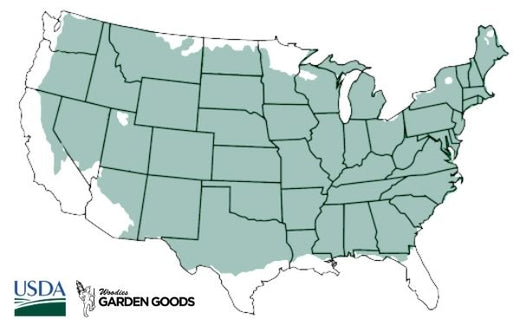
| Hardiness Zone: | 4-8 |
|---|---|
| Mature Height: | 15 to 25 Feet |
| Mature Width: | 15 to 20 Feet |
| Sunlight: | Full sun to part shade; more sun supports heavier fruiting and stronger fall color |
| Soil | Moist, well-drained soil; adaptable to clay, loam, and sandy soils when drainage is adequate |
| Water | Keep evenly moist during establishment; prefers consistent moisture and is not ideal for harsh dry sites |
| Bloom Time / Color | Early spring to mid spring; white star-shaped flowers in loose clusters |
| Fruit / Harvest | Edible red-to-purple berry-like pomes ripen in late spring to early summer |
| Foliage | Bronze-purple to reddish new growth, green summer foliage, yellow, orange, and red fall color |
| Ornamental Features | White spring flowers, edible purple fruit, orange-red fall color, smooth gray bark, native woodland form |
| Wildlife Value | Flowers support bees and other pollinators; fruit feeds songbirds, mammals, and other wildlife |
| Resistance | Moderately deer tolerant once established; young trees may need protection from browsing |
| Landscape Uses | Specimen trees, native gardens, edible landscapes, rain gardens, woodland edges, pollinator gardens, bird gardens, mixed borders, small yards |
How to Care for Allegheny Serviceberry Tree
Be sure to read our planting instructions to ensure a healthy and happy Allegheny Serviceberry plant for years to come!
-v1746199149120.png?92x91)
How should I plant Allegheny Serviceberry Tree?
Plant Allegheny Serviceberry Tree in full sun to part shade with moist, well-drained soil. Choose full sun if fruit production and fall color are top priorities, or part shade for a more natural woodland-edge planting. Avoid dry, salty, compacted, or poorly drained sites. Dig a hole two to three times wider than the root ball and about the same depth as the container. Set the root flare at or slightly above soil level, backfill with native soil, water deeply, and apply a 2- to 3-inch mulch layer over the root zone while keeping mulch away from the trunk.
-v1746199188447.png?89x84)
How often should I water Allegheny Serviceberry Tree after planting?
Water Allegheny Serviceberry deeply after planting and keep the soil evenly moist during the first growing season. Newly planted trees need consistent moisture while roots grow into the surrounding soil, especially during heat, drought, or windy weather. Once established, Allegheny Serviceberry can handle normal garden conditions but performs best with supplemental water during extended dry periods. It prefers moist, well-drained soil and is not the best choice for harsh dry sites. Mulch helps conserve moisture and protect the root system.
-v1746199218346.png?90x89)
When should I fertilize Allegheny Serviceberry Tree?
Fertilize Allegheny Serviceberry Tree in early spring if growth is weak or the soil is poor. Use a balanced slow-release tree and shrub fertilizer or topdress with compost around the root zone. In healthy native or amended soil, established serviceberries often need only light feeding. Avoid overfertilizing with high-nitrogen fertilizer, which can push leafy growth at the expense of flowers and fruit. Good planting, steady moisture, mulch, and proper light are more important than frequent fertilizer applications.

When and how should I prune / cut back Allegheny Serviceberry Tree?
Prune Allegheny Serviceberry in late winter or early spring while the tree is dormant. Remove dead, damaged, diseased, crossing, or crowded branches first. Light thinning improves airflow and can help reduce disease pressure. If you want a tree form, select a strong central leader or a few main trunks while the plant is young and remove competing shoots. If you want a natural multi-stemmed shrub form, allow several stems to develop and selectively thin older or crowded stems over time. Avoid heavy pruning during the growing season because it can reduce flowers and fruit.