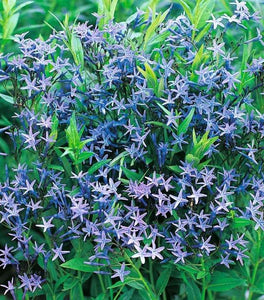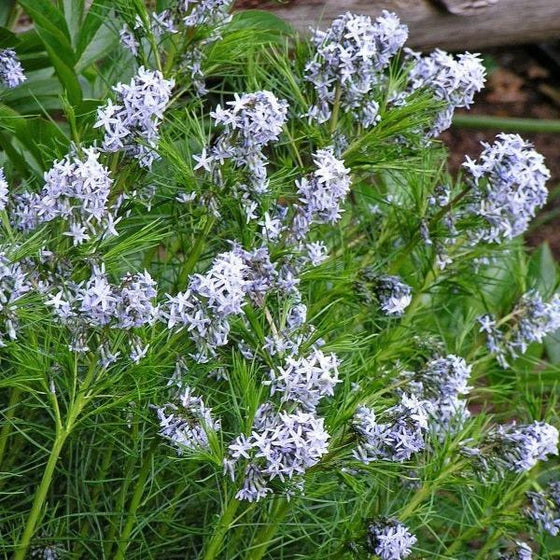


Images Depict Mature Plants
Hubricht’s Bluestar (Amsonia hubrichtii)
Amsonia hubrichtii
Hubricht’s Bluestar is one of the best native perennials for gardeners who want more than flowers. The pale blue spring blooms are lovely, but the real value is the soft threadleaf foliage and the glowing golden fall color. I like it in groups of three or more, especially with ornamental grasses, coneflowers, sedum, and black eyed Susans. Give it sun, patience, and room to mature.

PLANT-A-TREE WITH EVERY PURCHASE
PLUS 15% OFF SITEWIDE -- USE CODE 'USA250' AT CHECKOUT
📦 Free shipping on orders over $99.
Delay shipping by leaving us a message at Checkout.
Share:Recommended Add-Ons



A Native Bluestar with Soft Texture, Blue Spring Flowers, and Golden Fall Color
Pale Blue Spring Flowers on a Long-Lived Native Perennial
Hubricht’s Bluestar is a long-lived native perennial grown for its pale blue star-shaped flowers, fine threadlike foliage, and brilliant golden fall color. Also known as Threadleaf Bluestar or Arkansas Bluestar, Amsonia hubrichtii brings a soft, airy texture to sunny borders while remaining durable, low-maintenance, and easy to combine with other perennials.
In mid to late spring, clusters of pale blue flowers appear at the tips of upright stems. The flowers create a delicate seasonal show that pairs beautifully with spring-blooming perennials, early pollinator plants, and fresh emerging foliage in mixed borders and native gardens.
Fine Feathery Foliage for Summer Texture
After the flowers fade, Hubricht’s Bluestar continues to shine with narrow, threadlike green leaves that give the plant a soft, billowy appearance. This fine foliage is the key feature that separates it from many broader-leaf bluestar species and makes it especially useful in designed perennial plantings.
The plant forms an attractive, rounded clump over time, adding movement and texture without becoming coarse or overpowering. Use it to soften bolder plants like coneflowers, black-eyed Susans, ornamental grasses, sedum, baptisia, and shrub roses.
Brilliant Golden Fall Color
Hubricht’s Bluestar is one of the best perennials for fall foliage color. As temperatures cool, the fine green leaves turn bright yellow to golden orange, creating a glowing autumn display that can rival small shrubs in seasonal impact.
For the strongest fall color, plant Hubricht’s Bluestar in full sun. It can grow in part shade, but flowering and fall color are usually best in brighter locations. Massing several plants together creates an especially strong late-season effect in borders, meadow gardens, and native plantings.
Deer Resistant, Pollinator Friendly, and Low Maintenance
Hubricht’s Bluestar is generally deer-resistant and low-maintenance once established. The foliage contains milky sap, which helps make the plant less appealing to browsing deer and rabbits than many softer perennials.
The spring flowers support pollinators, while the dense summer foliage provides cover and structure in the garden. This is a strong choice for gardeners who want a native perennial that is beautiful, useful, and not overly demanding.
Easy Care in Sun to Part Shade
Plant Hubricht’s Bluestar in full sun to part shade with average to moist, well-drained soil. It adapts to a range of soil conditions and becomes drought-tolerant once established, though young plants benefit from regular watering while roots develop.
Maintenance is simple. Cut back old stems in late winter or early spring, before new growth emerges. Leaving some hollow stems standing through winter can provide nesting habitat for native bees, and then the remaining stems can be shortened in spring.
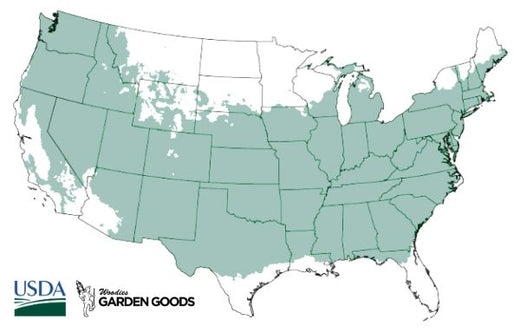
| Hardiness Zone: | 5-8 |
|---|---|
| Mature Height: | 2 to 3 Feet |
| Mature Width: | 2 to 3 Feet |
| Sunlight: | Full sun to part shade; best flowering and fall color in full sun |
| Soil | Average to moist, well-drained soil; adaptable to a range of soil moisture conditions |
| Water | Water regularly after planting; drought tolerant once established |
| Bloom Time / Color | Mid to late spring; pale blue star-shaped flowers |
| Ornamental Features | Pale blue flowers, feathery foliage, rounded habit, brilliant golden fall color, soft texture |
| Wildlife Value | Flowers attract pollinators; stems can provide overwintering habitat if left standing |
| Resistance | Generally deer resistant; low maintenance; drought tolerant once established; heat tolerant |
| Landscape Uses | Native garden, perennial border, pollinator garden, meadow planting, cottage garden, mass planting, fall color planting, full sun border, mixed shrub/perennial bed |
How to Care for Hubricht’s Bluestar (Amsonia hubrichtii)
Be sure to read our planting instructions to ensure a healthy and happy Hubricht’s Bluestar plant for years to come!

How should I plant Hubricht’s Bluestar?
Plant Hubricht’s Bluestar in full sun to part shade with well-drained soil. Choose a location where the soft foliage and golden fall color can be enjoyed, such as a sunny perennial border, native garden, meadow-style planting, or mixed foundation bed. Dig a hole about as wide as the root ball and just as deep. Set the crown level with the surrounding soil, backfill gently, and water thoroughly. Space plants about 24–36 inches apart so each clump has room to mature into a rounded shape.

How often should I water Hubricht’s Bluestar after planting?
Water Hubricht’s Bluestar deeply after planting, then keep the soil evenly moist while the roots establish. During the first growing season, water when the top few inches of soil begin to dry. Once established, Hubricht’s Bluestar is drought tolerant and usually needs little supplemental water except during extended dry periods. Consistent moisture during establishment helps the plant develop a fuller, stronger clump.

When should I fertilize Hubricht’s Bluestar?
Hubricht’s Bluestar usually needs little fertilizer in average garden soil. A light spring topdressing of compost is often enough to support healthy growth. Avoid heavy feeding, especially with high-nitrogen fertilizer. Too much fertility can encourage softer growth and may reduce the naturally sturdy, rounded habit that makes this plant so useful in borders.

When and how should I prune Hubricht’s Bluestar?
Cut Hubricht’s Bluestar back in late winter or early spring before new growth begins. Remove old stems to make room for fresh spring growth and keep the planting tidy. For added habitat value, leave 12–18 inches of old hollow stems standing through winter, then cut them back in spring. During the growing season, pruning is usually not needed, though plants can be lightly trimmed after bloom if shaping is desired.