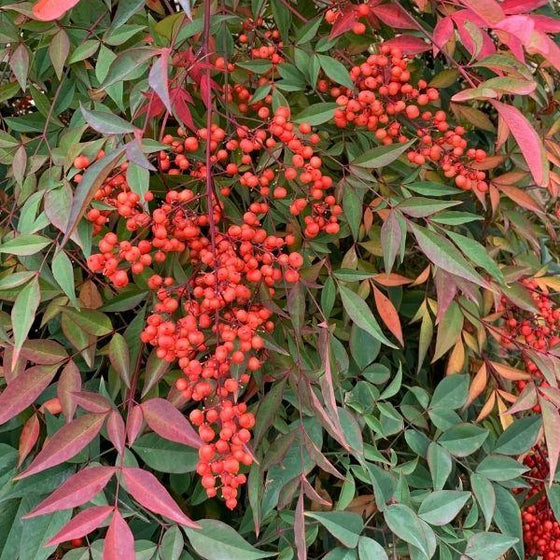
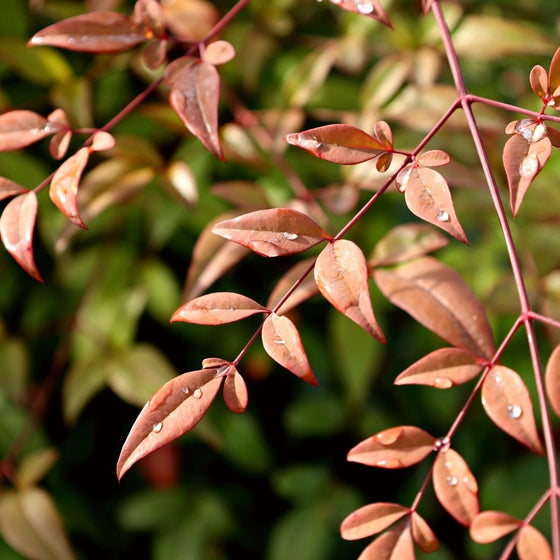
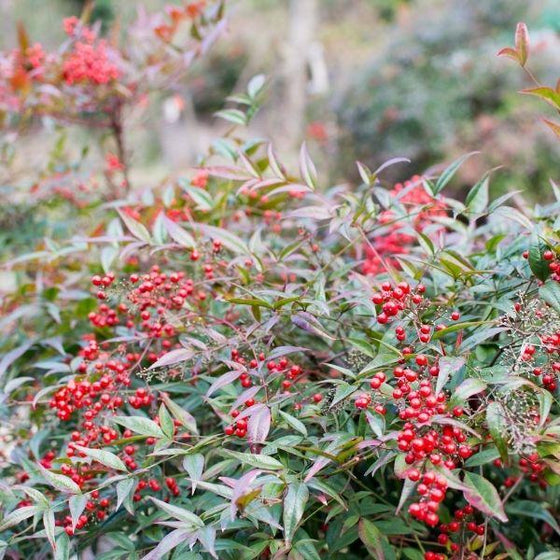
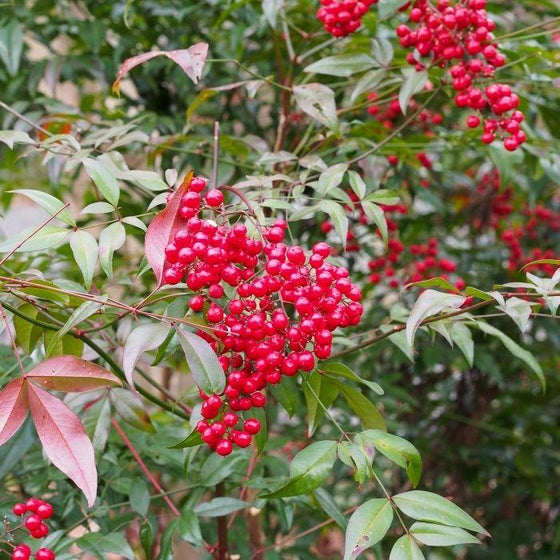


Images Depict Mature Plants
Heavenly Bamboo
Nandina domestica
Heavenly Bamboo is a good-looking shrub, but it is one I would sell with clear guidance. The color, texture, and upright habit are useful, especially in foundations and containers, but the straight species can produce berries and may be invasive in some regions. I would be honest with customers: plant it responsibly, remove berries if needed, watch for seedlings, and consider Gulf Stream or Fire Power Nandina when a lower-fruiting option is the better fit.
📦 Free shipping on orders over $99.
Delay shipping by leaving us a message at Checkout.
Share:Recommended Add-Ons


Heavenly Bamboo Adds Upright Texture, Colorful Foliage, and Winter Interest
A Classic Nandina With Year-Round Color
Heavenly Bamboo is an upright evergreen to semi-evergreen shrub known for colorful foliage, cane-like stems, white spring flowers, and red winter berries. Despite the name, it is not a true bamboo. It belongs to the barberry family and earns its common name from its slender upright stems and delicate, bamboo-like foliage.
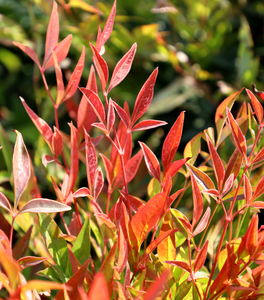
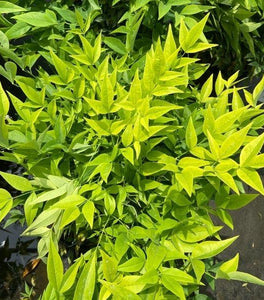
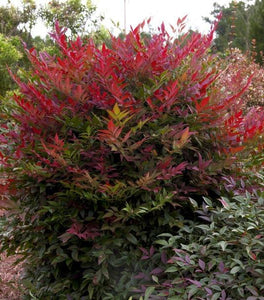
This shrub brings changing color through the seasons. New growth often emerges bronze-red, matures to green in summer, then develops red, orange, and burgundy tones in fall and winter. Use Heavenly Bamboo where you want fine texture, vertical movement, and year-round interest in foundation beds, mixed borders, containers, hedges, and narrow landscape spaces.
White Spring Flowers and Red Winter Berries
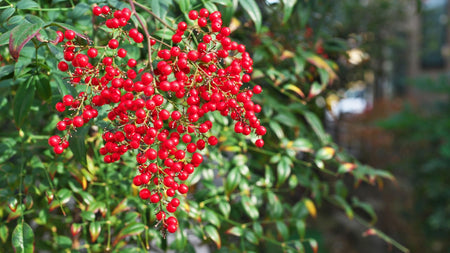
In late spring to early summer, Heavenly Bamboo can produce clusters of small white flowers. These flowers are followed by bright red berries in fall and winter when pollination and growing conditions are favorable. The berry clusters add strong cold-season color and are one of the most recognizable features of classic Nandina domestica.
Because the berries can be toxic to birds and other animals if consumed in quantity, and because seed dispersal can contribute to invasiveness in some regions, gardeners should handle fruiting plants responsibly. If berry production is a concern, remove flowers after bloom or prune off fruit clusters before they ripen. In regions where Nandina is restricted or discouraged, choose low-fruiting or non-fruiting Nandina varieties or native alternatives instead.
Upright Texture for Foundations, Hedges, and Containers
Heavenly Bamboo typically matures around 5 to 8 feet tall and 3 to 4 feet wide, giving it a taller, more vertical presence than compact Nandina cultivars. Its narrow, upright stems and layered foliage make it useful in spaces where a broad, heavy shrub would feel too bulky.
Plant it as an accent shrub, informal hedge, foundation plant, container specimen, mixed border anchor, or screening plant for narrow spaces. It pairs well with boxwood, hollies, yews, hydrangeas, camellias, azaleas, ferns, carex, heuchera, hellebores, and ornamental grasses. Its fine foliage texture is especially useful for softening the appearance of heavier evergreen plantings.
Easy to Grow in Sun or Part Shade
Heavenly Bamboo grows in full sun to part shade. More sun typically produces stronger red foliage color and heavier flowering, while part shade creates a softer green look and can help protect foliage from heat stress in hot climates. It adapts well to many garden settings as long as the soil drains properly.
Plant in well-drained soil and water regularly during establishment. Once established, Heavenly Bamboo becomes more drought-tolerant and lower maintenance. It can adapt to sandy, loamy, or clay-based soils if drainage is adequate, but it should not be planted where water sits around the roots.
Important Regional and Safety Considerations
Heavenly Bamboo is beautiful, durable, and useful, but it needs responsible placement. In some states and regions, Nandina domestica is considered invasive or requires caution because birds can spread the seeds into natural areas. Always check local guidance before planting, especially in the Southeast, Mid-Atlantic, and other regions where it has escaped cultivation.
All parts of Nandina contain compounds that may be toxic if eaten, and the berries can be a concern for pets, livestock, children, and certain birds. For lower-risk landscape use, remove flowers or berries, monitor for seedlings, avoid planting near natural areas, and consider lower-fruiting cultivars such as Gulf Stream or non-fruiting selections such as Fire Power where appropriate.
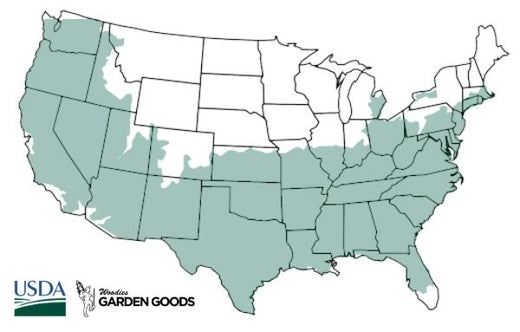
| Hardiness Zone: | 6-9 |
|---|---|
| Mature Height: | 5 to 8 Feet |
| Mature Width: | 3 to 4 Feet |
| Sunlight: | Full sun to part shade; best foliage color usually develops with more sun |
| Soil | Adaptable; best in well-drained soil |
| Water | Water regularly until established; drought tolerant once established |
| Bloom Time / Color | Late spring to early summer; small white flowers |
| Berry / Fruit | Bright red berries in fall and winter when fruiting occurs |
| Foliage | Evergreen, Fine-textured compound foliage; bronze-red new growth, green summer foliage, red-orange winter tones |
| Ornamental Features | Upright bamboo-like stems, colorful foliage, white flowers, red berries, winter interest |
| Resistance | Generally deer resistant; drought tolerant once established; low maintenance in well-drained sites |
| Landscape Uses | Foundation plantings, mixed borders, hedges, containers, narrow spaces, winter interest beds, evergreen accents |
How to Care for Heavenly Bamboo
Before you purchase your Heavenly Bamboo Shrubs, be sure to read the recommended care instructions to ensure your plant remains happy and healthy for years to come.

How should I plant Heavenly Bamboo?
Plant Heavenly Bamboo in full sun to part shade with well-drained soil. Choose full sun for the strongest red foliage color, or part shade where summers are hot and afternoon sun is intense. Avoid low, soggy areas where water collects around the roots. Dig a hole two to three times wider than the root ball and about the same depth as the container. Set the top of the root ball level with the surrounding soil, backfill with native soil, water deeply, and add a 2- to 3-inch mulch layer while keeping mulch away from the stems.

How often should I water Heavenly Bamboo after planting?
Water Heavenly Bamboo deeply after planting and keep the soil evenly moist during the first growing season. Newly planted shrubs need consistent moisture while roots grow into the surrounding soil, especially during hot, dry, or windy weather. Once established, Heavenly Bamboo becomes more drought-tolerant and usually needs less supplemental water. During extended drought or extreme summer heat, deep watering will help maintain better foliage color and a fuller habit. Avoid overwatering or planting in poorly drained soil.

When should I fertilize Heavenly Bamboo?
Fertilize Heavenly Bamboo in early spring as new growth begins if growth is weak or the soil is poor. Use a balanced slow-release shrub fertilizer or topdress with compost around the root zone. In reasonably fertile soil, this shrub usually does not need heavy feeding. Avoid overfertilizing, which can push soft growth and reduce the plant’s natural shape. Do not fertilize late in the season in colder regions. Healthy soil, mulch, drainage, and consistent first-year watering are more important than frequent fertilizer applications.

When and how should I prune / cut back Heavenly Bamboo?
Prune Heavenly Bamboo in late winter or early spring before new growth begins. Remove dead, damaged, or weak stems first. To refresh an older plant, selectively cut a few of the tallest or oldest canes all the way to the ground, rather than shearing the whole shrub into a tight shape. Avoid formal shearing because it can ruin the plant’s natural layered look. If you want to reduce berry production, remove flower clusters after bloom or cut off berry clusters before they ripen. Always monitor for seedlings in regions where Nandina is known to spread.