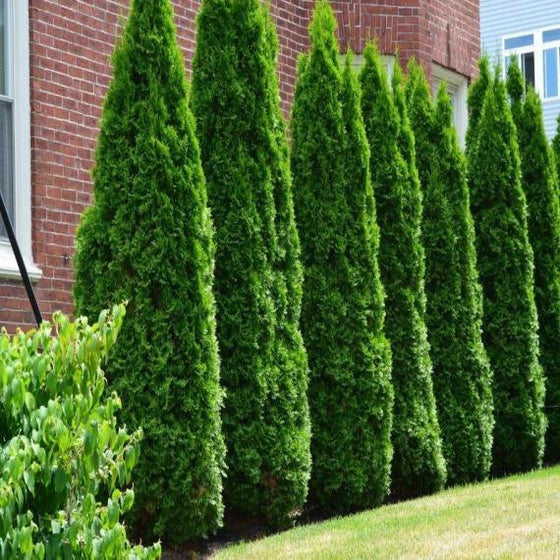


Images Depict Mature Plants
American Pillar Arborvitae – Full Speed A Hedge®
Thuja occidentalis 'American Pillar'
What gets my attention about Full Speed A Hedge® American Pillar Arborvitae is that it solves a problem I see constantly in residential landscapes: people want privacy quickly, but they simply do not have room for a big, spreading evergreen. This tree gives you impressive vertical growth in a narrow 3-to-5-foot footprint, and that is a combination I really like. I would use it along property lines, behind patios, and anywhere a homeowner wants a living screen without giving up a large portion of the backyard. I also appreciate that the naturally columnar form requires very little shaping. My biggest recommendation is to get the planting right from the beginning. Give the trees enough sunlight, space them for their mature width, and be especially attentive to watering during their first growing season. I would also protect young plants wherever deer are a problem. American Pillar may tolerate browsing better than certain other arborvitae, but I would never promise anyone that deer will leave it alone. If you need a fast-growing evergreen privacy hedge for a relatively tight space, this is one of the first varieties I would consider.
$31.16 with code SAVINGS20 at checkout Save $7.79
📦 Free shipping on orders over $99.
Delay shipping by leaving us a message at Checkout.
Share:

Fast-Growing Evergreen Privacy Without Sacrificing Yard Space
American Pillar Arborvitae Creates a Tall, Narrow Privacy Screen
When homeowners want privacy without waiting years for a hedge to fill in, American Pillar Arborvitae – Full Speed A Hedge® is a variety worth serious consideration. This exceptional selection of Thuja occidentalis combines remarkably fast growth with a naturally narrow, upright form, making it especially useful in residential landscapes where planting space is limited. Instead of spreading widely across the lawn or taking over a garden bed, American Pillar directs much of its growth upward. The result is a dense, attractive evergreen that can screen neighboring properties, soften the appearance of fences, and create a more private outdoor living area without overwhelming the landscape.
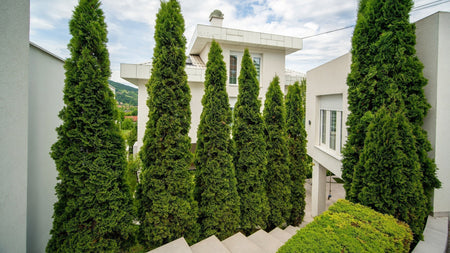
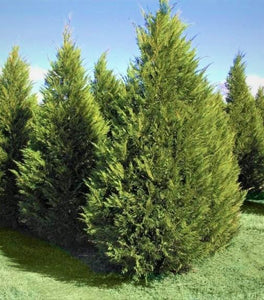
At maturity, American Pillar Arborvitae generally reaches 15 to 20 feet tall and approximately 3 to 5 feet wide, although mature dimensions can vary with growing conditions and age. This proportion makes it an excellent choice for homeowners who want the height of a substantial privacy screen but have only a relatively narrow strip of ground available. Plant several together for a continuous evergreen hedge, or use individual specimens to provide vertical structure beside a patio, along a driveway, or near the edge of a property. Its tall, columnar silhouette also introduces an architectural element that works beautifully in both traditional and contemporary landscape designs.
Full Speed A Hedge® Delivers Impressive Growth for Faster Privacy
The outstanding characteristic of American Pillar Arborvitae is its exceptionally vigorous growth rate. Once established and growing under favorable conditions, this cultivar can produce approximately 40 inches or more of new growth in a year. That level of performance is particularly attractive to homeowners planting a new privacy hedge where an existing screen has been removed or where neighboring homes overlook a backyard. Rather than selecting an evergreen that adds only a modest amount of height each season, gardeners can choose a tree with the potential to create meaningful screening much sooner.
That impressive growth rate does come with an important qualification: newly planted arborvitae must first establish healthy roots. The first growing season is primarily about developing a strong root system, so homeowners should not expect maximum annual growth immediately after planting. Consistent watering, suitable sunlight, and properly prepared soil make a substantial difference in performance. Once the plants are established, their vigorous upright growth becomes much more apparent. For the best results, give American Pillar Arborvitae adequate room for its mature width, regular moisture during establishment, and at least four hours of direct sunlight, with more sun preferred for the densest foliage.
Dense, Deep Green Foliage Provides Beautiful Year-Round Coverage
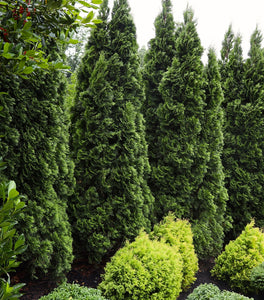
American Pillar Arborvitae offers more than impressive height. Its closely arranged evergreen branches and rich green foliage create a substantial visual barrier throughout the year. The flattened sprays of fine, scale-like leaves give the tree a soft, textured appearance that contrasts beautifully with broadleaf shrubs, flowering perennials, and ornamental grasses. Although the foliage looks delicate, the overall plant develops a strong, tightly branched structure that makes it well suited to screening applications. The result is a privacy tree that looks attractive as an individual specimen and becomes even more impressive when repeated in a carefully spaced hedge.
Because American Pillar is an evergreen conifer, it continues to provide coverage after deciduous trees and shrubs have dropped their leaves. This is especially valuable around patios, pools, outdoor seating areas, and neighboring windows where privacy matters throughout the winter. Its green foliage also offers a handsome backdrop for colorful spring flowers and summer-blooming shrubs. In colder or exposed locations, some seasonal color change may occur, so consistent moisture going into winter and protection from drying winds are beneficial. With appropriate care, the narrow evergreen silhouette remains an attractive feature in every season, even when much of the surrounding landscape is dormant.
An Excellent Evergreen Hedge for Property Lines and Small Backyards
One of the best uses for Full Speed A Hedge® American Pillar Arborvitae is creating a tall, space-saving privacy hedge along a property boundary. Many traditional screening evergreens eventually become too wide for narrow suburban lots, forcing homeowners to prune repeatedly or remove plants that have outgrown their space. American Pillar offers a practical alternative because its naturally columnar growth habit keeps the planting footprint relatively compact. It is particularly effective along backyard fences, between neighboring properties, and beside outdoor entertaining areas where homeowners want a green screen without sacrificing valuable lawn or garden space.
For a dense hedge, the introducer recommends planting American Pillar Arborvitae approximately 2½ to 4 feet apart, measured from trunk center to trunk center. Spacing toward the closer end of that range promotes quicker visual coverage, while wider spacing gives individual trees more breathing room as they develop. Homeowners should also consider the distance from buildings, fences, and pavement, as trees will continue to grow in width as they mature. A properly planned row can create a uniform living green wall that softens hard property lines and adds lasting landscape value. Where room permits, staggering plants can create a fuller screen with additional depth.
Cold-Hardy Arborvitae for Northern and Mid-Atlantic Landscapes
American Pillar Arborvitae is hardy in USDA Growing Zones 3 through 8, giving it a broad planting range across much of the United States. Its combination of winter hardiness and adaptability to summer conditions makes it especially valuable for landscapes that experience both freezing temperatures and periods of summer heat. This is an important advantage for homeowners in the Northeast, Midwest, and Mid-Atlantic who need an evergreen hedge that can withstand pronounced seasonal changes. Proper placement remains important, but this cultivar brings impressive versatility to residential screening projects.
For the strongest growth, plant American Pillar in full sun to partial sun and moist, well-drained soil. A location receiving six or more hours of direct sunlight is excellent for dense growth, although the variety can perform with at least four hours of sunlight. Avoid sites where water remains pooled around the root system or where the soil becomes severely dry for extended periods. A 2-inch layer of organic mulch helps protect the shallow roots and maintain more consistent soil moisture. Because arborvitae can suffer from winter drying, especially during their first few years, watering during prolonged dry spells in autumn is another worthwhile step toward maintaining healthy foliage.
Naturally Upright Growth Means Less Pruning and Easier Maintenance
Some evergreen hedges demand frequent shaping to keep their height and spread under control. American Pillar Arborvitae is different because its narrow, columnar form develops naturally, making routine shearing largely unnecessary. This allows homeowners to enjoy a more relaxed, informal evergreen hedge while still achieving a clean and orderly appearance. Individual trees maintain a strong vertical silhouette, and rows of plants produce a consistent screening effect as their branches mature. For gardeners who want dependable privacy without adding substantial pruning work to their schedule, this is one of the cultivar’s most appealing characteristics.
If shaping is desired, light pruning in early spring before new growth begins is generally the best approach. Minor trimming can also help maintain a neat hedge, but aggressive cutting should be avoided, as arborvitae typically do not readily regenerate foliage from old, bare interior wood. The best strategy is to select the proper spacing and allow the plants to develop their natural shape. Regular watering during the establishment period, occasional pest checks, and a little attention to winter moisture are usually more important than frequent pruning. With those fundamentals in place, American Pillar delivers an impressive amount of vertical greenery with comparatively little maintenance.
A Versatile Privacy Tree for Patios, Pools, Driveways, and Garden Borders
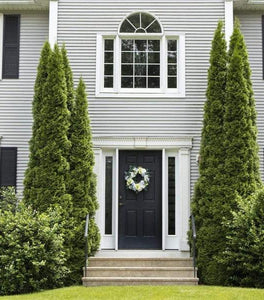
While privacy hedges are the most obvious use for American Pillar Arborvitae, its distinctive form opens up several additional landscape possibilities. A single specimen can provide a strong vertical accent at the corner of a garden bed, while a matched pair can frame an entrance or define the transition between outdoor spaces. Repeating individual trees along a long driveway creates a graceful rhythm without the wide canopy associated with many larger evergreens. Around swimming pools and outdoor entertaining areas, the cultivar offers upright evergreen screening that can make a backyard feel more secluded without enclosing it with a solid fence.
American Pillar also combines beautifully with ornamental grasses, flowering shrubs, and perennial plantings. The dark evergreen foliage provides a consistent green background that helps colorful blooms and contrasting textures stand out. Its narrow growth habit leaves room in front of the hedge for layers of lower-growing plants, allowing homeowners to create privacy and an attractive garden border in the same space. For best results, keep companion plants far enough from the trunks to avoid unnecessary competition for water, and plan for the arborvitae’s mature height so neighboring plants receive appropriate sunlight. Whether used as a living fence, foundation of a mixed border, or striking vertical specimen, American Pillar offers a useful combination of function and beauty.
A Smart Choice for Homeowners Who Want Privacy That Lasts
A successful privacy planting should look good not just during its first few years, but as the surrounding landscape matures. American Pillar Arborvitae allows homeowners to establish a long-term evergreen screen with a relatively modest footprint. Its dense branching, cold hardiness, and strong growth rate address several of the most common frustrations associated with privacy trees. Just as importantly, it provides an attractive natural alternative to a traditional privacy fence, bringing texture, greenery, and a softer visual boundary to the landscape.
Before planting, the most important considerations are sun exposure, mature spacing, soil drainage, and local deer pressure. Although American Pillar has been selected for better deer tolerance than some other arborvitae, browsing can still occur, particularly during winter. Young trees in areas with substantial deer activity benefit from protective fencing or other suitable precautions. Homeowners who give their trees the right conditions from the beginning are rewarded with a landscape investment that improves as their trees grow. For anyone searching for fast-growing privacy trees that remain tall, narrow, and attractive throughout the year, Full Speed A Hedge® American Pillar Arborvitae deserves a place near the top of the list.
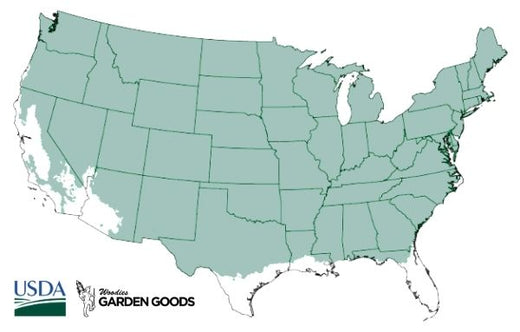
| Hardiness Zone: | 3-8 |
|---|---|
| Mature Height: | 15 to 20 Feet |
| Mature Width: | 3 to 5 feet |
| Sunlight: | Full sun to partial sun; at least 4 hours of direct sunlight |
| Foliage color: | Green in spring; dark green in summer; green through fall and winter |
| Soil Conditions: | Moist; well-drained; adaptable to several soil types |
| Water Requirements: | Regular watering during establishment; supplemental moisture during dry periods |
| Growth Rate: | Very fast under favorable conditions |
| Wildlife Value | Evergreen cover and potential shelter for birds |
| Landscape Uses | Privacy hedges; property lines; living fences; narrow screens; vertical accents |
How to Care for American Pillar Arborvitae – Full Speed A Hedge®
Follow these care and planting instructions to let your Full Speed A Hedge® American Pillar Arborvitae grow happy and healthy for years to come.

How should I plant American Pillar Arborvitae?
How should I plant American Pillar Arborvitae? Choose a location with full sun to partial sun, preferably receiving at least six hours of direct sunlight for the densest possible hedge. American Pillar Arborvitae performs best in moist, well-drained soil. Before planting, remove weeds and loosen a broad area of soil around each planting location. Dig a hole approximately twice as wide as the container but no deeper than the root ball. Carefully remove the tree from its container, loosen any tightly circling roots, and position it with the top of the root ball level with or slightly above the surrounding soil. For a continuous privacy hedge, space trees 2½ to 4 feet apart on center, depending on how quickly you want the branches to meet and how much room is available. Backfill with the original soil, water thoroughly to settle the root zone, and finish with approximately 2 inches of organic mulch, leaving a few inches of space around the trunk. Avoid burying the root flare or piling mulch against the bark. Spring and early fall are excellent planting seasons, although container-grown trees can be planted whenever the soil is workable and adequate watering is possible.

How often should I water American Pillar Arborvitae after planting?
During the first growing season, consistent root-zone moisture is essential. Water deeply immediately after planting, then check the soil regularly to determine when another thorough soaking is needed. Newly installed trees may need water several times per week during hot or windy weather, while cool temperatures and rainfall can significantly reduce that requirement. The goal is to keep the root ball evenly moist without leaving it waterlogged. A slow hose, drip irrigation system, or watering ring can help water penetrate the root zone. Once established, American Pillar Arborvitae develops some tolerance for dry conditions, but supplemental watering during prolonged drought remains important. Pay particular attention during midsummer heat and dry autumn weather. Evergreens continue losing moisture through their foliage even when growth has slowed, so entering winter with an adequately hydrated root system helps reduce winter burn. Keep mulch in place to conserve moisture, but periodically check the soil beneath it rather than assuming the roots are receiving enough water.

When should I fertilize American Pillar Arborvitae?
The most appropriate time to fertilize American Pillar Arborvitae is early spring, as new growth is beginning. If the soil is reasonably fertile and the trees are growing well, additional fertilizer may not be necessary every year. Where a soil test identifies a nutrient deficiency, use a balanced, slow-release fertilizer appropriate for evergreens, following the product label for the plant’s size and growing conditions. Apply fertilizer over the root zone rather than concentrating it against the trunk, and water thoroughly afterward. Avoid assuming that more fertilizer will automatically produce faster privacy. Excessive nitrogen can encourage soft growth and create unnecessary stress, particularly when moisture is limited. Newly planted trees should first be allowed to establish their roots, and fertilizer should not be used as a substitute for adequate watering or proper site preparation. Avoid heavy late-summer or fall applications that may encourage tender growth before freezing weather. Healthy soil, appropriate moisture, and good sunlight are the foundations of vigorous development.

When and how should I prune American Pillar Arborvitae?
American Pillar Arborvitae naturally develops a tall, narrow, columnar shape, so extensive pruning is rarely necessary. If you want to maintain a particularly uniform hedge, lightly trim the outermost growth in late winter or early spring before new growth begins. Remove dead, broken, or damaged branches whenever you notice them. For an informal privacy screen, allowing the trees to retain their natural form usually provides the most attractive result with the least maintenance. Avoid cutting deeply into the older, leafless interior of the plant because arborvitae generally will not fill in bare wood once it has been exposed. If you need to manage width, begin light shaping while the hedge is young rather than waiting until the branches become oversized. Do not remove the central leader unless you intentionally want to limit height and are prepared for ongoing maintenance. For most homeowners, correct spacing at planting is far more effective than heavy pruning later.