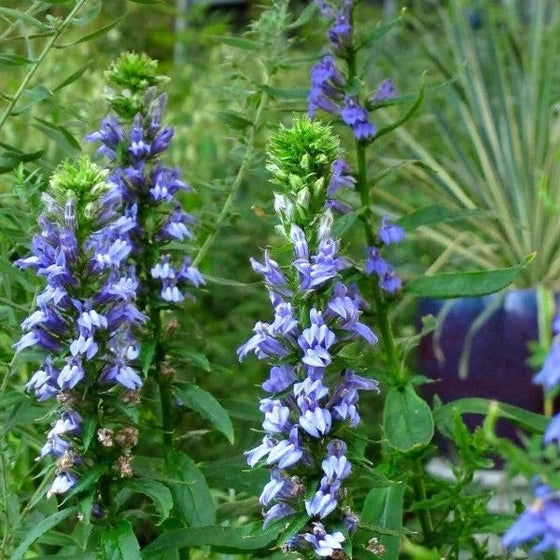
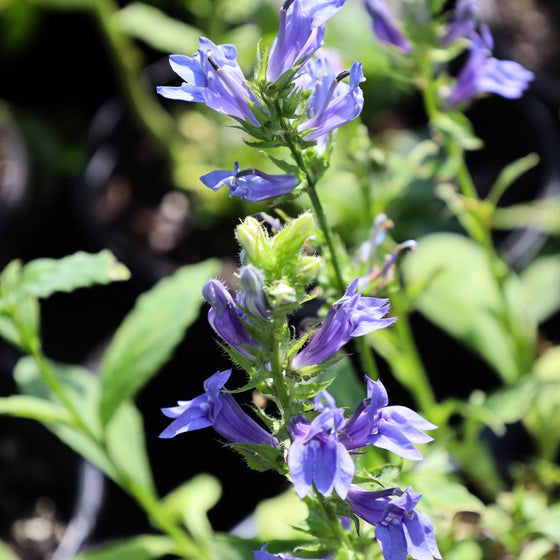
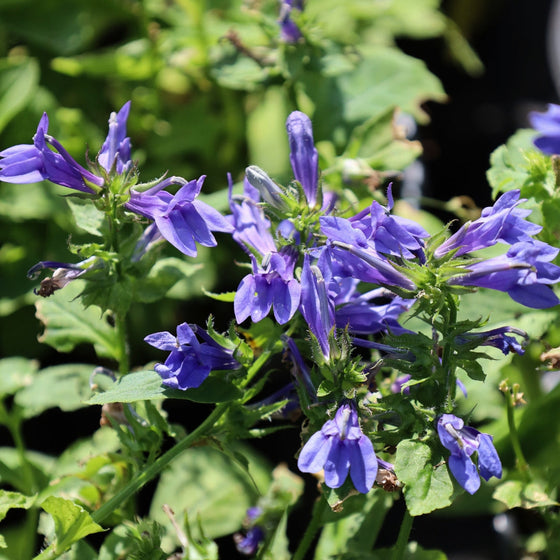
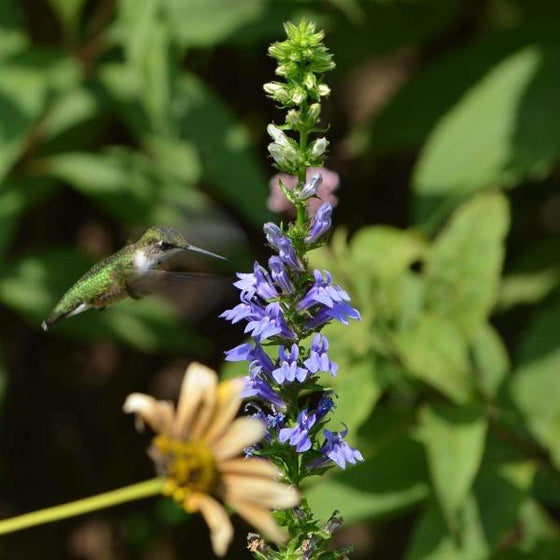
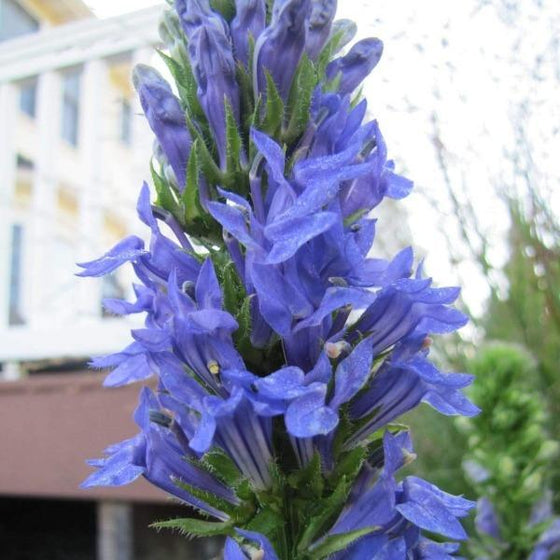


Images Depict Mature Plants
Great Blue Lobelia
Lobelia siphilitica
Great Blue Lobelia is one of the best native perennials for adding blue flowers to moist areas of the garden. I like it in rain gardens, near pond edges, and in part-shade pollinator plantings where the soil does not dry out. It brings a strong late-season color lift, supports pollinators, and pairs beautifully with cardinal flower, swamp milkweed, turtlehead, Joe Pye Weed, and native sedges.

15% OFF SITEWIDE SALE
Use Code 'PRIMETIME15' At Checkout
📦 Free shipping on orders over $99.
Delay shipping by leaving us a message at Checkout.
Share:Recommended Add-Ons


A Native Blue Lobelia for Moist Soil and Late-Season Color
Brilliant Blue Flowers for Late Summer Gardens
Great Blue Lobelia is a native herbaceous perennial known for upright spikes of blue to lavender-blue tubular flowers. Also called blue cardinal flower, this moisture-loving perennial brings cool, rich color to the garden from midsummer into early fall, right when many spring and early-summer perennials are slowing down.
The flowers are arranged along upright stems, creating a vertical accent that stands out in rain gardens, moist borders, native plantings, pond edges, streamside beds, and woodland edges. Its blue bloom color is especially valuable because true blue flowers are less common in late-season perennial gardens.
A Native Perennial with Strong Pollinator Value
Lobelia siphilitica is native across much of eastern and central North America and is well-suited to naturalized gardens, pollinator beds, and ecological landscapes. Its tubular flowers are visited by bees, butterflies, hummingbirds, and other pollinators that can reach the nectar.
Because it blooms late in the season, Great Blue Lobelia helps extend pollinator resources into the end of summer and early fall. Plant it with other moisture-loving native perennials to create a longer bloom sequence and stronger habitat value.
Perfect for Rain Gardens, Pond Edges, and Moist Borders
Great Blue Lobelia performs best in consistently moist soil. It is a natural fit for rain gardens, low spots, wet meadows, pond edges, stream banks, and moist woodland edges. It also grows well in average garden beds when watered regularly and protected from long dry spells.
Use it where the soil stays evenly moist but not stagnant. In full sun, consistent moisture is especially important. In hotter or drier sites, part shade helps keep foliage fresh and reduces stress during summer heat.
Upright Texture Without Taking Over the Garden
Great Blue Lobelia forms upright clumps that typically reach about 2–4 feet tall and 1–2 feet wide, depending on site conditions. The vertical flower spikes add structure without creating a large, woody footprint.
In favorable conditions, plants may self-seed and form natural colonies. This is a benefit in rain gardens, native plantings, and meadow-style beds, but seedlings can be thinned if more control is needed. Divide established clumps in spring if they become crowded.
Easy Care with Moisture and Seasonal Cleanup
Plant Great Blue Lobelia in full sun to part shade with fertile, moist to wet soil. It appreciates organic matter and steady moisture, especially during establishment and bloom season. Mulch can help conserve soil moisture and keep roots cool.
Cut back old stems in late winter or early spring, before new growth begins. Deadheading is optional. Leaving some flowers to set seed can help the plant reseed naturally and maintain a colony over time, which is useful because Great Blue Lobelia can behave as a shorter-lived perennial in some gardens.
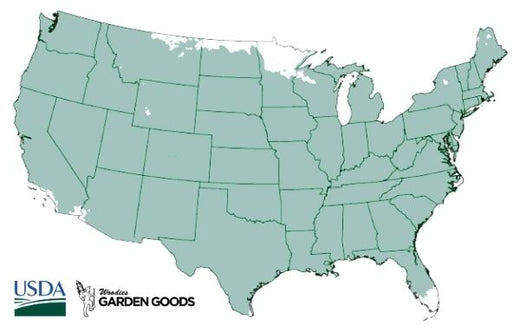
| Hardiness Zone: | 4-9 |
|---|---|
| Mature Height: | 2 to 4 Feet |
| Mature Width: | 1 to 2 Feet |
| Sunlight | Full sun to part shade; part shade is helpful in hotter or drier sites |
| Soil | Fertile, moist to wet soil; tolerates loamy, clay, and sandy soils with consistent moisture |
| Water | Water regularly after planting; prefers consistent moisture and can tolerate wet soil |
| Bloom Time / Color | Midsummer to early fall; blue to lavender-blue tubular flowers |
| Ornamental Features | Blue flower spikes, upright form, late-season bloom, native wildflower appeal |
| Wildlife Value | Attracts bees, butterflies, hummingbirds, and other pollinators |
| Resistance | Generally deer resistant; low maintenance with consistent moisture; may self-seed |
| Landscape Uses | Rain garden, pollinator garden, native garden, pond edge, streamside planting, moist meadow, woodland edge, low spot, mixed perennial border |
How to Care for Great Blue Lobelia
Be sure to read our planting instructions to ensure a healthy and happy Great Blue Lobelia plant for years to come!
-v1745249830495.png?92x91)
How should I plant Great Blue Lobelia?
Plant Great Blue Lobelia in full sun to part shade with fertile, moist to wet soil. Choose a location where the soil stays consistently moist, such as a rain garden, pond edge, streamside bed, moist meadow, woodland edge, or low spot in the landscape. Dig a hole about as wide as the root ball and just as deep. Set the crown level with the surrounding soil, backfill gently, and water thoroughly. Space plants about 12–18 inches apart for a natural clump or colony effect.
-v1745249858475.png?89x84)
How often should I water Great Blue Lobelia after planting?
Water Great Blue Lobelia deeply after planting, then keep the soil consistently moist while roots establish. During the first growing season, water whenever the top few inches of soil begin to dry. Established plants still prefer steady moisture, especially in full sun or hot weather. Great Blue Lobelia can tolerate wet soil, but it should not be allowed to dry out for long periods if you want the best flowering and foliage quality.
-v1745249885987.png?90x89)
When should I fertilize Great Blue Lobelia?
Great Blue Lobelia usually needs little fertilizer when planted in fertile, organic soil. A light spring topdressing of compost is often enough to support healthy growth and flowering. Avoid heavy fertilizing, especially with high-nitrogen products. Too much fertility can encourage soft growth. Consistent moisture and good soil organic matter are more important than frequent feeding.

When and how should I prune Great Blue Lobelia?
Cut Great Blue Lobelia back in late winter or early spring before new growth begins. Remove old stems and seed stalks to make room for fresh growth from the crown. Deadheading is optional. If you want the plant to self-seed and maintain a natural colony, leave some flowers to form seed. If you want a tidier look or less reseeding, remove spent flower spikes after bloom.