
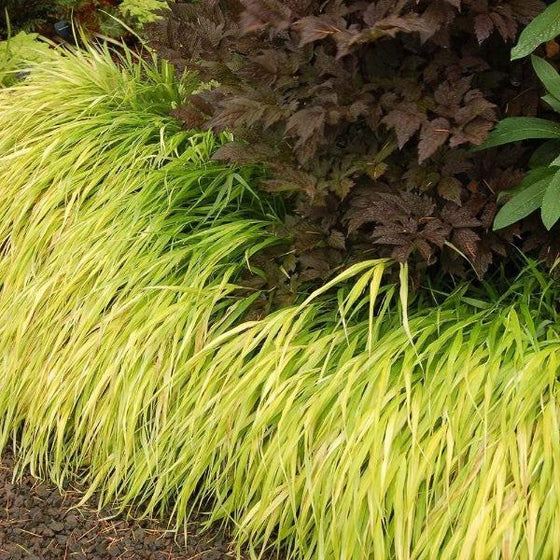


Images Depict Mature Plants
All-Gold Japanese Forest Grass
Hakonechloa macra 'All-Gold'
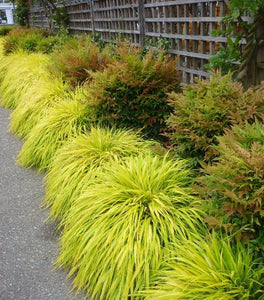
A shaded garden doesn't have to be a collection of nothing but green leaves, and All-Gold Japanese Forest Grass is one of the best plants I know for proving that. Those bright golden leaves can completely change the appearance of a planting, especially when they're next to dark Hostas, Japanese Painted Ferns, or burgundy Coral Bells. I particularly like using All-Gold along a shaded walkway or near a Japanese Maple, where its flowing foliage softens the edges of the garden. One feature I appreciate is that the leaves are predominantly golden rather than distinctly green-and-yellow striped like Aureola, so the plant gives you a more concentrated splash of color. There are two things I always tell homeowners about Japanese Forest Grass: it grows slowly, and it appreciates consistent moisture. Don't expect a small clump to fill a large bed in a single season, and don't place it in dry shade where tree roots will steal all the available water. Give it bright, filtered light, protection from hot afternoon sun, and rich, well-drained soil, and you'll have a beautiful ornamental grass that adds warmth and movement for years.
$48.41 with code NOVEMBER15 at checkout Save $8.54
📦 Free shipping on orders over $99.
Delay shipping by leaving us a message at Checkout.
Share:Recommended Add-Ons


All-Gold Japanese Forest Grass – Brilliant Golden Foliage for Beautiful Shade Gardens
All-Gold Japanese Forest Grass Brings Brilliant Golden Color to Shaded Gardens
All-Gold Japanese Forest Grass is one of the most beautiful ornamental grasses for homeowners who want to introduce brilliant foliage color into a partially shaded landscape. Its luminous golden-yellow leaves form attractive mounds that seem to brighten the garden from within, creating an effect that is especially valuable beneath trees, beside shaded walkways, and in woodland-style borders. Unlike conventional green ornamental grasses, All-Gold provides strong color without depending on a seasonal flower display. Its narrow leaves emerge in spring and gradually develop into a compact, softly flowing mound that adds movement and texture throughout the growing season. Against dark green shrubs or broad-leaved Hostas, the golden foliage creates a striking contrast that can completely change the appearance of a shaded planting.
What makes All-Gold Japanese Forest Grass especially useful is its ability to create a colorful focal point without becoming too tall or overwhelming neighboring plants. This ornamental grass stays relatively low, making it an excellent choice for the front of perennial borders, beneath smaller Japanese Maples, or alongside decorative stonework. Its graceful habit adds softness to rigid landscape features, while the bright foliage provides months of ornamental interest. The plant is also an appealing alternative to flowering annuals in partially shaded beds where long-lasting foliage color is more dependable than repeated blooms. For homeowners seeking a manageable ornamental grass that brings warmth, brightness, and natural movement into the shade garden, All-Gold is an outstanding selection.
Solid Golden-Yellow Foliage Creates Beautiful Color Without Relying on Flowers
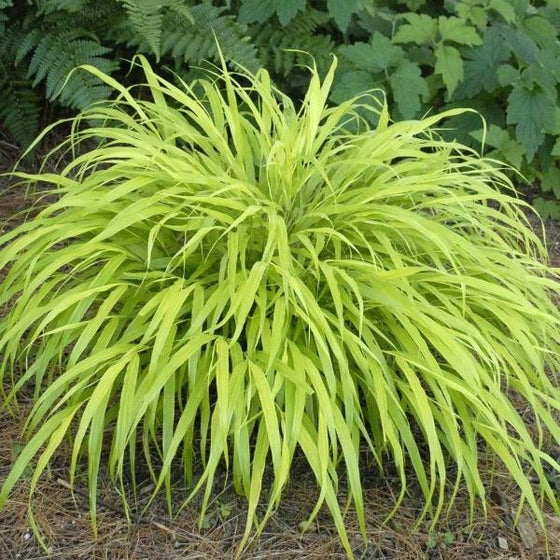
The foliage of All-Gold Japanese Forest Grass is the characteristic that truly sets it apart. Each slender leaf displays bright golden-yellow to chartreuse coloring, creating a more uniform appearance than the green-and-gold striped foliage of Aureola Japanese Forest Grass. The color is particularly effective in areas that receive bright, filtered light or gentle morning sunlight. Under these conditions, the leaves can develop an almost glowing golden appearance while remaining protected from harsh afternoon heat. In deeper shade, the foliage generally takes on softer lime-green or chartreuse tones, while too much direct summer sun can scorch the delicate leaf tips. Choosing the right light exposure is therefore important for achieving the plant's most attractive color.
Because All-Gold is grown primarily for its foliage, homeowners can enjoy ornamental interest throughout much of spring, summer, and fall rather than waiting for flowers to appear. The leaves emerge as the weather warms, gradually filling out into a colorful mound that contrasts with darker shade plants. The effect is especially dramatic when All-Gold is repeated along a garden path or planted beside dark-leaved Coral Bells. Although it produces small flowers during summer, they are relatively inconspicuous and are not the main reason to grow this plant. Its lasting golden color and fine foliage texture provide the strongest ornamental value, making All-Gold an excellent addition to gardens designed around complementary leaf colors.
Graceful Cascading Growth Softens Walkways, Borders, and Garden Edges
All-Gold Japanese Forest Grass develops a compact, slowly expanding mound of narrow, gently arching foliage. Young plants can appear somewhat more upright than certain other Japanese Forest Grass cultivars, but as the clump matures, the leaves create the recognizable flowing appearance associated with Hakone Grass. Mature plants commonly reach approximately 12–18 inches tall, with individual clumps gradually expanding to around 18–24 inches wide under favorable conditions. This manageable size makes All-Gold particularly useful in smaller residential gardens where taller ornamental grasses would crowd neighboring plants or block views of flowering perennials.
Along a shaded walkway, the leaves can gently arch toward the path's edge, softening hard lines and creating a natural transition between garden beds and stonework. All-Gold also looks beautiful near rocks, garden steps, and low retaining walls, where its cascading foliage becomes more noticeable. For an attractive border or grouped planting, space plants approximately 18–24 inches on-center, allowing the mounds to expand gradually. The plant develops slowly, so newly planted specimens may remain separated for several growing seasons before creating a more continuous display. For homeowners who want a low-growing golden ornamental grass that remains relatively easy to manage, All-Gold offers an excellent balance of foliage color, texture, and mature size.
All-Gold Japanese Forest Grass Is Perfect for Woodland Gardens and Partial Shade
Many ornamental grasses require substantial direct sunlight to grow well, but All-Gold Japanese Forest Grass thrives in the protected light conditions found in partially shaded gardens. It performs especially well in filtered sunlight, morning sun, or bright afternoon shade. These conditions encourage colorful foliage without exposing the leaves to the intense heat that can cause scorching. Beneath high-branched trees, along the eastern side of a house, or within a woodland-style perennial border, All-Gold can introduce brightness to locations where traditional flowering plants may struggle to provide continuous color. Its small stature also makes it appropriate for layering beneath taller shrubs and ornamental trees.
For the healthiest growth, plant All-Gold in fertile, organically enriched soil that remains evenly moist but drains properly. The plant is not well suited to extremely dry shade, where large tree roots compete aggressively for moisture, or locations where heavy clay remains constantly saturated. In hot summer climates, supplemental watering and protection from harsh afternoon sun help preserve attractive foliage. Although it tolerates shaded sites, very deep shade can reduce the intensity of its golden color and slow its already gradual growth. The best balance is bright, filtered light with reliable soil moisture, allowing the leaves to maintain their luminous appearance without suffering unnecessary heat stress.
Golden Foliage Creates Stunning Combinations With Hostas, Ferns, and Coral Bells
One of the greatest pleasures of growing All-Gold Japanese Forest Grass is discovering how beautifully it combines with other shade-loving plants. Its bright golden foliage creates a dramatic contrast against dark green Hostas, burgundy Coral Bells, and silvery Japanese Painted Ferns. The narrow leaves also offer a completely different texture from the broad, rounded foliage of Hostas and the delicate fronds of Ferns. This contrast makes it possible to create an interesting shade garden even when relatively few plants are flowering. For a particularly striking combination, plant All-Gold alongside Black Mondo Grass, where the nearly black leaves make the golden foliage appear even brighter.
All-Gold is equally attractive near Japanese Maples, Hellebores, Brunnera, and other plants suited to moist, partially shaded landscapes. A golden mound placed beneath a dark-leaved Japanese Maple creates a beautiful layered composition, while a grouping near blue-green Hostas provides a cooler contrasting palette. In contemporary courtyard gardens, the grass can soften stone features without distracting from a clean design. For woodland gardens, repeating several All-Gold plants creates warm ribbons of color that guide the eye through the planting. The strongest landscape combinations emphasize contrast in foliage color, leaf size, and growth habit, allowing All-Gold's golden leaves to remain a focal point throughout the growing season.
Slow, Clump-Forming Growth Makes All-Gold an Easy-to-Manage Groundcover
All-Gold Japanese Forest Grass develops a slow-growing, clump-forming habit that gradually spreads through short underground stems. Unlike aggressive ornamental grasses that race through neighboring garden beds, it typically does not overwhelm adjacent plants. This makes it useful in smaller landscapes and carefully arranged perennial borders where plant boundaries matter. Newly planted specimens often devote considerable energy to root establishment before producing noticeably more foliage. Homeowners should therefore expect gradual expansion rather than instant groundcover, particularly during the first one or two growing seasons. Once established, the clumps become fuller and provide beautiful low-growing texture.
Because the plant spreads slowly, it works best where patience and careful placement are part of the landscape design. A single specimen can provide a lovely accent, while multiple plants installed at appropriate intervals create a more substantial golden display. All-Gold also offers generally good deer resistance, which is valuable in shaded landscapes where browsing animals often damage Hostas and other broadleaf perennials. Routine maintenance is minimal when the growing conditions are suitable. Keep the soil evenly moist, remove competing weeds while the clumps establish, and avoid unnecessary heavy applications of fertilizer. With proper care, All-Gold can provide years of attractive foliage without the aggressive spreading associated with some other ornamental grasses.
Copper and Bronze Fall Color Adds a Beautiful Finish to the Growing Season
As summer gives way to autumn, the brilliant foliage of All-Gold Japanese Forest Grass gradually develops warm copper, orange, bronze, and reddish-brown tones, adding another layer of seasonal interest. The precise colors vary with temperature, sunlight, and local growing conditions, but the transition can be particularly attractive when the grass is planted near evergreen shrubs or other fall-color perennials. The warm foliage complements the autumn leaves of Japanese Maples and ornamental trees, while the soft, arching shape continues to provide movement in garden beds. This seasonal transformation is one reason All-Gold remains attractive even as many flowering perennials begin declining.
All-Gold is a deciduous perennial in most cold-winter climates, meaning its foliage eventually becomes dormant and turns tan or brown. The plant does not provide dependable golden evergreen color through winter. Some old leaves may remain attached, but they are normally removed in late winter or early spring to make room for new growth. Because Japanese Forest Grass begins active growth relatively late in spring, homeowners should not assume the plant has died when other perennials have already emerged. A light layer of mulch can help protect the crown in colder regions, but avoid burying it beneath heavy, wet material. The return of brilliant golden foliage each spring, followed by warm autumn coloration, makes All-Gold a rewarding perennial for shade gardens.
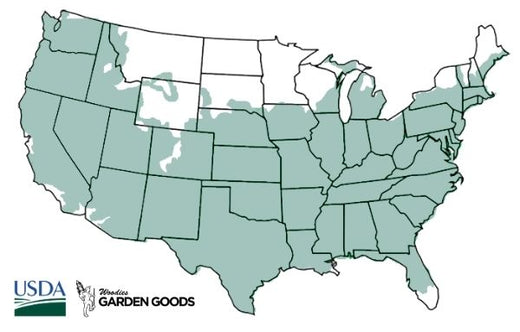
| Hardiness Zone: | 5-9 |
|---|---|
| Mature Height: | Approximately 12–18 inches |
| Mature Width: | Typically 12–18 inches; established clumps may approach 24 inches |
| Sunlight: | Partial shade and bright filtered shade preferred; morning sun tolerated; protect from intense afternoon sunlight |
| Water Requirements: | Moderate; consistent moisture preferred, particularly during establishment and summer heat |
| Soil | Humus-rich, fertile, consistently moist, well-drained soil; acidic to neutral preferred, with some pH adaptability |
| Foliage | Bright golden yellow to chartreuse |
| Ornamental Features | Brilliant golden-yellow foliage, compact cascading mounds, fine arching leaves, subtle summer flowers, copper-bronze fall coloration |
| Wildlife Value | Small ground-dwelling invertebrates may use foliage for cover |
| Resistance (deer/disease/drought/etc.) | Deer, Black Walnut, Urban Conditions; generally few serious pests and diseases; not highly drought tolerant |
| Landscape Uses | Shaded borders, woodland gardens, pathway edging, small-scale groundcover, Japanese-inspired gardens, rock gardens with adequate moisture, containers, underplanting, and shaded slopes |
How to Care for All-Gold Japanese Forest Grass
Before you buy an All-Gold Japanese Forest Grass, make sure to read the care instructions to keep this plant healthy and thriving.

How should I plant All-Gold Japanese Forest Grass?
Plant All-Gold Japanese Forest Grass in partial shade or bright filtered shade, where its golden foliage receives enough light to maintain attractive color without being exposed to intense afternoon heat. Morning sunlight is generally beneficial, particularly in cooler climates. Select a location with fertile, organically enriched, consistently moist, well-drained soil. Although Japanese Forest Grass tolerates several soil textures, it does not perform well in extremely dry conditions or heavy soil that remains waterlogged. Before planting, remove competing weeds and loosen the soil across a generous area around the planting hole. Adding compost can be useful when the existing soil lacks organic matter, but drainage should remain a priority. Dig a planting hole approximately twice as wide as the root ball and no deeper than its height. Carefully remove the grass from its nursery container and gently loosen any circling roots. Position the crown at the surrounding soil level, backfill with the prepared soil, and water thoroughly. For a border or small-scale groundcover planting, space plants approximately 18–24 inches apart on center, adjusting for their expected mature spread. Apply a light layer of organic mulch to help conserve moisture, keeping it away from the crown. Spring planting is especially beneficial in colder regions, allowing the relatively slow-growing roots time to establish before winter.

How often should I water All-Gold Japanese Forest Grass after planting?
During the first growing season, All-Gold Japanese Forest Grass requires consistent watering to establish healthy roots. Water thoroughly immediately after planting, then monitor soil moisture regularly. A general starting point is approximately 1 inch of water per week, including rainfall, adjusted according to soil texture, temperature, rainfall, and root development. Sandy soils and containers may dry more quickly, while loamy soils often hold moisture longer. The goal is to maintain evenly moist soil without creating continuously saturated conditions. Deep watering helps encourage roots to grow into the surrounding garden soil rather than remaining confined to the original nursery root ball. Once established, All-Gold still performs best with reliable moisture, particularly during hot summer weather. It is not as drought tolerant as many sunny prairie grasses, and prolonged dry conditions can cause brown leaf tips, scorching, or a decline in foliage quality. Plants growing beneath established trees may require additional watering because nearby roots compete for soil moisture. Container-grown specimens should also be checked frequently during warm weather. A light organic mulch layer can help maintain even moisture and moderate soil temperature. Consistently moist, well-drained soil is one of the most important requirements for keeping All-Gold's foliage healthy and attractive.

When should I fertilize All-Gold Japanese Forest Grass?
All-Gold Japanese Forest Grass generally needs only modest supplemental feeding when planted in fertile, organically enriched soil. A light topdressing of finished compost in spring can help maintain soil structure and nutrient availability. If a soil test identifies a deficiency, apply an appropriate balanced, slow-release fertilizer in spring as new growth begins, following the manufacturer's instructions. The plant naturally grows slowly, so limited expansion during its first few seasons should not automatically be interpreted as a fertilizer problem. Healthy roots, appropriate moisture, and filtered sunlight are more important than attempting to force rapid foliage growth. Avoid excessive nitrogen, as heavy fertilizer applications can encourage excessive soft growth without improving the plant's natural shape or long-term health. Too much fertilizer may also increase the maintenance required in mixed perennial beds. If All-Gold develops brown leaf tips, pale foliage, or poor vigor, examine sunlight exposure, soil moisture, drainage, and winter conditions before adding nutrients. In most established gardens, a modest annual compost application or no additional feeding may be sufficient. Maintain healthy soil rather than encouraging rapid growth, allowing All-Gold to develop its characteristic golden mound naturally.

When and how should I prune All-Gold Japanese Forest Grass?
All-Gold Japanese Forest Grass is a deciduous perennial grass that typically becomes dormant during winter. The best time for pruning is late winter or early spring before fresh foliage begins emerging. During fall, the leaves may develop copper, orange, or bronze coloration before turning tan or brown. Some dormant leaves remain attached through winter, providing limited texture, but the old growth should generally be removed before the next growing season. Because this plant often emerges later in spring than other shade perennials, homeowners should avoid assuming the crown has died simply because new leaves are not immediately visible. Use clean, sharp scissors or pruning shears to remove the previous season's dead foliage close to the crown without damaging emerging shoots. If portions of the plant remain healthy and green in a mild climate, remove only unattractive or damaged leaves as necessary. Avoid heavy trimming during summer because the foliage is the plant's primary ornamental feature. Mature clumps can be divided in spring when they become large enough, but division is usually unnecessary for several years because All-Gold grows slowly. A single careful spring cleanup and occasional removal of damaged leaves are generally the only pruning tasks required.