

Images Depict Mature Plants
Blue Point Juniper Spiral Topiary
Juniperus chinensis 'Blue Point'
I've always liked Blue Point Juniper Spiral Topiary because it delivers an immediate sense of elegance and structure to a landscape. There's something about a beautifully shaped spiral evergreen that makes a front entrance, patio, or formal garden look professionally designed. What really makes this plant special is the combination of dense blue-green foliage and that distinctive sculpted shape. I particularly like using matching pairs beside a front doorway or placing a single specimen where it can become a focal point. Another advantage is that you're starting with Blue Point Juniper, a tough, dependable evergreen that tolerates drought once established and is generally resistant to deer browsing. One thing I always explain to gardeners is that the spiral shape does require regular trimming to remain crisp and well defined. My recommendation is to give it full sun, excellent drainage, and make small pruning adjustments rather than cutting deeply into the foliage. For homeowners who want a striking, year-round evergreen accent that adds instant curb appeal, Blue Point Juniper Spiral Topiary is an excellent choice.
$195.46 with code NOVEMBER15 at checkout Save $34.49
📦 Free shipping on orders over $99.
Delay shipping by leaving us a message at Checkout.
Share:



Blue Point Juniper Spiral Topiary – Sculpted Blue-Green Evergreen Beauty for Elegant Entrances and Gardens
Create Instant Curb Appeal with Blue Point Juniper Spiral Topiary
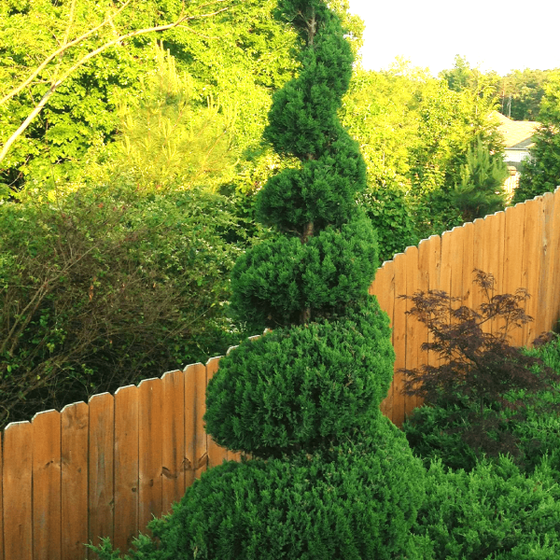
Blue Point Juniper Spiral Topiary is an exceptional evergreen accent for homeowners who want to bring professional-looking landscape design and immediate architectural beauty to their property. Its distinctive spiral form transforms the naturally dense foliage of Blue Point Juniper into a sculpted, upright evergreen with sweeping curves that spiral gracefully toward the top. Unlike traditional evergreen shrubs that rely primarily on foliage color or natural shape, this decorative topiary combines beautiful blue-green needles with a carefully maintained ornamental design. The result is an eye-catching specimen that adds sophistication to front entrances, formal gardens, patios, and prominent landscape beds.
One of the greatest advantages of purchasing an established spiral topiary is that the essential shaping has already been performed. Creating a spiral from an ordinary conical juniper requires considerable time, planning, and repeated pruning, but a professionally shaped Blue Point Juniper provides immediate visual impact. Plant it as a single focal point in a prominent garden bed, or use a matching pair to create balance around an entrance or walkway. The combination of evergreen foliage and sculpted form produces a polished landscape appearance that remains attractive even when surrounding flowering plants are dormant. For homeowners seeking a distinctive living landscape accent, this topiary offers both ornamental beauty and dependable evergreen structure.
Frame Front Entrances with Elegant Spiral Evergreen Trees
Few ornamental evergreens create the same sense of symmetry and refinement as matching Blue Point Juniper Spiral Topiary trees positioned near a front entrance. Their upright spiral forms introduce vertical interest while helping frame architectural features such as doors, porches, columns, and walkways. The blue-green foliage provides attractive contrast against brick, natural stone, painted siding, and other building materials. Unlike low-growing shrubs that form continuous masses of foliage, a spiral topiary has an open, sculptural outline that allows the individual plant to become an important part of the overall design.
For a formal entrance, place two appropriately sized spiral topiaries at equal distances from the doorway, allowing sufficient room for their mature growth and ongoing maintenance. A single topiary can also serve as an accent at the end of a walkway or beside a porch step. The spiraling foliage creates a strong visual feature without requiring additional seasonal decorations, making these evergreens especially useful for homeowners who want permanent curb appeal. When combined with low-growing flowering perennials, compact evergreen shrubs, or decorative groundcovers, Blue Point Juniper Spiral Topiary becomes the centerpiece of a coordinated landscape design that remains attractive year-round.
Enjoy Beautiful Blue-Green Evergreen Foliage in Every Season
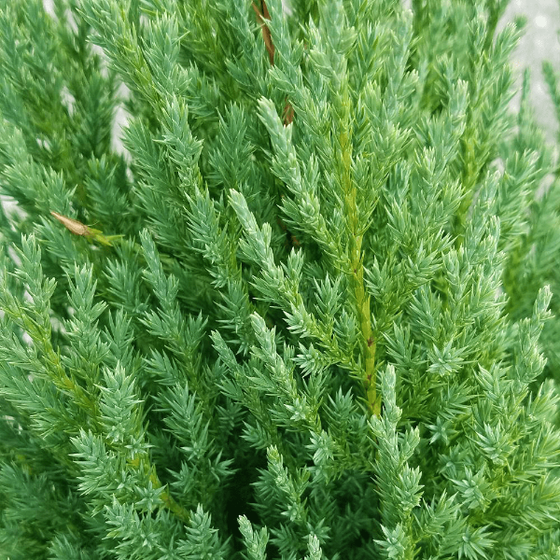
The attractive foliage color of Blue Point Juniper is one of the characteristics that makes this cultivar especially desirable for decorative topiary. Its dense, blue-green to blue-gray evergreen foliage provides a cool-toned appearance that complements a wide variety of landscape colors and materials. Unlike flowering shrubs that provide their strongest ornamental value during a limited blooming season, Blue Point Juniper remains evergreen through spring, summer, autumn, and winter. This consistency is especially valuable for spiral topiary trees because the sculpted shape remains visible even when surrounding garden plants lose their leaves.
During spring, new growth adds fresh texture to the carefully maintained spiral, while summer emphasizes the contrast between the blue-green foliage and brightly colored seasonal flowers. Autumn brings beautiful combinations with ornamental grasses, fall foliage, and flowering perennials, while winter showcases the topiary's architectural form against dormant garden beds. The combination of attractive evergreen color and an elegant spiral shape provides true four-season landscape interest. For the best foliage density and color, plant Blue Point Juniper Spiral Topiary in full sun, where its branches can develop evenly and maintain a healthy, compact appearance.
Add Architectural Beauty to Patios and Decorative Containers
Blue Point Juniper Spiral Topiary is an excellent choice for large outdoor containers, patio entrances, courtyard gardens, and decorative porch displays. Its upright sculpted form provides substantial ornamental interest without requiring a sprawling plant arrangement. A single spiral topiary can anchor a large patio planter, while matching specimens can create an elegant entrance display. The blue-green foliage looks especially attractive in dark planters, natural stone containers, and neutral-colored decorative pots, where its unusual shape becomes a prominent feature of the outdoor space.
When growing Blue Point Juniper Spiral Topiary in a container, choose a large, sturdy pot with excellent drainage and sufficient root space. Containers should be heavy enough to remain stable as the tree develops height, particularly in exposed or windy locations. Use a well-drained potting mix and water carefully, allowing the top layer to begin to dry between deep waterings. Container-grown specimens need more frequent moisture checks than plants growing directly in the ground, especially during hot summer weather. In colder regions, the exposed root system may also require winter protection. With appropriate container size, drainage, and light shaping, Blue Point Juniper Spiral Topiary creates a distinctive living accent for patios and outdoor entertaining spaces.
Grow a Deer-Resistant, Drought-Tolerant Spiral Evergreen
Beneath its decorative shape, Blue Point Juniper Spiral Topiary retains the useful growing characteristics of the hardy, adaptable Blue Point Juniper. This evergreen performs best in full sun and well-drained soil, making it an excellent choice for sunny residential landscapes. Once established, it tolerates periods of dry weather better than many moisture-loving ornamental shrubs. Its dense, somewhat prickly foliage is also generally resistant to deer browsing, providing an additional advantage for homeowners whose landscapes experience frequent deer activity.
Although established Blue Point Junipers are drought tolerant, newly planted spiral topiaries require regular watering while their roots become established. Good drainage is essential because prolonged saturated soil can damage the root system. Once established, the plant generally requires supplemental irrigation during extended drought rather than constant watering. Fertilization is usually minimal, particularly in reasonably fertile garden soil. Blue Point Juniper can also tolerate certain environmental stresses, including some salt exposure and urban conditions, but proper placement remains important. Its combination of ornamental beauty, deer resistance, and relatively modest water requirements makes this sculpted evergreen both attractive and practical for residential landscaping.
Maintain the Perfect Spiral Shape with Simple Annual Pruning
The distinguishing feature of Blue Point Juniper Spiral Topiary is its carefully sculpted spiral form, and maintaining that shape requires regular attention as the plant grows. Blue Point Juniper naturally develops a dense, broadly conical growth habit, but the spiral is created through professional pruning. As new foliage emerges, the defined curves gradually become softer and less distinct. Light trimming helps restore the clean lines and preserves the decorative appearance that makes spiral topiary so appealing. Most established specimens benefit from at least an annual shaping session, with additional light touch-ups during periods of active growth.
For the best results, trim only the youngest green foliage along the established spiral outline, using clean, sharp pruning tools. Avoid cutting deeply into old, bare interior branches because junipers generally do not produce new foliage from wood that has lost its leaves. Concentrate on maintaining the rounded spiral bands and open channels between them rather than removing large amounts of growth. Small, regular corrections are safer and more effective than infrequent severe pruning. Homeowners who enjoy maintaining formal garden features will appreciate the satisfaction of keeping their topiary beautifully sculpted, while those who prefer professional maintenance can have a landscape specialist perform seasonal touch-ups.
Design Beautiful Formal Gardens with Blue Point Spiral Juniper
Blue Point Juniper Spiral Topiary is especially valuable in formal gardens, symmetrical landscape designs, and elegant foundation plantings where distinctive plant shapes create a sense of order. Its upright spiral silhouette provides contrast against low-growing groundcovers, rounded shrubs, and broadleaf flowering plants. When repeated in a coordinated arrangement, several spiral topiaries establish rhythm and structure throughout the garden. A single specimen can also become a dramatic focal point in a circular planting bed, courtyard, or prominent lawn border.
For a more traditional landscape, combine spiral topiaries with compact boxwoods, flowering roses, or other neatly maintained ornamental shrubs. In contemporary gardens, the sculpted blue-green foliage pairs beautifully with decorative gravel, natural stone, architectural planters, and simple perennial combinations. The contrast between the curved spiral design and the straight lines of surrounding hardscaping creates a sophisticated visual effect. Because the topiary remains evergreen, its architectural contribution continues throughout winter when seasonal flowers are no longer present. For homeowners seeking a landscape feature that combines living sculpture, year-round color, and formal garden elegance, Blue Point Juniper Spiral Topiary is an exceptional ornamental choice.
**DISCLAIMER** The trees pictured are mature, professionally pruned topiaries. Plants shipped are trimmed into a spiral shape and will need to be pruned yearly once established to maintain the shape.

| Hardiness Zone: | 4-8 |
|---|---|
| Mature Height: | Approximately 10 to 12 feet under maintained landscape conditions; size can vary with training and pruning |
| Mature width: | Approximately 3 to 4 feet when maintained as a spiral |
| Sunlight: | Full sun preferred; light partial shade tolerated with reduced density possible |
| Soil | Well-drained; sandy; loamy; adaptable to clay if drainage is adequate; slightly acidic to alkaline |
| Water | Moderate during establishment; low once established in the ground |
| Wildlife Value | Provides evergreen cover and shelter value |
| Resistance (deer/disease/drought/etc.) | Deer; drought once established; salt exposure; air pollution; heat; cold; wind in suitable sites |
| Landscape Uses | Spiral topiary accents; formal gardens; entryways; matched pairs; patio containers; foundation accents; specimen trees; walkways |
How to Care for Blue Point Juniper Spiral Topiary
Be sure to read our planting instructions for Blue Point Juniper Spiral Topiary Trees to ensure a healthy and happy plant for years to come!

How should I plant Blue Point Juniper Spiral Topiary?
Choose a location that receives full sun and has well-drained soil, since these conditions encourage dense blue-green foliage and healthy root development. Dig a planting hole approximately twice as wide as the root ball but no deeper than its height. Carefully remove the topiary from its container, loosen any circling roots, and position the top of the root ball level with or slightly above the surrounding soil. Backfill using the original soil, gently firm it, and water thoroughly. Avoid planting too deeply or in areas where water regularly collects. For matching entrance plantings, carefully measure the distance from doorways, walkways, and surrounding landscape features so the topiaries appear symmetrical. Allow approximately 4 to 6 feet or more between separate specimens, adjusting for their intended mature size and the space needed for future trimming. Apply 2 to 3 inches of organic mulch around the root zone, keeping it away from the trunk. Provide adequate clearance for the spiral's finished outline and ensure that nearby plants do not crowd the lower branches.

How often should I water Blue Point Juniper Spiral Topiary after planting?
Newly planted Blue Point Juniper Spiral Topiary requires regular, deep watering during establishment. Water thoroughly immediately after planting, then check the surrounding root-zone soil several times each week during the first growing season. Irrigate when the upper few inches begin to dry, adjusting for rainfall, temperature, and drainage. Plants in sandy soils or exposed locations may need more frequent watering than those growing in moisture-retentive loam. Avoid keeping the soil constantly saturated because excessive moisture can encourage root problems. Once established, Blue Point Juniper becomes notably drought tolerant and generally needs supplemental watering only during extended dry periods. Deep watering is preferable to frequent shallow irrigation because it encourages roots to grow into the surrounding soil. Container-grown topiaries require additional attention because the limited root volume can dry out quickly, particularly during hot or windy weather. Check container drainage regularly and avoid allowing water to collect beneath the pot. Consistent establishment care helps preserve healthy foliage and the dense growth needed to maintain the spiral design.

When should I fertilize Blue Point Juniper Spiral Topiary?
Blue Point Juniper Spiral Topiary generally requires little fertilizer when planted in suitable garden soil. If a soil test reveals a nutrient deficiency or the plant demonstrates unusually weak growth, apply a balanced, slow-release fertilizer formulated for evergreen trees in early spring. Follow the manufacturer's directions and avoid placing concentrated fertilizer directly against the trunk. Healthy, established plants often need no routine supplemental feeding when sunlight, moisture, and drainage are adequate. Avoid excessive nitrogen fertilizer because it can encourage rapid, soft foliage growth that makes the spiral shape more difficult to maintain. A topiary is intended to grow steadily and remain dense rather than develop unusually long shoots. Excessive feeding may increase the amount of seasonal trimming required without improving overall plant health. In most landscapes, proper watering during establishment and maintaining well-drained soil are more important than frequent fertilization.

When and how should I prune Blue Point Juniper Spiral Topiary?
The best time for major maintenance of the spiral is late winter to early spring, with light corrective trimming as needed during the growing season. Begin by examining the existing spiral shape and identifying shoots that extend beyond the established curves. Use clean, sharp pruning shears to shorten only the newest foliage, following the original spiral outline. Work gradually from the top downward, preserving the full, rounded bands of green growth and the open channels between them. Never cut deeply into old, leafless juniper wood, because those areas generally do not produce new foliage. Severe pruning can create permanent bare patches and damage the spiral design. Instead, make small, regular adjustments to maintain the sculpted appearance. Annual shaping is typically necessary, and particularly vigorous plants may benefit from additional light touch-ups. Avoid heavy pruning late in the growing season, when tender regrowth could be vulnerable to winter conditions. Regular, careful maintenance preserves the appearance of this distinctive evergreen topiary.