


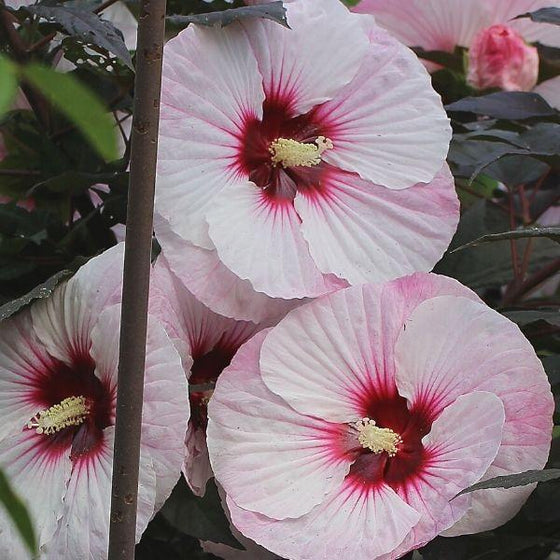
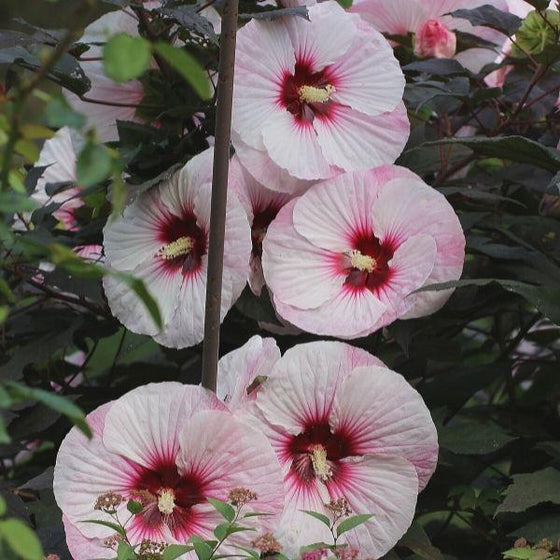


Images Depict Mature Plants
Summerific® Perfect Storm Hibiscus
Hibiscus 'Perfect Storm'
Perfect Storm Hibiscus gives you the drama of a tropical plant with the staying power of a hardy perennial. The dark foliage sets off the pale pink and white flowers beautifully, and the blooms are large enough to stop people in their tracks. I like it in sunny borders, rain garden edges, and large containers where it can get steady moisture and show off as a summer focal point. Just remember that hardy hibiscus is late to wake up in spring, so give it time.

20% Off Sitewide Sale!
Use Code 'CLOSEOUT20' At Checkout
📦 Free shipping on orders over $99.
Delay shipping by leaving us a message at Checkout.
Share:Recommended Add-Ons


Huge Pink-White Blooms with Dramatic Dark Foliage
Large Tropical-Style Flowers on a Hardy Perennial.
Summerific® Perfect Storm Hibiscus delivers the oversized bloom power gardeners expect from hardy hibiscus in a more compact, garden-friendly form. Its huge flowers open white to pale pink with a deep rosy-red eye and pink veining that radiates across the petals. Each bloom lasts only a short time, but the plant continues to produce fresh flowers through the summer, creating a bold, tropical-looking display on a cold-hardy perennial.
Dark Foliage for Strong Garden Contrast.
The dark purple to near-black foliage is one of the standout features of Perfect Storm Hibiscus. Its deeply colored leaves create a dramatic backdrop for the pale flowers, making the blooms look even brighter from a distance. This contrast gives the plant value before and after individual flowers open, making it useful as both a foliage accent and a flowering focal point in sunny beds.
A Compact Summerific® Hibiscus with Big Presence.
Perfect Storm is more compact than many older hardy hibiscus selections, typically growing about 3 to 4 feet tall and 4 to 5 feet wide. Its broad, mounding habit gives it enough size to anchor a perennial border, but it remains manageable for smaller landscapes. Use it as a specimen perennial, back-of-border accent, large container feature, rain garden plant, cottage garden highlight, or poolside summer color plant.
Moisture-Loving, Heat-Tolerant Summer Performance.
This hardy hibiscus grows best in full sun to part sun with moist, well-drained soil. It can also tolerate wetter soils and heavy clay better than many flowering perennials, making it a strong choice for rain gardens, low spots, pond edges, and moisture-retentive borders. Consistent watering is important during the heat and bloom season because large hibiscus leaves and oversized flowers need steady moisture to look their best.
Deer-Resistant Color for Pollinator Gardens.
Perfect Storm Hibiscus is considered deer-resistant and attracts hummingbirds, butterflies, bees, and other pollinators. It is a strong choice for gardeners who want bold summer flowers with wildlife value and lower browsing pressure. Like other hardy hibiscus, it dies back to the ground in winter and emerges late in spring, so mark the planting location and be patient before assuming it did not return.
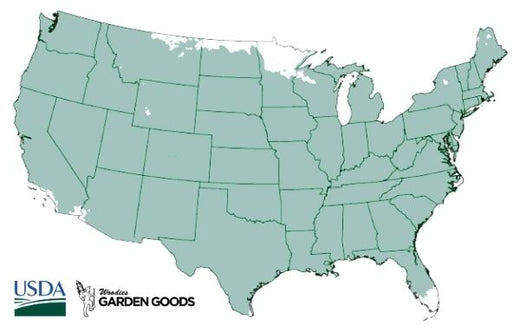
| Hardiness Zone: | 4-9 |
|---|---|
| Mature Height: | 3 to 4 Feet |
| Mature Width: | 4 to 5 Feet |
| Sunlight: | Full sun to part sun; best foliage color and bloom in full sun |
| Soil | Moist, well-drained soil; tolerates wet soil and heavy clay when properly sited |
| Water Requirements: | Average to wet; keep consistently moist, especially during heat and bloom |
| Bloom Time / Color | Mid-summer to fall; large white to pale pink flowers with a deep rosy-red eye |
| Foliage: | Dark purple to near-black, glossy foliage |
| Ornamental Features | Huge bicolor flowers, dark foliage, compact mounding habit, tropical-style summer color |
| Wildlife Value | Attracts hummingbirds, butterflies, bees, and pollinators |
| Resistance | Deer resistant, heat tolerant, wet soil tolerant, heavy clay tolerant with adequate moisture |
| Landscape Uses | Specimen perennial, sunny borders, rain gardens, large containers, focal points, pollinator gardens, cottage gardens, poolside plantings, back-of-border plantings |
How to Care for Summerific® Perfect Storm Hibiscus
Before you purchase your Summerific® Perfect Storm Hibiscus, be sure to read the recommended care instructions to ensure your plant remains happy and healthy for years to come!
-v1778605741434.png?92x91)
How should I plant Perfect Storm Hibiscus?
Plant Perfect Storm Hibiscus in full sun to part sun where it has enough room to develop into a broad, mounded perennial. Full sun encourages the darkest foliage, strongest stems, and heaviest bloom display. Choose moist, well-drained soil, or plant it in a moisture-retentive bed where the roots will not dry out for long periods. Dig a hole about twice as wide as the root ball and just as deep. Set the crown level with the surrounding soil, backfill gently, and water thoroughly. Add a 2- to 3-inch mulch layer around the root zone to conserve moisture and protect the crown, keeping mulch slightly pulled back from the stems.
-v1778605769794.png?89x84)
When Should I Prune My Hibiscus Summerific Perfect Storm Plants?
Water Perfect Storm Hibiscus deeply after planting and keep the soil evenly moist through the first growing season. Hardy hibiscus has large leaves and oversized flowers, so steady moisture is important for strong growth, good foliage color, and reliable blooming. Water when the top few inches of soil begin to dry. Once established, Perfect Storm still performs best with consistent moisture, especially during hot weather and active bloom. Container-grown plants may need more frequent watering than in-ground plants. Avoid repeated drought stress, which can cause wilting, leaf scorch, smaller flowers, and reduced bloom quality.
-v1778605785840.png?90x89)
When should I fertilize Perfect Storm Hibiscus?
Fertilize Perfect Storm Hibiscus in spring once new growth begins. Use a balanced slow-release fertilizer or a fertilizer formulated for flowering perennials. This supports vigorous stems, dark foliage, and large summer flowers. A second light feeding in early summer may help support continued bloom in nutrient-poor soils. Avoid excessive high-nitrogen fertilizer, which can encourage leafy growth at the expense of flowers. Consistent moisture, full sun, and healthy soil are just as important as fertilizer for strong hibiscus performance.

When and how should I prune Perfect Storm Hibiscus?
Prune Perfect Storm Hibiscus in spring by cutting back the previous year’s dead stems before or just as new growth begins. Hardy hibiscus dies back naturally in winter, so removing old stems helps clean up the planting and make room for fresh growth. During the growing season, remove broken or damaged stems as needed. Deadheading is optional, but removing spent blooms can keep the plant looking tidy. Be patient in spring, because hardy hibiscus often emerges later than many other perennials, then grows rapidly once warm weather arrives.


