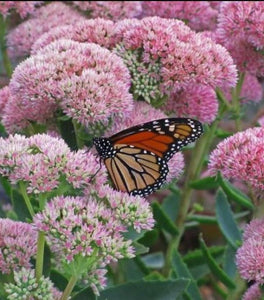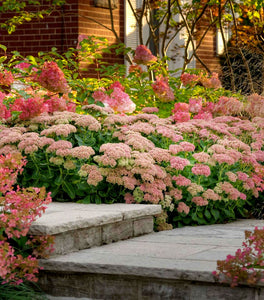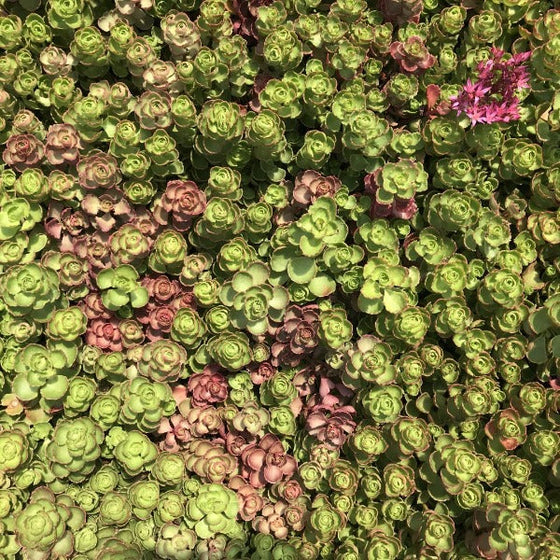
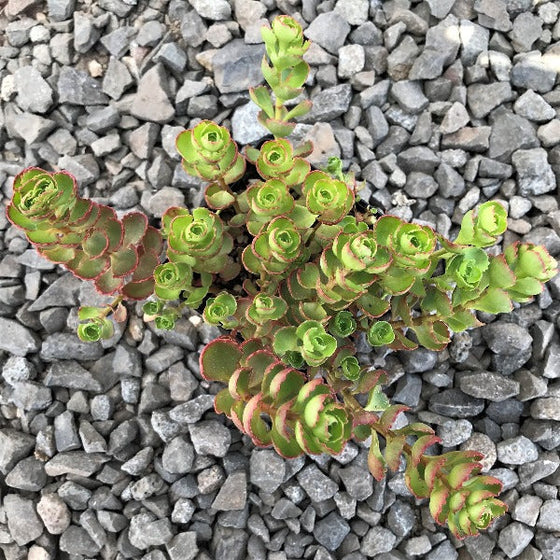
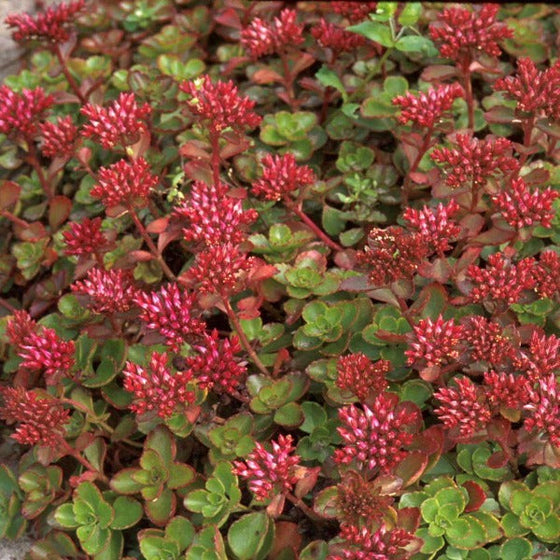


Images Depict Mature Plants
Fuldaglut Sedum
Sedum spurium 'Fuldaglut'
Fuldaglut Sedum is a great pick when you need a tough, colorful groundcover for sunny spots that stay on the dry side. The red-bronze foliage gives it more personality than a basic green filler, the ruby summer flowers help feed pollinators, and the drought tolerance makes it especially useful in rock gardens, edging, and low-water perennial beds.

15% OFF SITEWIDE SALE
Use Code 'PRIMETIME15' At Checkout
📦 Free shipping on orders over $99.
Delay shipping by leaving us a message at Checkout.
Share:Recommended Add-Ons



A Red-Toned Sedum Groundcover for Sunny, Low-Maintenance Color
Rich Red Foliage in a Low-Growing Groundcover
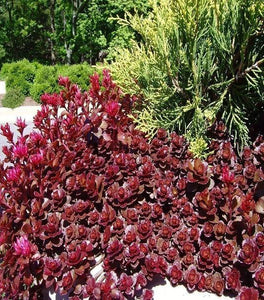
Fuldaglut Sedum is a colorful, mat-forming stonecrop grown for its red-bronze foliage, low spreading habit, and reliable performance in sunny, dry garden spaces. This low-growing perennial forms a tight carpet of fleshy leaves that can shift from green-bronze to deeper burgundy and red tones, especially with strong sun and cooler seasonal temperatures.
Unlike upright sedums used for height in perennial borders, Fuldaglut stays close to the ground and spreads outward, making it a smart choice for gardeners who want colorful coverage without a tall plant. It brings year-round texture in mild climates and long seasonal interest in colder regions, where the foliage color intensifies before winter dormancy.
Ruby Summer Flowers Over Colorful Succulent Foliage
In summer, Fuldaglut Sedum produces clusters of small, star-shaped red to ruby-red flowers that sit just above the foliage. The blooms add a bright seasonal layer over the already colorful leaves and help draw attention to edging, rock gardens, slopes, and sunny container plantings.
The combination of red-toned foliage and summer flowers gives Fuldaglut more visual impact than a plain green groundcover. Its foliage remains attractive before and after bloom, making it useful even when flowers are not present. This makes it especially valuable in small-space gardens where every plant needs to contribute more than one season of interest.
Ideal for Rock Gardens, Edging, Slopes, and Dry Sunny Beds
Fuldaglut Sedum excels in places where many traditional perennials struggle. Use it along walkway edges, between stones, in rock gardens, on sunny slopes, near retaining walls, or at the front of dry perennial borders. Its spreading habit helps soften hard edges and create a colorful living carpet in well-drained areas.
This sedum is also a strong choice for containers and trough gardens, where its low habit can spill gently over edges. Plant it in groups for a stronger color effect, or weave it between other sun-loving perennials to add ground-level contrast. It is best used where light foot traffic is minimal, as the succulent stems and leaves are not meant for heavy foot traffic.
Deer Resistant, Drought Tolerant, and Pollinator Friendly
Fuldaglut Sedum is drought-tolerant once established, making it a practical choice for dry sunny landscapes, rock gardens, and low-water planting areas. Its succulent foliage stores moisture, helping the plant handle heat and short dry spells better than many softer groundcovers.
This stonecrop is also generally considered deer resistant, though deer browsing can vary by location and pressure. When in bloom, the small star-shaped flowers attract bees, butterflies, and other beneficial pollinators, adding ecological value to its ornamental groundcover role. For gardeners building drought-tolerant or pollinator-friendly beds, Fuldaglut Sedum offers color, resilience, and seasonal usefulness in one compact plant.
Simple Care for Sunny, Well-Drained Spaces
Plant Fuldaglut Sedum in full sun for the best red foliage color, strongest growth, and heaviest flowering. It can tolerate some light shade, but too much shade may reduce flowering and cause greener, less vivid foliage. Well-drained soil is essential. Avoid planting it in wet, heavy, or compacted soil where roots may stay too moist.
Water regularly after planting until the roots establish, then reduce watering. Once established, Fuldaglut prefers drier conditions and usually needs little supplemental water except during extended drought or when grown in containers. Fertilizer is rarely needed, and heavy feeding can lead to weaker growth. Trim lightly after flowering or as needed to keep the plant within bounds.
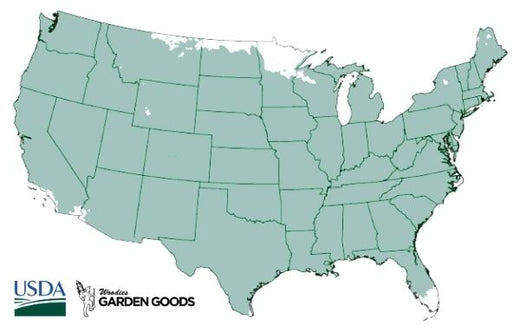
| Hardiness Zone: | 4-9 |
|---|---|
| Mature Height: | 2 to 4 inches |
| Mature Width: | 12 to 18 inches |
| Sunlight: | Full sun; tolerates light shade, with best color and bloom in full sun |
| Soil | Dry to medium, well-drained soil; performs well in lean, sandy, gravelly, or rocky soils |
| Water | Water regularly after planting; drought-tolerant once established |
| Bloom Time / Color | Summer; red to ruby-red star-shaped flowers |
| Foliage: | Semi-evergreen in mild climates; may die back or thin in colder winters |
| Ornamental Features | Red-bronze foliage, low mat-forming habit, ruby summer flowers, colorful groundcover effect |
| Wildlife Value | Attracts bees, butterflies, and beneficial pollinators when in bloom |
| Resistance | Generally deer resistant; drought tolerant once established; tolerant of heat, dry soil, and rocky soil |
| Landscape Uses | Groundcover, edging, rock gardens, slopes, containers, stone walls, sunny borders, green roof-style plantings |
How to Care for Fuldaglut Sedum
Before you buy a Fuldaglut Sedum, make sure to read the care instructions required and recommended to keep this plant healthy and thriving.

How should I plant Fuldaglut Sedum?
Plant Fuldaglut Sedum in a sunny location with well-drained soil. This low-growing stonecrop performs best in lean, sandy, gravelly, or rocky soil where water drains quickly. If your soil is heavy clay or stays wet after rain, improve drainage before planting or use Fuldaglut in a raised bed, container, rock garden, or slope. Dig a hole slightly wider than the root ball and set the plant so the crown sits level with the surrounding soil. Backfill gently and water well to settle the roots. Space plants about 9–12 inches apart for quicker coverage or farther apart if you want them to fill in gradually.

How often should I water Fuldaglut Sedum after planting?
Water Fuldaglut Sedum thoroughly after planting, then keep the soil lightly moist while the roots establish. During the first growing season, check the soil regularly and water when the top few inches feel dry, especially during hot weather or if the plant is growing in a container. Once established, Fuldaglut Sedum is drought-tolerant and prefers drier conditions over wet soil. Avoid frequent watering unless the weather is extremely hot and dry. Overwatering is one of the most common problems with sedum and can lead to soft growth, rot, or decline.

When should I fertilize Fuldaglut Sedum?
Fuldaglut Sedum usually needs little to no fertilizer when planted in the ground. It naturally performs well in lean soils, and too much fertilizer can encourage softer, less compact growth. If growth seems weak in very poor soil, apply a light layer of compost or a mild slow-release fertilizer in spring. Avoid heavy feeding, especially in containers or rich garden beds, because Fuldaglut looks best when grown on the lean side with strong sun and good drainage.

When and how should I prune Fuldaglut Sedum?
Prune Fuldaglut Sedum lightly after flowering if you want to tidy the plant or keep it from spreading beyond its intended space. Use clean shears to trim back stray stems and shape the mat without cutting too deeply into the crown. In early spring, remove any winter-damaged or tired-looking foliage to refresh the planting. Groundcover sedums do not need heavy annual pruning, but occasional trimming helps maintain a neat edge along walkways, containers, stone walls, or garden borders.