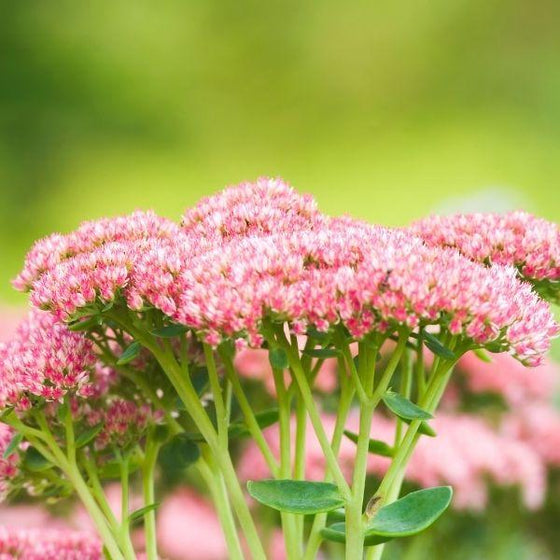
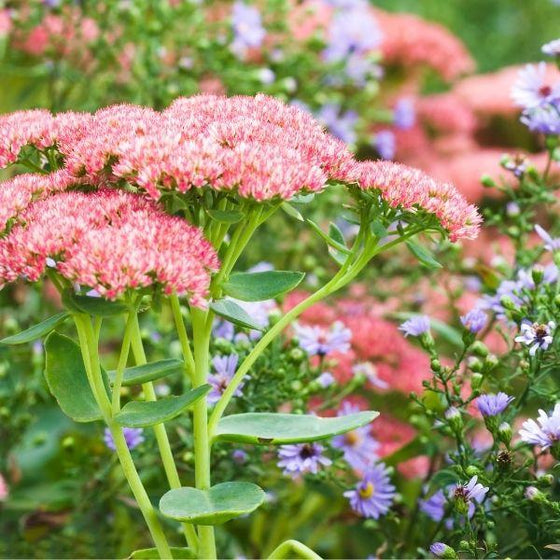


Images Depict Mature Plants
Autumn Fire Sedum
Hylotelephium spectabile 'Autumn Fire'
Autumn Fire Sedum is one of those perennials that earns its keep from summer into winter. The upright habit gives sunny borders dependable structure, the rosy fall flowers bring in pollinators, and the drought tolerance makes it a practical choice for gardeners who want beauty without constant watering. Plant it in groups where the late-season color can really show off.

15% OFF SITEWIDE SALE
Use Code 'PRIMETIME15' At Checkout
📦 Free shipping on orders over $99.
Delay shipping by leaving us a message at Checkout.
Share:



A Fall-Blooming Sedum Built for Color, Structure, and Easy Care
Rosy Fall Flowers on a Strong Upright Perennial
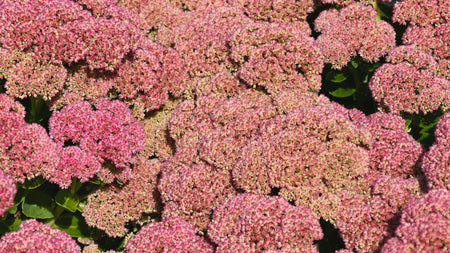
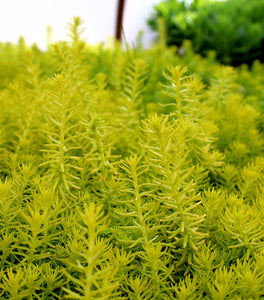
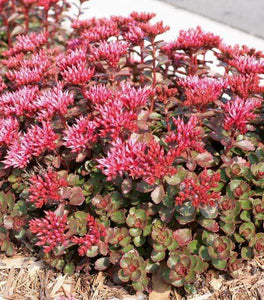
Autumn Fire Sedum is a dependable upright stonecrop prized for its late-season flower color, sturdy habit, and low-maintenance performance in sunny landscapes. This clump-forming perennial produces thick, succulent green foliage topped with broad clusters of rosy pink flowers that deepen as the season progresses. It brings fresh color to the garden as many summer perennials begin to fade.
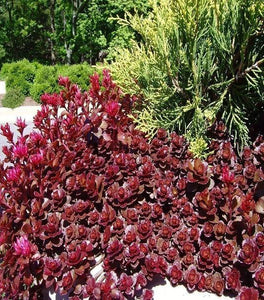
Unlike low-growing sedums used as spreading groundcovers, Autumn Fire Sedum grows as a more upright, mounded perennial. Its strong stems and compact shape make it especially useful in perennial borders, foundation plantings, pollinator gardens, and mixed beds where gardeners want structure, texture, and fall bloom without constant upkeep.
Late Summer Blooms That Age Beautifully Into Fall
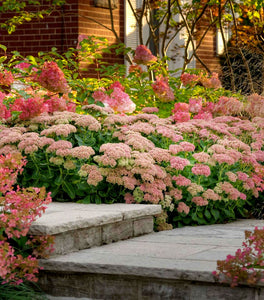
The flower show begins in late summer and continues into fall, with tight clusters of star-shaped blooms held above fleshy green foliage. The rosy pink flowers gradually mature into deeper rose, copper, and bronze tones, giving the plant a natural seasonal transition that pairs beautifully with ornamental grasses, Black Eyed Susans, asters, salvia, Russian sage, and other late-season perennials.
Even after bloom, Autumn Fire Sedum continues to earn its space. The dried flower heads can be left standing into winter for added texture and structure, especially in naturalistic gardens and mixed perennial beds. This extended interest makes it a smart choice for gardeners who want a plant that looks good beyond its main bloom window.
A Smart Choice for Borders, Rock Gardens, and Sunny Foundation Beds
Autumn Fire Sedum works well wherever sunny, well-drained planting space needs dependable color and texture. Use it near the front or middle of perennial borders, along walkways, in cottage gardens, in pollinator plantings, or in rock gardens where its succulent foliage and drought tolerance can shine. Its upright habit also makes it useful as a repeating plant to create rhythm through a landscape bed.
This perennial is especially effective when planted in groups. A small mass of Autumn Fire Sedum creates a stronger late-season color block than a single plant, while still maintaining a neat, manageable footprint. Its rounded form helps soften hardscape edges, fill sunny gaps, and bridge the transition between summer bloomers and fall garden interest.
Pollinator-Friendly, Deer Resistant, and Drought Tolerant Once Established
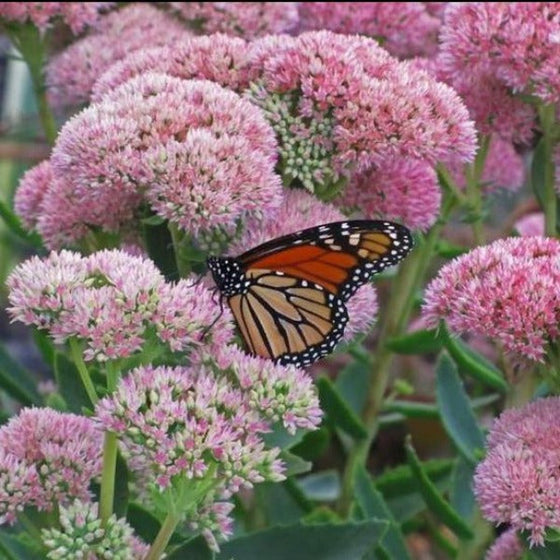
Autumn Fire Sedum is a strong pollinator plant, attracting bees, butterflies, and other beneficial insects during the late summer and fall bloom season. Because it flowers when many earlier perennials are finishing, it helps extend nectar availability in the garden and supports a more active pollinator-friendly landscape.
This sedum is also valued for its toughness. Once established, it is drought-tolerant and performs well in average to lean soils with good drainage. It is generally considered deer resistant, though browsing can vary by location and pressure. For homeowners dealing with dry sunny beds, slopes, rock gardens, or low-maintenance borders, Autumn Fire Sedum offers a practical mix of beauty and resilience.
Easy Placement and Simple Seasonal Care
Plant Autumn Fire Sedum in full sun for the strongest stems, best flowering, and richest color. It can tolerate some light shade, especially in very hot climates, but too much shade or overly rich soil may cause weaker, floppier growth. Well-drained soil is essential because sedums dislike sitting in wet, heavy conditions.
Water regularly after planting to help roots establish, then reduce watering once the plant is settled. Avoid overfertilizing, as excess nutrients can encourage soft growth. Cut stems back in late winter or early spring before new growth emerges, or leave the dried flower heads standing through winter for extra texture and seasonal interest.
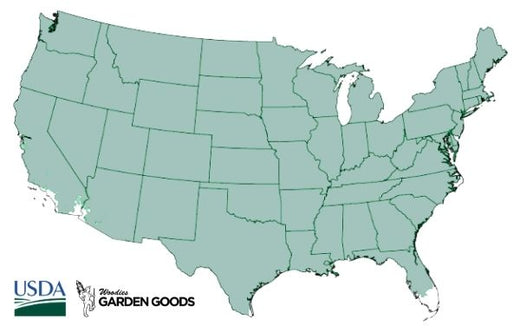
| Hardiness Zone: | 3-9 |
|---|---|
| Mature Height: | 18 to 24 Inches |
| Mature Width: | 18 to 24 Inches |
| Sunlight: | Full sun; tolerates light shade, with best flowering in full sun |
| Soil | Average to lean, well-drained soil; avoid soggy conditions |
| Water | Water regularly after planting; drought tolerant once established |
| Bloom Time / Color | Late summer to fall; rosy pink flowers aging to deeper rose, copper, or bronze tones |
| Ornamental Features | Rosy flower clusters, upright habit, succulent foliage, fall color, winter seed head interest |
| Wildlife Value | Attracts bees, butterflies, and beneficial pollinators |
| Resistance | Generally deer resistant; drought tolerant once established; tolerant of heat and lean soils |
| Landscape Uses | Perennial borders, pollinator gardens, rock gardens, cottage gardens, sunny foundation beds, mass plantings, containers |
How to Care for Autumn Fire Sedum
Be sure to read our planting instructions to ensure a healthy and happy Autumn Fire Sedum for years to come!
-v1781104388385.png?92x91)
How should I plant Autumn Fire Sedum?
Plant Autumn Fire Sedum in a sunny location with well-drained soil. Choose a spot that receives at least 6 hours of direct sun for the strongest stems and best flower production. If your soil is heavy clay or stays wet after rain, improve drainage by mixing in compost, pine fines, or mineral material such as expanded shale or gravel, depending on your local soil needs. Dig a hole about twice as wide as the root ball and just as deep. Set the plant so the top of the root ball sits level with the surrounding soil, backfill gently, and water well to settle the roots. Space plants about 18–24 inches apart to allow room for their mature clumping habit.
-v1781104411756.png?89x84)
How often should I water Autumn Fire Sedum after planting?
Water Autumn Fire Sedum thoroughly after planting, then keep the soil lightly moist while the root system establishes. During the first growing season, check the soil regularly and water when the top few inches feel dry. New plants need more consistent moisture than established sedums, especially during hot or dry weather. Once established, Autumn Fire Sedum is drought tolerant and usually needs less supplemental watering than many flowering perennials. Avoid frequent shallow watering or soggy soil, as excess moisture can lead to weak growth or root problems. Containers may dry faster and should be checked more often.
-v1781104428198.png?90x89)
When should I fertilize Autumn Fire Sedum?
Fertilize Autumn Fire Sedum lightly in spring if needed, using a balanced slow-release fertilizer or a thin layer of compost around the base of the plant. In many garden soils, this perennial performs well with little to no added fertilizer. Avoid heavy feeding, especially in rich soils. Too much fertilizer can encourage soft, floppy growth and reduce the strong upright habit that makes Autumn Fire Sedum valuable in the landscape. Leaner, well-drained soil often produces sturdier plants.

When and how should I prune Autumn Fire Sedum?
Prune Autumn Fire Sedum in late winter or early spring before new growth begins. Cut the old stems back close to the ground once the dried flower heads have finished providing winter interest. This clears the way for fresh spring growth and keeps the plant tidy. You can also pinch or lightly cut back stems in late spring if you want a shorter, fuller plant, though this may delay bloom slightly. During the growing season, deadheading is optional. Many gardeners leave the fading flower heads in place because they add texture and seasonal color as they age.