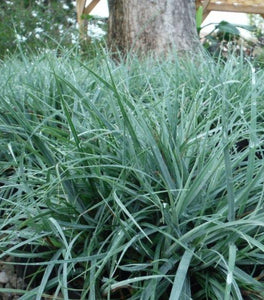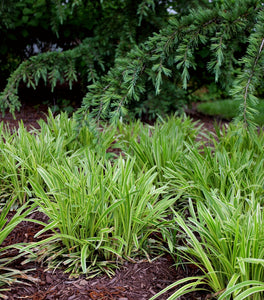

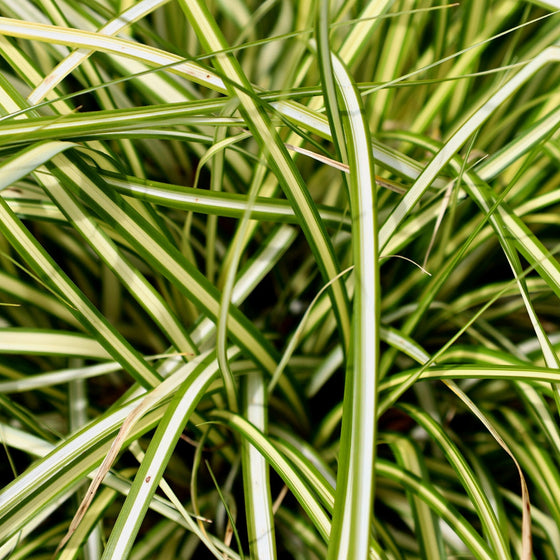
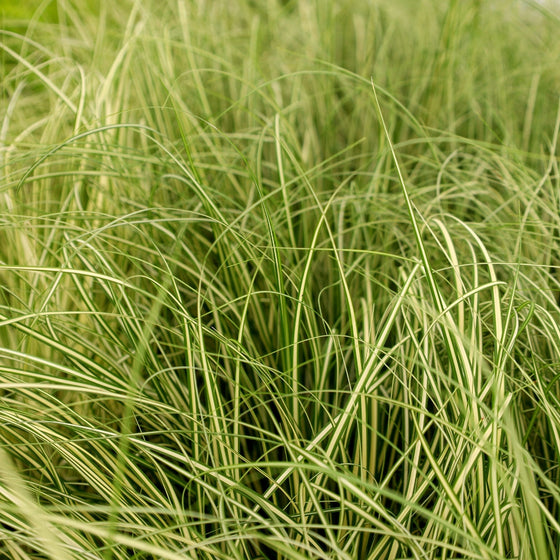


Images Depict Mature Plants
Evergold Carex
Carex oshimensis "Evergold'
Evergold Carex is the kind of plant I use when a shaded garden needs a little brightness without adding another flowering perennial. The creamy-yellow stripe running down each leaf, framed by dark green edges, gives it a really attractive appearance, especially against Hostas, Ferns, and dark-leaved Coral Bells. I like repeating several Evergold plants along a shaded walkway, where their arching leaves soften the edge of the path and create a consistent ribbon of color. It's also excellent in containers because the foliage spills gently outward without getting too large. One thing I'd emphasize is that Evergold is not the same as Everillo. Evergold has a distinct gold-and-green striped appearance, while Everillo offers a more solid golden color. Give Evergold bright shade, consistent moisture, and protection from hot afternoon sun, particularly in warmer areas. I also recommend leaving healthy evergreen foliage alone and trimming only what's damaged after winter. For homeowners who want a compact, deer-resistant ornamental sedge that brings lasting color to a shaded landscape, Evergold is a very useful plant.
$28.01 with code NOVEMBER15 at checkout Save $4.94
📦 Free shipping on orders over $99.
Delay shipping by leaving us a message at Checkout.
Share:



Evergold Carex – Beautiful Golden-Striped Foliage for Shade Gardens
Evergold Carex Brightens Shade Gardens With Beautiful Gold-and-Green Foliage
Evergold Carex is one of the most attractive ornamental sedges for homeowners who want to introduce bright foliage color into partially shaded landscapes. Its narrow, arching leaves display creamy-yellow central stripes surrounded by deep green margins, creating a beautiful variegated pattern that stands out against darker garden plants. Unlike flowering perennials that provide color for only part of the season, Evergold delivers its ornamental appeal through foliage that remains attractive for much of the year. The leaves rise from a dense central clump before cascading gracefully outward, creating a soft mound that adds natural movement to the garden. Whether planted beside a shaded walkway, beneath ornamental shrubs, or in decorative containers, Evergold provides a bright, finished appearance without requiring large amounts of space.
What makes this selection particularly valuable is its ability to add long-lasting color and fine foliage texture where many sun-loving ornamental grasses struggle. The golden center stripes catch available light and create a beautiful contrast with the rich green leaves of Hostas, Ferns, and evergreen shrubs. In a small garden, one Evergold plant can provide an attractive accent, while multiple plants repeated along a border create a stronger visual effect. Its compact growth and relatively simple maintenance make it useful for homeowners who appreciate colorful gardens but prefer not to rely entirely on seasonal flowers. For a low-growing ornamental sedge that brings brightness and movement into shaded planting areas, Evergold is an excellent choice.
Creamy-Yellow Centers and Dark Green Margins Create Distinctive Variegation
The foliage pattern of Evergold Carex is its defining ornamental feature. Each narrow leaf displays a broad creamy-yellow to pale golden central stripe bordered by dark green edges, producing a beautifully balanced appearance. The green margins help define the brighter middle portion of the leaf, giving Evergold a more distinctly striped appearance than uniformly golden sedges. In bright partial shade, the contrast can be especially noticeable, with the golden stripes creating a soft glow against darker garden backgrounds. The leaves remain relatively narrow and flexible, allowing them to move naturally in a gentle breeze. This creates a fine-textured appearance that complements broadleaf plants and more rigid ornamental foliage.
Because Evergold is grown primarily for its leaves, the plant continues providing color long after its modest spring flowers have faded. The foliage generally retains its cream-and-green variegation throughout the active growing season, although the intensity of the yellow tones varies with sunlight and growing conditions. In very deep shade, plants may develop weaker growth or less pronounced coloration, while hot afternoon sunlight can cause browning or leaf scorch. A location with morning sun or bright filtered shade often provides an attractive balance. For homeowners comparing variegated sedges, Evergold's sharply contrasting golden centers and green margins are the most important reasons to choose it.
Compact Cascading Growth Makes Evergold Ideal for Borders and Garden Edging
Evergold Carex develops a compact, rounded mound of gracefully arching foliage, typically reaching approximately 9–12 inches tall and 12–18 inches wide. The individual leaves grow upward from the crown before bending toward the ground, creating an attractive cascading appearance. This low growth makes Evergold especially useful at the front of perennial borders, along shaded walkways, beside garden steps, and around ornamental trees. It adds texture without obscuring smaller flowers or becoming too tall for the available planting space. Its naturally controlled form also complements formal landscape designs where repeating plants help establish a consistent border.
For a colorful border, space Evergold plants approximately 12–18 inches apart on center, allowing room for the mature foliage to develop. Closer spacing creates a fuller display sooner, while wider spacing allows individual mounds to remain visible. Because Evergold expands gradually through short rhizomes, it should not be expected to fill a large planting bed immediately. Groups of three or five can create an attractive arrangement that highlights the variegated foliage without overwhelming neighboring plants. Along a shaded path, its arching leaves soften the edge of stone or brick and create a pleasant transition into the garden. Its compact size and graceful texture make Evergold particularly effective for repeated edging and small-scale groundcover plantings.
Partial Shade and Bright Filtered Light Encourage Beautiful Foliage Color
One of Evergold Carex's greatest advantages is its ability to grow successfully in partial shade and bright filtered sunlight. This makes it valuable for woodland-inspired gardens, the eastern sides of buildings, and partially shaded perennial beds where full-sun ornamental grasses may not perform well. The bright yellow central stripes help illuminate these areas, while the green margins create enough contrast to keep the foliage visually defined. Evergold can tolerate some direct sunlight, especially morning sun or full sun in cooler climates when soil moisture is sufficient. However, prolonged exposure to hot afternoon sun can stress foliage and reduce its ornamental quality.
Although Evergold tolerates shaded locations, very deep shade is not necessarily ideal. Plants receiving extremely little light may grow more slowly, become less dense, or lose some of their bright appearance. In warmer regions, afternoon shade is especially helpful because it protects the leaves during the hottest part of the day. The best growing conditions combine bright partial shade, moist but well-drained soil, and adequate airflow. Beneath established trees, homeowners should also account for root competition, which may require additional watering during dry weather. When planted in the right location, Evergold develops attractive foliage color without needing intense direct sunlight.
Evergreen Character Provides Attractive Texture Beyond the Growing Season
Evergold Carex is evergreen through much of its growing range and may behave as semi-evergreen in colder or exposed landscapes. In mild climates, its narrow green-and-gold leaves can remain attractive through much of winter, providing valuable foliage interest when many flowering perennials are dormant. This makes it particularly useful near entrances, shaded patios, and foundation plantings where an attractive year-round appearance is desirable. Its foliage color also contrasts beautifully with evergreen shrubs and winter garden materials such as stone, bark, and decorative containers. Compared with deciduous ornamental grasses that disappear or turn entirely brown during winter, Evergold can offer a longer period of living foliage interest.
In colder climates, freezing temperatures, drying winds, and prolonged winter exposure may cause browned leaf tips, flattened foliage, or partial winter dieback. This is a normal consideration for ornamental sedges near the colder end of their hardiness range. Homeowners should not expect perfectly golden leaves after every winter, especially in exposed locations. As spring approaches, carefully remove damaged foliage before new leaves develop to help the plant regain its fresh appearance. A protected location and appropriate winter drainage can help reduce damage. Evergold's ability to retain attractive foliage in suitable climates is an important advantage, but its winter appearance should be described realistically rather than guaranteed.
Evergold Carex Creates Beautiful Combinations With Hostas, Ferns, and Dark Foliage
Evergold Carex is especially attractive when combined with shade-loving plants that offer contrasting foliage colors and leaf shapes. The narrow golden-striped leaves look beautiful beside broad-leaved Hostas, finely divided Ferns, and dark burgundy Coral Bells. For a particularly dramatic combination, consider planting Evergold beside Black Mondo Grass, where the nearly black foliage makes the golden central stripes appear even brighter. Japanese Painted Fern provides silvery tones that coordinate with Evergold's cream-colored foliage, while Hellebores contribute attractive foliage and late-winter to spring flowers. These combinations create a layered planting that remains interesting even when relatively few plants are in bloom.
Evergold also works well near Japanese Maples, ornamental rocks, low retaining walls, and decorative garden containers. Its cascading growth softens the edges of hardscape materials, while the variegated leaves add brightness beneath taller plants. In mixed borders, repeat Evergold at intervals to connect different sections of the garden with a consistent foliage pattern. Pair it with plants that appreciate partial shade and reasonably consistent soil moisture, rather than combining it with extremely drought-tolerant species that require much drier conditions. The most successful combinations make use of differences in leaf width, growth habit, and foliage color, allowing Evergold to provide an attractive golden accent throughout the planting.
Moist, Well-Drained Soil Supports Healthy, Low-Maintenance Growth
Evergold Carex performs best in moist, well-drained soil with a reasonable amount of organic matter, although established plants can adapt to average garden conditions. It is useful in partially shaded planting areas where moisture remains relatively consistent, including woodland borders and some pondside landscapes. Newly planted specimens require regular watering while their root systems establish. Once mature, Evergold can tolerate occasional periods of drier soil, but it generally looks more attractive when not exposed to prolonged drought. The grass-like foliage can develop brown tips when subjected to excessive heat, drying wind, or insufficient moisture. Providing appropriate water and shade is therefore more valuable than attempting to force growth through repeated fertilization.
Evergold generally requires very little supplemental fertilizer when planted in healthy soil. A light spring application of compost may be sufficient, while balanced slow-release fertilizer should be used only when soil conditions indicate a need. Most annual maintenance involves removing unattractive foliage in late winter or early spring. Mature clumps can be divided if they become overcrowded, although Evergold's relatively slow expansion means this is not usually necessary every year. The plant is also generally deer resistant, which makes it useful where browsing pressure can damage Hostas and other shade perennials. For homeowners who want a compact, colorful ornamental sedge without intensive maintenance, Evergold combines dependable foliage interest with manageable growth and straightforward seasonal care.
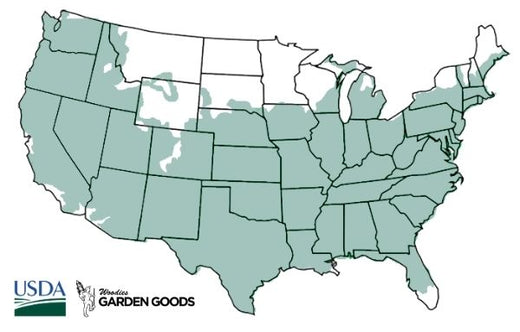
| Hardiness Zone: | 5-9 |
|---|---|
| Mature Height: | Approximately 9–12 inches; occasionally 15–16 inches in favorable conditions |
| Mature Width: | Approximately 12–18 inches |
| Sunlight: | Partial shade preferred; morning sun and filtered light ideal; fuller sun possible in cooler climates with adequate moisture |
| Soil | Average to fertile, moist but well-drained loam, clay, or sandy soil; adaptable to a range of soil pH |
| Water | Moderate; even moisture preferred, particularly during establishment and hot weather |
| Bloom Time / Color | Spring to early summer, commonly April–June / Brown to tan |
| Ornamental Features | Creamy-yellow leaf centers with narrow dark green margins, cascading mounded habit, evergreen to semi-evergreen foliage, subtle brown spring flowers |
| Wildlife Value | Small invertebrates may use foliage for shelter |
| Resistance | Deer, Partial Shade, Periodic Wet Soil, Average Garden Soil, Some Dryness Once Established; limited tolerance of prolonged heat or severe drought |
| Landscape Uses | Shaded borders, pathway edging, containers, woodland gardens, small-scale groundcover, pond margins, rain gardens with suitable drainage, foundation plantings, rock gardens with adequate moisture |
How to Care for Evergold Carex
Be sure to read our planting instructions to ensure a healthy and happy Evergold Carex for years to come!

How should I plant Evergold Carex?
Plant Evergold Carex in partial shade or bright filtered sunlight, where its variegated foliage can maintain attractive color without experiencing excessive afternoon heat. Choose a location with moist, well-drained soil and enough space for the mature clump to reach approximately 12–18 inches wide. Evergold adapts to ordinary garden soils but performs especially well when organic matter helps retain consistent moisture. Before planting, remove weeds and loosen compacted soil. In heavy clay, evaluate drainage before adding amendments; a planting site that remains stagnant for long periods is not desirable. In warmer climates, gentle morning sun and afternoon shade provide an excellent combination for healthy growth. Dig a planting hole approximately twice the width of the root ball and no deeper than its height. Remove the plant carefully from its container and loosen any tightly circling roots. Position the crown level with the surrounding soil, backfill, and water thoroughly. For edging or small-scale groundcover, space plants approximately 12–18 inches apart on center. Closer spacing creates a fuller appearance sooner, while wider spacing preserves individual clumps. Apply a light layer of organic mulch around the root zone, keeping mulch away from the crown. Spring or early fall planting is often successful when temperatures are moderate and adequate establishment watering is available.

How often should I water Evergold Carex after planting?
During its first growing season, Evergold Carex benefits from consistent moisture while its root system becomes established. Water thoroughly immediately after planting, then monitor the soil regularly. A general starting point is approximately one inch of water per week, including rainfall, adjusted for local weather, soil texture, drainage, and plant size. Because Evergold often grows in partially shaded areas, some planting beds retain moisture longer than exposed sunny locations. However, the presence of tree roots can also make shaded soil surprisingly dry. Check the root zone before watering rather than relying on a rigid schedule. Once established, Evergold can tolerate occasional periods of dry soil better than some moisture-loving sedges, but prolonged drought may cause browned tips and reduced foliage quality. During hot weather, keep the soil reasonably moist without allowing water to stand continuously around the crown. Plants growing in containers require more frequent moisture checks because their potting mix has a limited volume and can dry quickly. A light mulch layer helps moderate soil temperature and reduce evaporation in garden beds. Balanced moisture and adequate drainage are the most dependable ways to keep Evergold's golden-striped foliage attractive.

When should I fertilize Evergold Carex?
Evergold Carex generally requires very little supplemental fertilizer when planted in healthy garden soil. In early spring, a light layer of finished compost can help maintain soil structure and provide modest nutrients. If a soil test shows a deficiency, apply an appropriate balanced slow-release fertilizer as new growth begins, following the manufacturer's instructions. Avoid assuming that slow clump expansion indicates a lack of fertilizer; Evergold naturally spreads gradually. Plants with healthy green margins and creamy-yellow centers may not need any additional feeding beyond normal soil maintenance. Avoid heavy nitrogen applications, as excess fertilization may promote soft growth without improving foliage color or long-term vigor. If leaves develop brown tips or the plant becomes unattractive, investigate sunlight, soil moisture, winter exposure, and drainage before adding nutrients. Fertilizer will not correct damage from intense afternoon heat or persistently dry roots. Container-grown plants may occasionally need light feeding as nutrients become depleted, but moderate applications are generally sufficient. Healthy soil, filtered sunlight, and even moisture matter more than frequent fertilization for Evergold Carex.

When and how should I prune Evergold Carex?
Evergold Carex is evergreen through much of its growing range and may be semi-evergreen where winters are severe. The best time for cleanup is late winter or early spring before fresh growth develops. In mild climates, healthy leaves may remain attractive throughout winter and require only selective grooming. In colder or exposed locations, some foliage can become brown, flattened, or wind-damaged. Removing these older leaves helps restore a cleaner appearance as new growth fills in. Unlike tall deciduous ornamental grasses, Evergold does not automatically require complete annual shearing. Use clean scissors or pruning shears to remove damaged foliage without cutting into the crown or healthy emerging leaves. If most foliage has been damaged by winter, a more substantial early-spring cutback may be appropriate before new growth begins. Avoid performing heavy pruning once new leaves are developing, since this can leave unattractive cut tips that persist. Mature clumps can be divided in spring if they become overcrowded or need to be relocated. A light annual cleanup is usually sufficient to maintain Evergold's graceful arching shape and colorful foliage.