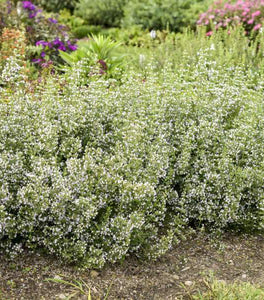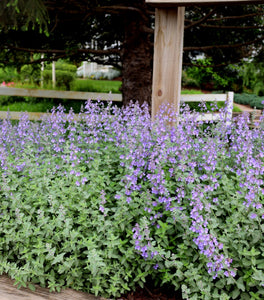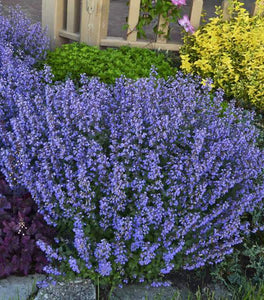


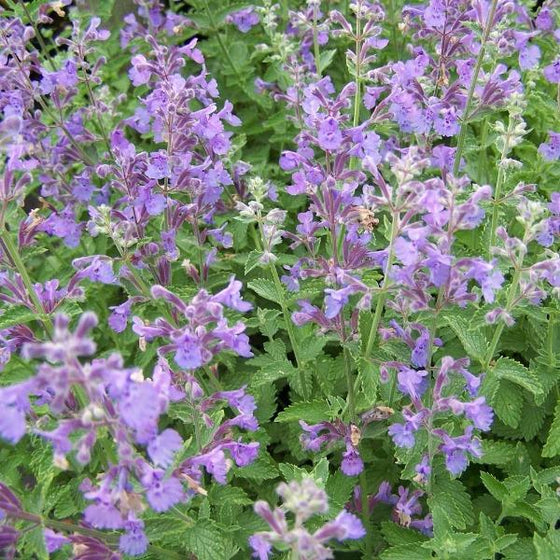
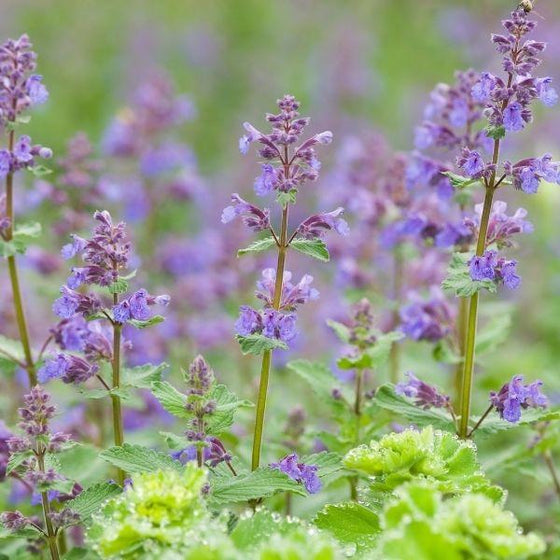


Images Depict Mature Plants
Walker’s Low Catmint
Nepeta × faassenii ‘Walker’s Low’; also listed as Nepeta racemosa ‘Walker’s Low’
I've always considered Walker’s Low Catmint one of the best flowering perennials for homeowners who want dependable color without a lot of maintenance. The combination of lavender-blue flowers and soft, silvery gray-green foliage works with practically everything, but I especially like planting it along the front of rose beds. It gives roses a softer, more natural appearance while providing a steady supply of flowers for bees and butterflies. Another reason I recommend Walker’s Low Nepeta is its excellent drought tolerance and general resistance to deer browsing. Once established in a sunny, well-drained garden, it's remarkably easy to grow. Don't let the name fool you, though—this isn't an exceptionally short catmint. It develops a beautiful, broad mound that can spread 2 feet or more. My biggest tip is to shear it lightly after the first major bloom. That simple step encourages fresh growth and often brings another round of flowers. For sunny borders, cottage gardens, and pollinator plantings, Walker’s Low Catmint is a perennial I recommend again and again.
$23.16 with code SAVINGS20 at checkout Save $5.79
📦 Free shipping on orders over $99.
Delay shipping by leaving us a message at Checkout.
Share:Recommended Add-Ons



Walker’s Low Catmint Plants for Long-Lasting Blooms and Pollinator Gardens
Fill Sunny Borders with Long-Blooming Walker’s Low Catmint
Walker’s Low Catmint is one of the most dependable flowering perennials for homeowners seeking long-lasting lavender-blue color and beautiful, low-maintenance growth. Its abundant flower spikes emerge above softly textured, silvery gray-green foliage, creating a relaxed, billowing display that brings movement and color to sunny garden beds. The flowers typically begin appearing in late spring and continue into summer, with additional blooms possible after the initial flowering stems are trimmed back. This extended flowering potential makes Walker’s Low especially valuable for landscapes where consistent seasonal color is an important design goal.
Unlike flowering perennials that produce a brief display and then disappear into the background, Walker’s Low Catmint continues contributing attractive foliage and garden texture throughout the growing season. Its naturally mounding habit softens the edges of planting beds and provides an appealing transition between taller flowering plants and lower-growing groundcovers. Walker’s Low Nepeta is an excellent choice for perennial borders, cottage gardens, and landscape beds that need dependable blue-toned flowers. Plant it in generous groups for a continuous drift of color or use individual plants to introduce contrast among flowering shrubs and ornamental grasses.
Attract Bees and Butterflies with Walker’s Low Nepeta
One of the outstanding qualities of Walker’s Low Catmint is its exceptional appeal to bees, butterflies, and other beneficial flower-visiting insects. Its numerous lavender-blue blossoms provide a valuable nectar source during the growing season, making it a popular addition to pollinator-friendly landscapes. When planted in larger groups, Walker’s Low creates a concentrated display of flowers that can attract consistent insect activity. Its long flowering period becomes especially useful when gardeners are trying to provide nectar sources across multiple months.
Walker’s Low Catmint blends beautifully into pollinator gardens containing coneflowers, salvia, yarrow, coreopsis, and other sun-loving flowering perennials. Its soft, mounding form creates a natural transition between taller flowering plants, while the cool lavender-blue blossoms offer striking contrast against yellow, orange, pink, and white flowers. Planting several Walker’s Low Catmint together creates a colorful, pollinator-friendly landscape feature that benefits both garden design and local beneficial insects. For homeowners interested in combining attractive ornamental plantings with meaningful pollinator support, this perennial is a particularly rewarding choice.
Create Beautiful Rose Gardens with Walker’s Low Catmint
Walker’s Low Catmint is a classic companion for roses because its lavender-blue flowers and silvery gray-green foliage complement nearly every rose color. Its soft, billowing growth habit creates an attractive contrast against the more structured stems and larger flowers of rose bushes. When planted along the front of a rose border, Walker’s Low helps conceal the lower portions of the shrubs while creating an inviting layer of color. The combination works especially well with pink, red, apricot, yellow, and white roses.
For the strongest visual effect, plant Walker’s Low Catmint in repeating groups rather than scattering individual plants throughout the bed. Its mounding shape connects neighboring rose bushes while giving the planting a more cohesive appearance. The aromatic foliage and general resistance to deer browsing provide practical benefits in addition to ornamental appeal. Walker’s Low Catmint is also an excellent companion for hydrangeas in sunny locations, ornamental grasses, and summer-flowering shrubs, making it versatile enough for both formal and informal landscapes. Its attractive foliage and long flowering season help keep mixed borders looking colorful and established.
Enjoy Deer-Resistant, Drought-Tolerant Catmint Plants
Walker’s Low Catmint is particularly appealing to gardeners who want attractive flowering perennials that tolerate challenging summer conditions. Once established, its root system allows it to withstand periods of dry weather better than many moisture-loving landscape plants. It performs best in full sun and well-drained soil, where it develops abundant flowers and a compact, mounding appearance. Its aromatic foliage also makes it less appealing to browsing deer, providing a useful advantage in landscapes where more vulnerable perennials are frequently damaged.
Although Walker’s Low Catmint is adaptable, proper planting conditions remain important. Newly installed plants need regular watering until their roots expand into the surrounding soil, and overly wet locations should be avoided. Heavy fertilizer applications are unnecessary and can encourage excessive foliage growth at the expense of a naturally balanced appearance. Full sun, excellent drainage, and moderate watering during establishment are the foundations of successful Walker’s Low Catmint care. Once settled into the landscape, this hardy perennial provides beautiful seasonal flowers with relatively little ongoing attention.
Soften Walkways and Garden Borders with Lavender-Blue Catmint
The naturally mounding growth habit of Walker’s Low Catmint makes it an excellent choice for softening walkways, patios, retaining-wall edges, and sunny garden borders. Its arching flowering stems create a relaxed appearance that contrasts beautifully with straight hardscape lines and neatly clipped evergreen shrubs. The plant typically reaches 18 to 24 inches tall and spreads approximately 24 to 30 inches wide, creating a substantial display without becoming a tall, rigid perennial. This makes it useful near the front of mixed borders or along pathways where flowers can spill gently toward the edge.
Walker’s Low Catmint is especially attractive in cottage-style gardens, where flowing plant combinations create a natural, abundant appearance. Pair it with ornamental grasses for contrasting texture or combine it with flowering perennials in warm colors to emphasize its cool lavender-blue blooms. Because the plant spreads into a broad mound, provide adequate space so nearby plants are not crowded. Repeating Walker’s Low Nepeta along a walkway creates an inviting ribbon of flowers that provides color, fragrance, and pollinator activity throughout much of the growing season.
Encourage Repeat Blooms with Easy-Care Walker’s Low Nepeta
One of the simplest ways to keep Walker’s Low Catmint looking attractive is to trim back its flowering stems after the first major bloom begins to fade. This encourages fresh foliage and can stimulate another flush of flowers later in the season. The plant responds well to this type of rejuvenation, making it particularly useful in garden designs where continued summer color is desirable. Its naturally aromatic leaves remain attractive between flowering periods and contribute a distinctive silvery texture to mixed plantings.
Walker’s Low Catmint requires little fertilizer and generally performs best in well-drained soil that is not excessively rich. Avoid heavy watering once the plant is established, especially in humid climates where consistently damp conditions can contribute to weaker growth. Divide mature clumps when necessary to maintain healthy growth and preserve the planting's shape. With a simple seasonal trim and proper placement, Walker’s Low Catmint can provide months of lavender-blue flowers while remaining one of the easier flowering perennials to maintain. For homeowners seeking color, resilience, and strong pollinator appeal, it offers an outstanding combination of benefits.
2007 Perennial Plant of the Year
| Botanical Name | Nepeta x faassenii ‘Walker’s Low’ |
|---|---|
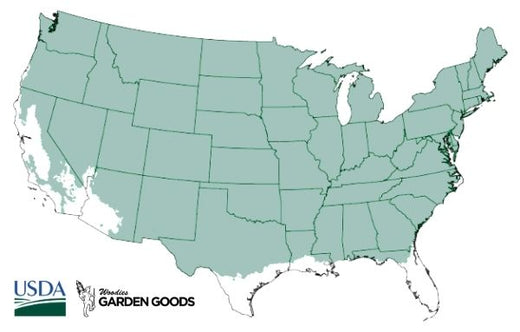
| Hardiness Zone: | 3-8 |
| Mature Height: | 18 to 24 inches |
| Mature Width: | 24 to 30 Inches |
| Sunlight: | Full sun; tolerates light partial shade |
| Soil Condition: | Average; dry to moderately moist; well-drained; sandy or loamy soils |
| Water Requirements: | Moderate during establishment; low once established |
| Bloom Time / Color | Late spring through summer; rebloom possible into fall / Lavender-blue; violet-blue |
| Ornamental Features | Long-blooming lavender-blue flower spikes; aromatic silver-green foliage; soft mounding habit; extended seasonal color |
| Wildlife Value | Honey bees; bumble bees; native solitary bees; butterflies; other nectar-feeding insects |
| Resistance | Deer; rabbits; drought once established; dry soil; heat in well-drained locations |
| Landscape Uses | Perennial borders; pollinator gardens; rose gardens; cottage gardens; walkway edging; mass plantings; drought-tolerant gardens; rock gardens |
How to Care for Walker’s Low Catmint
Before you buy a Walker’s Low Catmint Plant, make sure to read Woodies care instructions to keep this plant healthy and thriving.

How do I plant Walker’s Low Catmint?
Choose a planting location that receives at least six hours of direct sunlight and offers well-drained soil. Dig a hole approximately twice as wide as the root ball and no deeper than the root ball itself. Carefully remove the plant from its container, loosen any circling roots, and position the crown level with the surrounding soil. Backfill with the original soil, gently firm it, and water thoroughly. Space Walker’s Low Catmint approximately 24 to 30 inches apart to accommodate its mature, spreading habit. Avoid heavily amended soils that retain excessive moisture, as Nepeta generally prefers good drainage. Apply a light layer of mulch around the root zone without burying the plant's crown. Water regularly during establishment to encourage strong root development.

How often should I water Walker’s Low Catmint?
Newly planted Walker’s Low Catmint requires consistent moisture during establishment. Check the soil regularly and water deeply whenever the upper few inches begin to dry. Plants growing in sandy soils or during hot weather may require more frequent watering than those growing in moisture-retentive loam. Avoid allowing the root ball to dry completely during the first several weeks. Once established, Walker’s Low Catmint is highly drought tolerant and generally needs supplemental irrigation only during extended dry periods. Overwatering is often more problematic than occasional dryness, particularly in heavy soil. Allow the soil to dry somewhat between deep waterings and avoid constantly saturated conditions.

What is the best fertilizer for Walker’s Low Catmint?
Walker’s Low Catmint typically grows well without heavy fertilization. In average garden soil, supplemental feeding is often unnecessary. If the soil is especially poor or a soil test identifies a nutrient deficiency, apply a light amount of balanced, slow-release fertilizer in early spring according to the manufacturer's directions. Avoid fertilizers with excessive nitrogen, which can encourage soft, sprawling foliage and reduce the plant's naturally balanced appearance. A thin layer of compost is usually sufficient to support healthy soil. Adequate sunlight and excellent drainage are more important than frequent feeding for this drought-tolerant perennial.

When should I prune Walker’s Low Catmint?
The most beneficial time to prune Walker’s Low Catmint is immediately after its first major flowering period, usually in early to midsummer. Trim faded flowering stems back by approximately one-third to one-half, depending on the plant's appearance. This encourages fresh foliage and can stimulate another flush of lavender-blue flowers later in the growing season. Remove dead stems in late winter or early spring before new growth begins. Avoid cutting actively flowering plants unnecessarily, especially when bees and butterflies are visiting the blossoms. A timely midsummer trim is one of the easiest ways to maintain a neat shape and encourage repeat blooming.