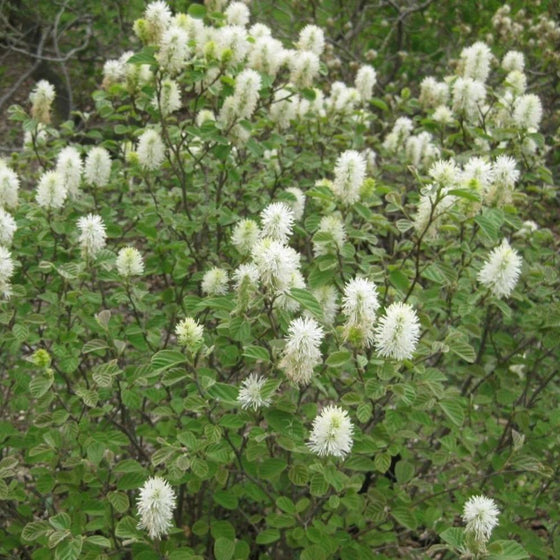


Images Depict Mature Plants
Mount Airy Fothergilla
Fothergilla major 'Mount Airy'
Mount Airy Fothergilla is one of those shrubs that feels like a smart gardener’s plant. I like it because it offers fragrant spring blooms, handsome blue-green summer foliage, and some of the best fall color you can ask for from a compact shrub. It is especially useful when a homeowner wants something native, refined, and seasonally dynamic without having to make room for a large, unruly plant.

20% Off Sitewide Sale!
Use Code 'ENDOFSEASON20' At Checkout
📦 Free shipping on orders over $99.
Delay shipping by leaving us a message at Checkout.
Share:



Fragrant Spring Bloom and Brilliant Fall Color for Smaller Landscapes
Fragrant bottlebrush flowers that brighten spring gardens
Mount Airy Fothergilla is one of those shrubs that earns attention the moment it comes into bloom. In spring, before the foliage fully unfolds, it produces creamy-white bottlebrush flowers that stand upright along the branches and carry a sweet, honey-like fragrance. The flowers do not rely on petals for their beauty. Instead, the soft stamens create a fuzzy, airy effect that feels both refined and unusual, making this shrub stand out from more common spring bloomers.
That early-bloom display gives the landscape a fresh, lively feel as the season begins to build momentum. The flowers are especially rewarding near patios, paths, woodland edges, and mixed shrub borders where gardeners can enjoy both the look and the fragrance up close. For homeowners who want a native shrub that offers something more distinctive than a standard flowering hedge, Mount Airy brings a memorable spring presence without feeling flashy or overdone.
Blue-green summer foliage and unforgettable fall color
After flowering, Mount Airy Fothergilla settles into a handsome season of foliage interest. The leaves are leathery, blue-green to dark green, and slightly rounded, giving the plant a substantial, healthy look throughout summer. Even outside the bloom window, the shrub helps a planting feel full and intentional, especially when used with evergreens, perennials, or other deciduous shrubs that benefit from its steady structure and cool foliage tone.
Fall is when this plant truly shines. The leaves turn vivid shades of yellow, orange, red, and purple, often showing several colors at once on the same plant. That multicolored fall display is one of the best reasons to grow it. Instead of offering just a short spring moment, Mount Airy gives homeowners a second dramatic season later in the year. In a front border, mixed shrub bed, or native planting, that autumn color can easily become one of the highlights of the entire landscape.
Compact native habit that fits beautifully into layered plantings
Mount Airy Fothergilla is especially appealing because it stays compact enough for many residential gardens while still offering a real shrub presence. It usually matures around 3 to 6 feet tall and about as wide, forming a rounded, multi-stemmed shrub that feels full but not oversized. That moderate size makes it easy to place in foundation-adjacent beds, mixed borders, woodland edges, and smaller naturalized plantings where larger native shrubs might be harder to fit.
It also has a naturally layered, somewhat suckering habit, which can be an advantage when a fuller, more natural look is desired. In looser landscape settings, that growth pattern helps it feel at home among perennials, grasses, and other native shrubs. For more formal spaces, occasional sucker removal keeps the outline tidier. That flexibility makes it a strong option for gardeners who want a plant that can feel both polished and ecologically grounded, depending on how it is used.
A low-maintenance shrub with strong four-season value
Mount Airy Fothergilla performs best in full sun to part shade and appreciates moist, rich, acidic, well-drained soil. It tends to flower best and color most intensely with more sun, though it tolerates part shade well. Once established, it becomes a dependable, low-maintenance shrub that requires very little beyond appropriate siting, occasional watering during prolonged dry spells, and light shaping if needed.
It is also a strong candidate for gardeners who want a multi-season return from a single plant. Spring brings fragrance and bloom, summer offers attractive blue-green foliage, fall delivers outstanding color, and winter leaves behind a sturdy branching framework. For homeowners who want a compact native shrub with true ornamental depth rather than one-season performance, Mount Airy Fothergilla is one of the best options available.
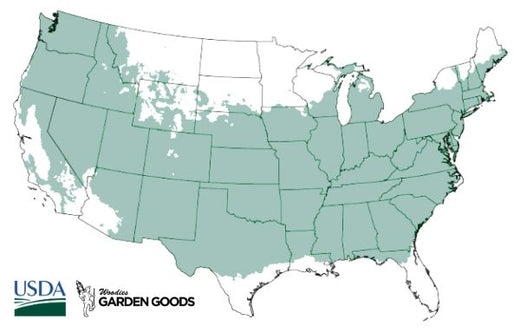
| Hardiness Zone: | 5-8 |
|---|---|
| Mature Height: | 3 to 6 feet |
| Mature width: | 3 to 6 feet |
| Sunlight: | full sun to part shade |
| Bloom Time / Color: | Spring / creamy-white bottlebrush flowers |
| Soil: | Moist, rich, acidic, well-drained soil |
| Water: | Regular water during establishment; average to moderate moisture preferred |
| Wildlife Value: | Attracts pollinators and supports native-style plantings |
| Resistance (deer/disease/drought/etc.): | Deer resistant, low maintenance, adaptable once established |
| Landscape Uses: | Mixed borders, foundation beds, woodland gardens, native plantings, specimen shrub, fall color garden |
How to Care for Mount Airy Fothergilla
Be sure to read our planting instructions to ensure a healthy and happy Mount Airy Fothergilla plant for years to come!
-v1773841135546.png?92x91)
How should I plant Mount Airy Fothergilla?
Plant Mount Airy Fothergilla in full sun to part shade in moist, well-drained, acidic soil, setting the top of the root ball level with the surrounding grade. Dig a hole two to three times wider than the root ball and no deeper than the root ball itself, then backfill with the native soil so the roots can settle naturally into the surrounding area. Water thoroughly after planting and add a light mulch layer around the base to help conserve moisture and moderate soil temperature, keeping mulch away from direct contact with the stems. Choose a site with enough room for the shrub to develop its rounded, multi-stemmed form, especially if you want to enjoy its natural habit rather than prune it tightly.
-v1773841191098.png?89x84)
How often should I water Mount Airy Fothergilla after planting?
Water Mount Airy Fothergilla deeply and regularly during the first growing season so it can establish a strong root system. In most landscapes, that means watering once or twice a week depending on rainfall, soil type, and temperature, with the goal of keeping the soil evenly moist but not soggy. After establishment, the shrub prefers average to moderate moisture and generally performs best when it does not dry out for long periods. Deep watering during extended dry spells is much more helpful than frequent shallow watering, especially in sunnier locations where soil moisture drops faster.
-v1773841212535.png?90x89)
When should I fertilize Mount Airy Fothergilla?
Fertilize Mount Airy Fothergilla lightly in early spring if needed, just as new growth begins. A modest topdressing of compost or a balanced slow-release shrub fertilizer is usually enough to support healthy foliage, good flowering, and strong seasonal color. Heavy feeding is usually unnecessary, especially in soil with decent organic matter. A restrained approach works best because it supports steady growth without pushing excessive softness or disrupting the plant’s naturally compact, rounded habit.

When and how should I prune Mount Airy Fothergilla?
Prune Mount Airy Fothergilla lightly after flowering if shaping is needed. Remove any dead or damaged stems and thin selectively to preserve the natural rounded form while improving airflow and keeping the shrub balanced. If suckers develop beyond the space you want the shrub to occupy, they can be removed cleanly at the base. Most of the time, this plant looks best with minimal pruning, since its natural habit is a big part of its charm and its bloom and fall color are strongest when it is not overmanaged.