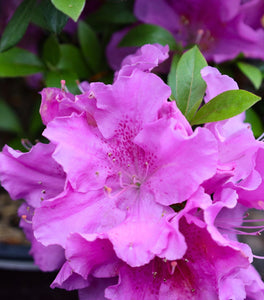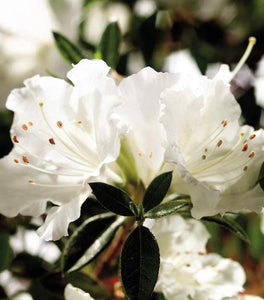


Images Depict Mature Plants
Autumn Twist® Encore® Azalea
Rhododendron 'Conlep' PP12133
I love Autumn Twist® because it looks like two azaleas in one, white blooms striped and splashed with purple, plus the occasional solid purple flower that pops like a surprise encore. Give it a bright spot, keep the roots comfortable in acidic, well-drained soil, and do your shaping right after spring bloom, and you’ll get a compact evergreen shrub that keeps showing color long after typical azaleas are done.

20% Off Sitewide Sale!
Use Code 'ENDOFSEASON20' At Checkout
📦 Free shipping on orders over $99.
Delay shipping by leaving us a message at Checkout.
Share:



Reblooming Bicolor Azalea With Purple-White Blooms And Evergreen Structure
Bicolor Blooms That Keep The Landscape Interesting For Months
Autumn Twist® Encore® Azalea brings a playful, high-impact bloom pattern that’s hard to ignore: crisp white flowers splashed and striped with purple, plus the occasional bloom that opens solid purple for a surprise “twist.” The first big flush arrives in spring, and repeat blooms can continue through summer and into fall when the plant is well sited. That longer bloom window is what makes this azalea feel like a true upgrade—your beds don’t peak once and fade, they stay visually active across the growing season.
The bicolor effect also makes the design easier to implement. In one shrub, you get light and dark tones that pair with almost everything—deep green evergreens, white hydrangeas, soft grasses, and colorful perennials. Plant it where you’ll see the blooms up close near an entry or walkway, or mass it in a bed to create a lively, patterned ribbon of color that reads from the curb.
Autumn Twist® is more than a spring showpiece because it stays evergreen. The foliage gives you year-round structure, and in colder weather it can take on deeper tones that keep the plant looking intentional even when flowers pause. That evergreen presence makes it especially valuable in foundation beds, front borders, and mixed plantings where you want the landscape to look “finished” in every season.
If you’re building a bed that needs dependable bones, this azalea earns its spot. Use it as a repeating accent to create rhythm, place a pair to frame steps or a gate, or tuck it into a mixed border where evergreen foliage can anchor perennials as they come and go. You get an easy-to-read shrub shape plus a bloom pattern that makes the whole planting feel designed.
Sun Hours And Soil Comfort That Drive Better Rebloom
Repeat bloom is strongest when Autumn Twist® gets enough light—aim for roughly 4 to 6 hours of direct sun per day for the best Encore-style performance. Full sun can work, and partial shade can work, but that “bright site” is what keeps flowers cycling. In hotter climates, morning sun with some afternoon shade often hits the sweet spot: strong bloom support without the stress of late-day heat.
Root comfort matters just as much as light. Azaleas prefer acidic, organic-rich, well-drained soil that stays evenly moist, not wet and not bone-dry. A wide mulch ring is one of the simplest ways to improve performance: it keeps roots cool, reduces moisture swings, and gradually improves soil texture. When the plant isn’t stressed by drought swings or soggy soil, it stays denser, greener, and more willing to rebloom.
Hedge-Ready Or Specimen-Perfect With Clear Spacing And Pruning Timing
Autumn Twist® matures into a tidy, intermediate-size shrub, making it flexible for both single-plant accents and short hedges. Spacing is the decision that determines how it looks in the long term. Planting too closely together can provide quick coverage, but it also increases competition and reduces airflow as shrubs mature. Giving the right space up front helps foliage dry faster after rain, supports a fuller shape, and makes pruning simpler.
Pruning is straightforward, but timing matters for flowers. Do your main shaping right after the spring bloom flush; this encourages branching (more bloom sites) while protecting buds that support later bloom cycles. Keep trims light and tidy rather than severe; think “refine and thicken,” not “cut it back hard.” With correct spacing and a quick post-spring trim, Autumn Twist® stays dense, balanced, and bloom-ready.
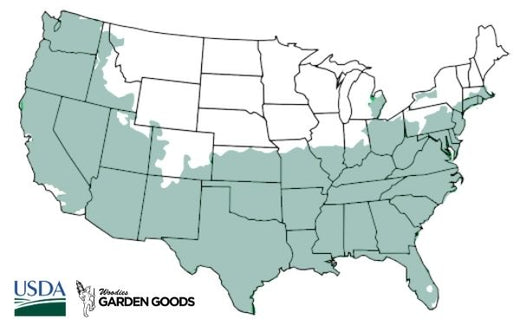
| Hardiness Zone: | 6b–10b |
|---|---|
| Mature Height: | 4 to 5 feet |
| Mature Width: | 4 to 5 feet |
| Sunlight: | Full sun to partial shade (best rebloom with ~4–6 hours sun) |
| Bloom Time / Color: | Spring with repeat blooms summer/fall; purple-and-white bicolor, occasional solid purple |
| Soil Condition: | Acidic, organic-rich, well-drained |
| Water Requirements: | Moderate; keep evenly moist while establishing |
| Wildlife Value: | Flowers support pollinators |
| Resistance (deer/disease/drought/etc.): | Deer resistance is variable; moderate drought tolerance once established with mulch |
| Landscape Uses: | Foundation beds, mixed borders, low hedges, mass plantings, containers |
How to Care for Autumn Twist® Encore® Azalea
Be sure to read our planting instructions to ensure a healthy and happy Autumn Twist® Encore® Azalea for years to come!
-v1772210312642.png?92x91)
How should I plant Autumn Twist® Encore® Azalea?
Plant Autumn Twist® Encore® Azalea in full sun to partial shade in acidic, well-drained soil. Dig a hole 2–3 times wider than the root ball, set the shrub at the same depth it was growing (don’t bury the crown), backfill, and water deeply to settle the roots. Finish with a 2–3-inch mulch layer over the root zone, keeping it a few inches away from the stems. Avoid low spots that stay wet in winter; if your soil is heavy, improve drainage with organic matter and consider planting slightly high or on a gentle mound.

How often should I water Autumn Twist® Encore® Azalea after planting?
Water deeply right after planting, then keep the root zone evenly moist through the first growing season. In most landscapes, that means deep watering 1–2 times per week when rainfall is light, and more often during heat or windy weather. After establishment, water during extended dry spells to prevent stress that can reduce flowering. Mulch is a big help here—steady moisture (not soggy soil) supports healthier foliage and more reliable repeat bloom.
-v1772210356594.png?90x89)
When should I fertilize Autumn Twist® Encore® Azalea?
Fertilize in early spring as new growth begins, using a slow-release azalea/camellia fertilizer or another acid-forming fertilizer suited for acid-loving shrubs. Apply over the root zone, not against the stems, and water in well. If your soil is lean, a light feeding right after the spring bloom flush can help the shrub recover and continue setting buds. Avoid heavy late-summer fertilizing so the plant can harden off properly as cooler weather approaches.

When and how should I prune Autumn Twist® Encore® Azalea?
Prune right after the spring bloom flush. This timing encourages branching for a denser shrub while protecting buds that support later bloom cycles and next season’s flowers. Remove any dead or damaged twigs first, then lightly shape the outer growth to refine the mounded form. Avoid hard pruning in late summer or fall, which can reduce rebloom, and trim away developing buds.