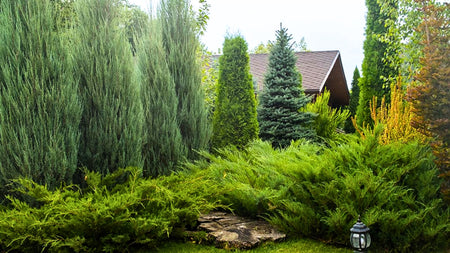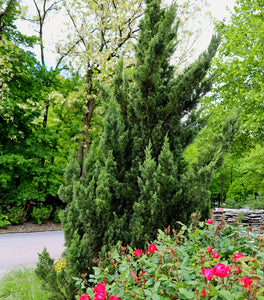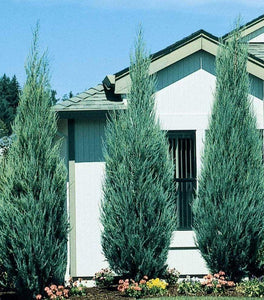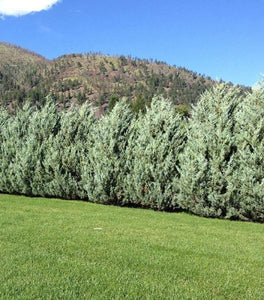


Images Depict Mature Plants
Blue Arrow Juniper
Juniperus scopulorum 'Blue Arrow'
“The Blue Arrow Juniper is one of my favorite evergreens for tight spaces because it gives you height and privacy without taking up much room. Its silvery-blue color really pops in the landscape, especially when paired with green shrubs or colorful flowering plants. It’s low-maintenance, deer-resistant, and drought-tolerant, which means once it’s planted, you’ll have a reliable and stylish tree for years to come.”

15% OFF SITEWIDE SALE
Use Code 'PRIMETIME15' At Checkout
📦 Free shipping on orders over $99.
Delay shipping by leaving us a message at Checkout.
Share:


Slim Evergreen Privacy Tree for Tight Spaces and Year-Round Color
A Pencil-Slim Evergreen for Narrow Spaces
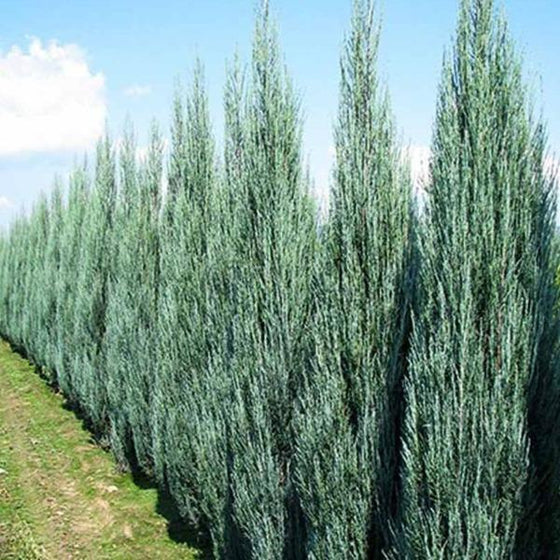
Blue Arrow Juniper is one of the best evergreen choices for homeowners who need height without bulk. Its mature size is typically about 12 to 15 feet tall and only around 2 feet wide, which makes it especially useful in side yards, along property lines, near driveways, and in narrow foundation beds where wider privacy trees would quickly feel too large.
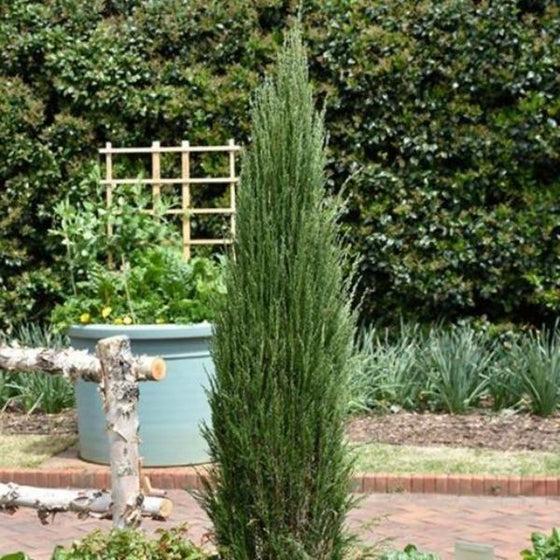
That narrow habit is what makes Blue Arrow so useful in modern residential landscapes. It gives you real vertical presence and privacy potential while preserving planting room for walkways, lawn, or companion shrubs. Instead of spreading outward, it grows upward in a dense, elegant column that keeps the overall design clean and structured.
Silvery-Blue Foliage That Works All Year
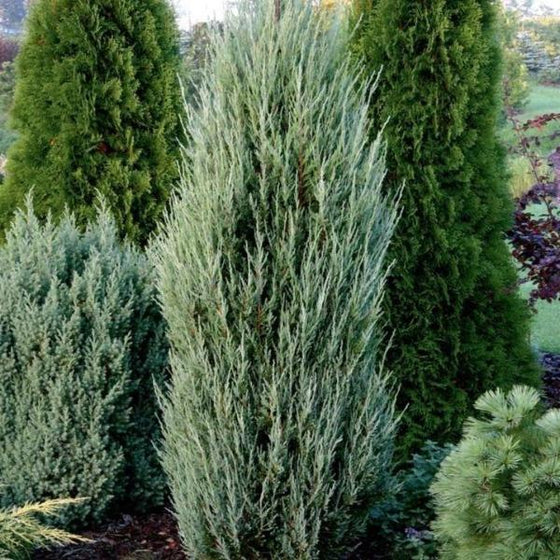
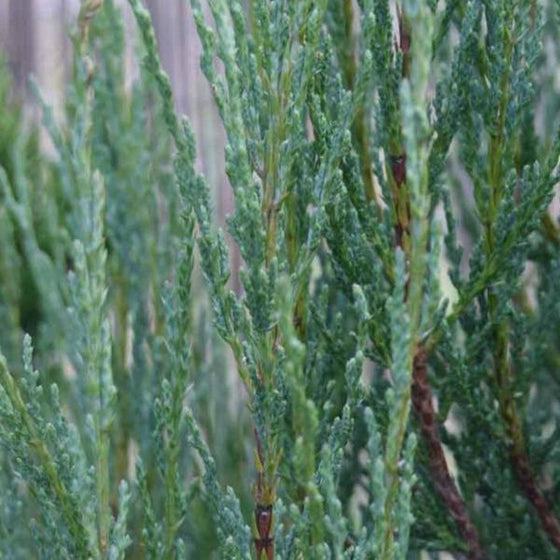
Blue Arrow Juniper brings more than just shape. Its foliage has a bright blue-green to silvery-blue tone that adds cool contrast to darker evergreens, brick, stone, and mulch. That color is one of the reasons gardeners use it as both a specimen and a screening plant.
Because it is evergreen, it maintains its strong visual presence through winter, when many plants disappear from the landscape. It can frame an entry, sharpen a mixed bed, or repeat in a row to create rhythm and privacy without looking heavy. For shoppers wanting year-round structure and color in one plant, Blue Arrow does a lot with very little width.
Low-Maintenance Privacy With a Clean Natural Shape
One of Blue Arrow Juniper’s biggest selling points is how little shaping it usually needs. Its branches naturally grow upright and close to the trunk, so it typically keeps its narrow, columnar form without frequent trimming. That makes it an appealing option for homeowners who want a crisp, intentional look without high hedge-maintenance demands.
It is also well-suited to sunny, well-drained sites and is widely described as drought-tolerant once established. That combination of easy form, low water needs, and strong sun tolerance makes it especially practical for privacy rows, entry accents, and dry landscape conditions where fussier evergreens may struggle.
A Smart Choice for Privacy Rows and Formal Accents
Blue Arrow Juniper is especially useful when the design goal is privacy in a limited footprint. Planted in rows, it can create a dense living wall without the width required by broader conifers. Used singly or in pairs, it adds formal vertical punctuation at entries, corners, and bed transitions.
That flexibility is what makes it such a strong landscape plant. It works equally well in tight urban gardens, suburban side yards, and more formal layouts where repeated upright forms help organize the space. For gardeners who want a narrow evergreen that reads as elegant, durable, and highly usable, Blue Arrow Juniper is one of the strongest options in the columnar category.
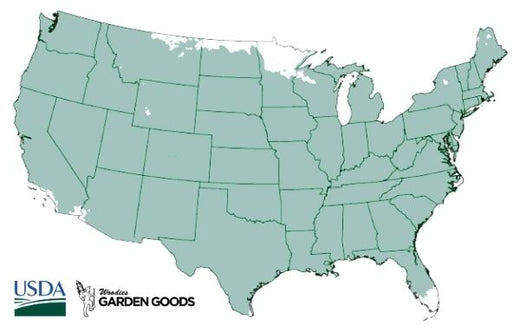
| Hardiness Zone: | 4-9 |
|---|---|
| Mature Height: | 12 to 15 Feet |
| Mature width: | 2 to 3 Feet |
| Sunlight: | Full sun |
| Bloom Time / Color | Conifer; grown for silvery blue to blue-green foliage |
| Soil Condition: | Well-drained soil |
| Water Requirement: | Moderate while establishing; occasional watering once established |
| Wildlife Value | Evergreen cover; can provide shelter value |
| Resistance (deer/disease/drought/etc.) | Drought tolerant once established; easy care; commonly regarded as deer resistant |
| Landscape Uses | Privacy screens, narrow hedges, vertical accents, foundation plantings, entry framing |
How to Care for Blue Arrow Juniper
Before you buy a Blue Arrow Juniper Tree, make sure to read about the recommended care instructions to keep this plant healthy and flourishing.

How should I plant Blue Arrow Juniper?
Plant Blue Arrow Juniper in full sun and well-drained soil. Dig a hole about twice as wide as the root ball and no deeper than the root ball itself, then set the plant so the top of the root ball is level with or slightly above the surrounding soil. Water thoroughly after planting and mulch lightly while keeping mulch away from the trunk. Choose a site where the plant’s narrow form can be appreciated and where drainage is dependable. This is a great plant for tight privacy strips, entry framing, and narrow foundation zones because it gives height without crowding nearby hardscape or other plants.

How often should I water Blue Arrow Juniper after planting?
Water Blue Arrow Juniper deeply right after planting, then keep the root zone evenly moist while it establishes. Once established, it requires only occasional watering and is widely considered drought-tolerant. The main thing is to avoid soggy soil. During establishment, do not let it dry out completely; once the root system settles in, it becomes much more forgiving and performs well in low-water, sunny landscapes.

When should I fertilize Blue Arrow Juniper?
Fertilize Blue Arrow Juniper in early spring if needed. A balanced, slow-release evergreen fertilizer is usually enough to support steady growth without forcing weak new shoots. In many landscapes, this plant needs only light feeding. Proper sun exposure, drainage, and moderate watering are usually more important than heavy fertilization for keeping it healthy and attractive.

When and how should I prune Blue Arrow Juniper?
Blue Arrow Juniper usually needs very little pruning because it naturally keeps a tight, upright shape. If pruning is needed, keep it light and focus on removing damaged growth or correcting a stray branch. Avoid aggressive cutting into old wood. In most cases, minimal cleanup is all that is necessary, and the plant looks best when its naturally narrow silhouette is allowed to stay intact.