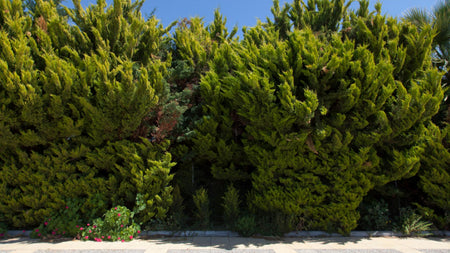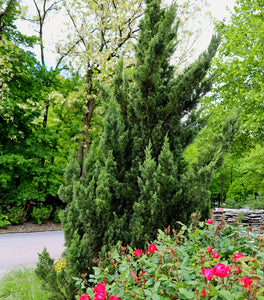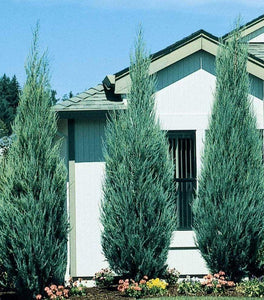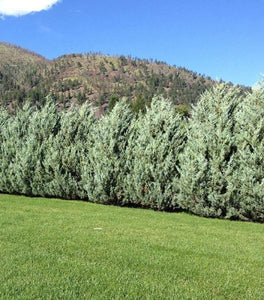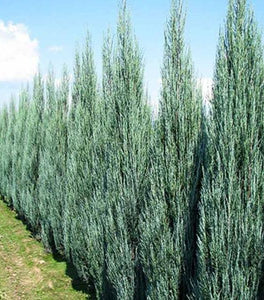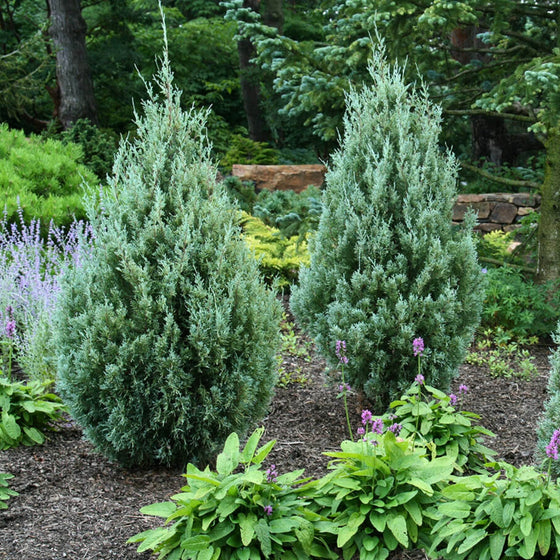
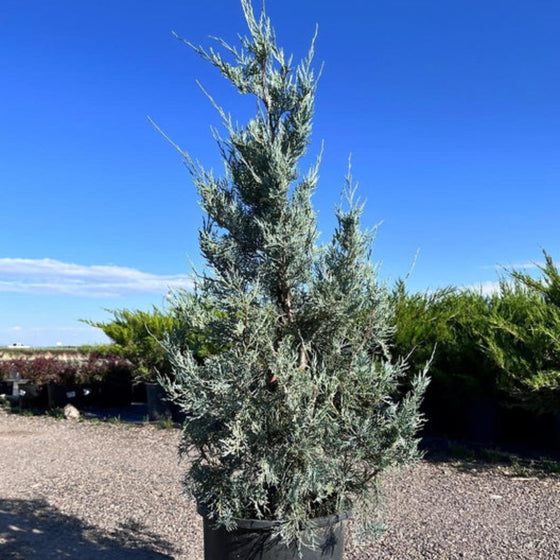


Images Depict Mature Plants
Wichita Blue Juniper
Juniperus scopulorum 'Wichita Blue'
Wichita Blue Juniper is one of those evergreens I like when a landscape needs real structure without giving up color. The silver-blue foliage stands out beautifully all year, the narrow upright habit makes it incredibly useful for privacy and screening, and it handles tough sunny sites with very little fuss once established. For homeowners who want a deer-resistant blue evergreen that can anchor a border, screen a property line, or act as a striking specimen, this is a really dependable and attractive choice.

15% OFF SITEWIDE SALE
Use Code 'PRIMETIME15' At Checkout
📦 Free shipping on orders over $99.
Delay shipping by leaving us a message at Checkout.
Share:


Silver-Blue Evergreen Privacy Color for Screens, Borders, and Year-Round Structure
A Blue Evergreen That Adds Color and Vertical Structure
Wichita Blue Juniper is one of those evergreens that can instantly sharpen and brighten a landscape. Its dense upright habit and vivid silver-blue foliage give it a strong architectural look, but it still feels soft enough to work naturally in home plantings. For homeowners who want an evergreen that does more than just stay green, this cultivar offers standout color with a shape especially useful in modern residential landscapes.
The foliage color is one of its biggest selling points. Rather than blending into the background like a typical dark green conifer, Wichita Blue Juniper holds a bright blue to blue-gray tone that creates contrast in every season. That makes it especially valuable near foundations, along property lines, and in mixed evergreen borders where color variation helps the planting feel more layered and intentional.
Its upright pyramidal form also offers significant practical design value. The plant grows much taller than it does wide, which means homeowners can get privacy, screening, and evergreen presence without giving up too much horizontal space. That narrower footprint makes it especially useful where a broad hedge would feel too bulky.
For homeowners looking for a blue evergreen that combines strong color with usable height, Wichita Blue Juniper is a very smart choice. It brings year-round interest and a clean vertical presence that works in a wide range of landscape styles.
Year-Round Blue Foliage Keeps the Landscape Looking Alive
Wichita Blue Juniper is valuable not just because it is evergreen, but because it stays visually strong all year. The silver-blue foliage keeps a landscape from feeling flat in winter and gives sunny borders, screening rows, and specimen plantings a cooler, fresher look in every season. It adds the kind of dependable structure homeowners need while still bringing ornamental appeal.
That year-round presence is especially important in landscapes where the planting has to work hard through the colder months. When deciduous shrubs drop their leaves and herbaceous perennials disappear, Wichita Blue Juniper continues to carry color, shape, and texture. It helps the garden feel finished even in the off-season, which is one reason blue evergreens like this are so valuable in four-season design.
The foliage texture also contributes to its appeal. It is dense enough to create privacy and background value, but still fine-textured enough to pair well with broader-leaved shrubs, stone, grasses, and flowering perennials. That balance between density and texture makes it easy to use as both a practical and ornamental plant.
For gardeners who want an evergreen that keeps delivering after the bloom season ends, Wichita Blue Juniper is a very dependable choice. It offers color, privacy, and winter interest without asking for much in return.
A Strong Fit for Privacy, Screening, and Specimen Planting
Wichita Blue Juniper works best in landscapes where height, screening, and evergreen color matter. It is especially effective in privacy rows, property-line plantings, foundation-adjacent screening, and specimen use where its tall, narrow habit can be appreciated. Because it grows upright and dense, it can create a much more formal or polished look than looser evergreen shrubs.
Its mature size is one of the most important things to understand. Wichita Blue Juniper generally reaches about 10 to 15 feet tall and around 4 to 6 feet wide, though older plants in ideal conditions may stretch a bit beyond that. That makes it a very useful evergreen for homeowners who want real vertical impact without committing to a huge broad conifer.
This juniper is also very effective when repeated in rows. Planted with correct spacing, it creates a strong evergreen screen that feels structured and deliberate. It can also be used as a single accent in the lawn or at the corner of a foundation where the foliage color can act as a contrast point against darker evergreens or deciduous shrubs.
For homeowners looking for a blue evergreen privacy tree that fits more easily into residential space than a wider-screen plant, Wichita Blue Juniper is a very practical option. It gives strong height and year-round definition without becoming too broad too quickly.
Easy-Care Performance in Sunny, Well-Drained Sites
Wichita Blue Juniper performs best in full sun and in well-drained soil. It is especially useful in landscapes where homeowners want a plant that can take heat, dry conditions, rocky soils, and leaner sites without constant maintenance. Good drainage is essential, but once established, this juniper is notably tough and adaptable.
During establishment, regular watering helps the roots settle in and supports strong early growth. Once rooted in, it becomes much more drought-tolerant and can handle challenging sunny conditions very well. That makes it a strong fit for low-water landscapes and homeowners who want a durable evergreen with minimal ongoing care.
Maintenance is generally minimal. The natural pyramidal form is one of the reasons people plant it, so pruning is usually limited to minor cleanup or very light shaping. It is also widely regarded as deer resistant, which adds another practical advantage in landscapes where browsing pressure can make evergreen selection more difficult.
For gardeners seeking a handsome, durable, low-maintenance blue evergreen, Wichita Blue Juniper is a rewarding choice. Give it sun, drainage, and enough room to mature, and it will provide years of strong evergreen color and privacy value.
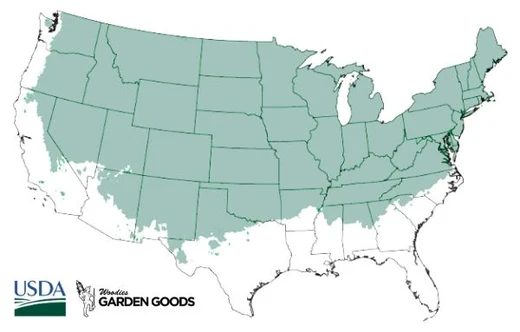
| Hardiness Zone: | 3-7 |
|---|---|
| Mature Height: | 10 to 15 Feet |
| Mature width: | 4 to 6 Feet |
| Sunlight: | Full sun |
| Bloom Time / Color | Non-blooming evergreen grown for silver-blue foliage |
| Soil Condition: | Well-drained soil; adaptable to lean, rocky, sandy, and average soils |
| Water Requirement | Medium during establishment; low water needs once established |
| Wildlife Value | Evergreen cover value for birds |
| Resistance (deer/disease/drought/etc.) | Deer resistant, drought tolerant once established, erosion tolerant, low-maintenance |
| Landscape Uses | Privacy screen, evergreen hedge, specimen planting, foundation accent, windbreak, property-line planting |
How to Care for Wichita Blue Juniper
Be sure to read about the recommended care instructions to keep your Wichita Blue Juniper Tree healthy and thriving for years to come!

How should I plant Wichita Blue Juniper?
Plant Wichita Blue Juniper in full sun in well-drained soil. Dig a hole about twice as wide as the root ball and no deeper than the root ball itself, then set the plant so the top of the root flare sits level with or slightly above the surrounding soil. Backfill with native soil, water deeply, and mulch around the base to help reduce weed competition and regulate moisture while the plant establishes. This evergreen works especially well in screening rows, sunny borders, and specimen plantings where it has enough room to develop its natural upright form.

How often should I water Wichita Blue Juniper after planting?
Water Wichita Blue Juniper deeply right after planting, then keep the soil evenly moist during the establishment period. In the first growing season, that usually means watering during dry spells so the roots can settle in and support strong top growth. Once established, Wichita Blue Juniper becomes notably drought tolerant and usually needs supplemental watering only during extended periods of hot, dry weather. Deep watering is better than frequent shallow watering, and overly wet soil is much more likely to cause trouble than occasional dryness.

When should I fertilize Wichita Blue Juniper?
Wichita Blue Juniper generally needs very little fertilizer. If the soil is especially poor, a light application of balanced slow-release fertilizer in spring is enough to support healthy growth. Avoid heavy feeding, because this plant performs well without aggressive fertilizing. In most landscapes, proper siting, full sun, and good drainage matter much more than rich soil or frequent fertilizer applications.

When and how should I prune Wichita Blue Juniper?
Wichita Blue Juniper needs very little pruning. If needed, light shaping or cleanup is best done in spring or early summer to preserve the plant’s natural upright pyramidal habit. Avoid heavy shearing, because this evergreen looks best when allowed to keep its natural form. Most of the time, pruning is limited to removing damaged tips or lightly refining the outline if the planting needs a cleaner edge.