
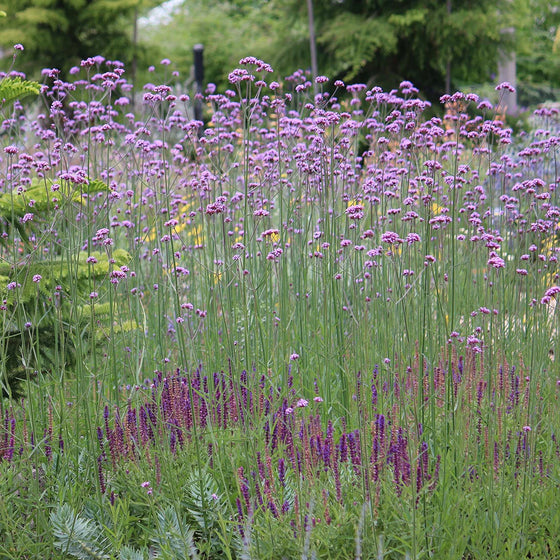


Images Depict Mature Plants
Tall Verbena (Verbena bonariensis)
Verbena bonariensis
Tall Verbena is one of the best plants for adding height without making a garden feel crowded. The purple flowers float above the border, pollinators love it, and it handles summer heat well once established. I like it with grasses, coneflowers, rudbeckia, salvia, and catmint. Just remember that it may self-seed, which is a benefit in naturalized gardens but something to manage in formal beds.

20% Off Sitewide Sale!
Use Code 'CLOSEOUT20' At Checkout
📦 Free shipping on orders over $99.
Delay shipping by leaving us a message at Checkout.
Share:Recommended Add-Ons



A Tall, Airy Verbena with Purple Flowers for Pollinator Gardens
Airy Purple Blooms That Float Above the Garden
Tall Verbena is a graceful flowering perennial grown for its slender upright stems and clusters of lavender-purple to violet-purple flowers. Also known as Purpletop Verbena, Purpletop Vervain, or Verbena bonariensis, this plant creates a light, floating effect in sunny borders because the blooms rise high above a lower base of foliage.
Instead of forming a dense wall of foliage, Tall Verbena lets surrounding plants show through. That makes it especially useful in layered borders, cottage gardens, meadow-style plantings, and pollinator gardens where movement, height, and soft color are part of the design.
Long Summer-to-Fall Flowering for Full Sun
Tall Verbena blooms from summer into fall, bringing long-lasting purple color during the hottest part of the growing season. The small flowers are borne in rounded clusters at the ends of branching stems, creating a loose yet highly visible display.
This extended bloom season makes Verbena bonariensis especially valuable with ornamental grasses, coneflowers, black-eyed Susans, salvias, catmint, sedum, yarrow, and other sun-loving perennials. It adds height without heaviness and can repeat color throughout a mixed planting.
A Pollinator Magnet for Bees and Butterflies
Tall Verbena is one of the best plants for attracting pollinators to a sunny garden. The nectar-rich flowers attract butterflies, bees, and other beneficial insects, making it a strong choice for pollinator gardens and wildlife-friendly landscapes.
Because the flowers are held on tall, open stems, pollinators can move through the plant easily. Gardeners often use it near patios, vegetable gardens, herb gardens, and perennial borders where pollinator activity adds both beauty and garden benefit.
Heat Tolerant, Drought Tolerant, and Easy to Use
Tall Verbena performs best in full sun and well-drained soil. Once established, it is tolerant of heat and short dry periods, making it useful in sunny summer gardens where softer plants may struggle.
It is also a good choice for naturalistic designs because it can self-seed where conditions are favorable. In colder climates, Verbena bonariensis is often grown as an annual that may return from seed. In warmer zones, it can behave more like a short-lived perennial.
Simple Care with Light Cleanup and Spring Pruning
Plant Tall Verbena in full sun with average, well-drained soil. Water regularly after planting until roots establish, then reduce watering once the plant is growing strongly. Avoid wet, heavy soils that stay soggy.
Deadheading is optional. Removing spent flowers can keep the plant tidier, while leaving seed heads can encourage self-seeding and provide a more natural garden look. In perennial zones, cut old stems back in late winter or early spring before new growth begins.

| Hardiness Zone: | 7-11 |
|---|---|
| Mature Height: | 3 to 6 Feet |
| Mature Width: | 1 to 3 Feet |
| Sunlight: | Full sun |
| Soil | Average, well-drained soil; avoid soggy soil |
| Water | Water regularly after planting; drought tolerant once established |
| Bloom Time / Color | Summer to fall; lavender-purple to violet-purple flower clusters |
| Ornamental Features | Tall airy habit, purple flower clusters, long bloom season, see-through structure, vertical texture |
| Wildlife Value | Attracts butterflies, bees, and beneficial pollinators |
| Resistance | Heat tolerant; drought tolerant once established; generally low maintenance in full sun and well-drained soil |
| Landscape Uses | Pollinator garden, cottage garden, meadow planting, perennial border, cut flower garden, sunny border, naturalized planting, container accent, mixed grass planting |
How to Care for Tall Verbena (Verbena bonariensis)
Before you buy a Tall Verbena Plant, make sure to read about the recommended care instructions to keep this plant healthy and thriving.
-v1782137846169.png?92x91)
How should I plant Tall Verbena?
Plant Tall Verbena in full sun with well-drained soil. Choose a sunny location where its tall, open flower stems can weave through other perennials without blocking them. It works especially well in mixed borders, cottage gardens, meadow-style plantings, pollinator gardens, and cut flower beds. Dig a hole about as wide as the root ball and just as deep. Set the crown level with the surrounding soil, backfill gently, and water thoroughly. Space plants about 18–24 inches apart so the stems have room to branch while still creating a natural, airy effect.

How often should I water Tall Verbena after planting?
Water Tall Verbena deeply after planting, then keep the soil evenly moist while the roots establish. During the first growing season, water when the top few inches of soil begin to dry, especially during hot or windy weather. Once established, Tall Verbena is drought-tolerant and can handle short dry periods. It still performs best with occasional deep watering during extended drought. Avoid soggy soil, which can weaken the plant and reduce performance.

When should I fertilize Tall Verbena?
Tall Verbena usually needs little fertilizer in average garden soil. If growth is weak, apply a light dose of balanced slow-release fertilizer or compost in spring. Avoid heavy fertilizing, especially with high-nitrogen products. Too much fertility can encourage leafy growth and reduce the open, graceful habit that makes Verbena bonariensis so useful in sunny borders.

When and how should I prune Tall Verbena?
Deadheading Tall Verbena during the season is optional. You can remove spent flowers for a tidier look, or leave seed heads in place if you want the plant to self-seed naturally. In perennial zones, cut old stems back in late winter or early spring before new growth begins. In colder climates where it is grown as an annual, remove frost-killed plants at the end of the season or leave seed heads briefly if you want to encourage volunteers.
Frequently Asked questions
Is Tall Verbena the same as Verbena bonariensis?
How tall does Verbena bonariensis grow?
Does Tall Verbena come back every year?
Does Verbena bonariensis need full sun?
Is Tall Verbena good for pollinators?
Does Verbena bonariensis self-seed?
Related Blogs


Other Products you may be interested in


Customer Reviews
- Rated 5 out of 5 stars2 months agoBeautiful and healthy
Everything arrived in perfect condition, I was blown away at how well everything was packaged. Fulls grown with beautiful flowers! I will definitely buy more plants from Woodies Garden Goods!
KBKristi b.Verified Buyer