

Images Depict Mature Plants
Gold Standard Hosta
Hosta fortunei 'Gold Standard'
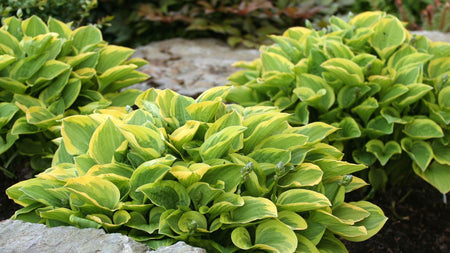
Gold Standard Hosta is one of those classic plants that has earned its place in the garden. I've always liked how the foliage starts out chartreuse in spring and gradually turns a beautiful golden yellow while the green edges remain distinct. It brings a tremendous amount of color to shaded beds, especially when planted beside blue Hostas, dark Heuchera, or Ferns. My favorite way to use Gold Standard is in groups beneath trees or along a shaded foundation where those large golden leaves can really brighten the landscape. Give it some morning sun, protect it from hot afternoon sunlight, and keep the soil evenly moist. Just remember that deer love Hostas, so take precautions where browsing is common.
$29.56 with code SAVINGS20 at checkout Save $7.39
📦 Free shipping on orders over $99.
Delay shipping by leaving us a message at Checkout.
Share:



A Golden Variegated Hosta That Brings Brilliant Color to Shade Gardens
Beautiful Golden Leaves with Bold Green Margins
Gold Standard Hosta is one of the most popular variegated Hostas for bringing bright foliage color into shaded landscapes. Botanically known as Hosta ‘Gold Standard’, this classic perennial produces broad, heart-shaped leaves with brilliant golden-yellow centers surrounded by irregular dark green margins. The contrast creates a striking display that immediately brightens woodland gardens, shaded borders, foundation beds, and areas beneath mature trees.
Unlike Hostas grown primarily for blue or solid green foliage, Gold Standard offers a vibrant combination of gold and green that draws attention throughout the growing season. Its large, slightly textured leaves form an attractive rounded mound that provides structure and a lush appearance. For homeowners looking for a dependable golden Hosta that makes shaded garden beds feel brighter and more colorful, Gold Standard remains an excellent choice.
Chartreuse Spring Leaves Turn Brilliant Gold in Summer
One of the most remarkable qualities of Gold Standard Hosta is the way its foliage changes color as the growing season progresses. New leaves emerge in spring with chartreuse or yellow-green centers and darker green margins. As temperatures warm and the plant receives gentle morning sunlight, the leaf centers gradually develop richer golden-yellow coloring while the irregular green edges remain distinctly visible.
This seasonal transformation makes Gold Standard particularly valuable for gardeners who appreciate foliage interest beyond a single flowering period. The golden centers may become increasingly pale toward the end of summer, especially in brighter conditions. Plant Gold Standard in an area that receives some morning sunlight or filtered afternoon light to encourage its characteristic golden color, without exposing the leaves to intense summer heat that may cause scorching.
Large Mounding Foliage for Borders, Foundations, and Woodland Gardens
Gold Standard Hosta typically develops a mature foliage mound approximately 20 to 24 inches tall and 36 inches wide, although older plants may spread farther in favorable growing conditions. Its broad, overlapping leaves create a full appearance that works beautifully as a specimen plant or repeated throughout a shaded garden bed. The relatively substantial size makes Gold Standard especially useful for filling spaces between shrubs and providing a colorful ground layer beneath taller landscape plants.
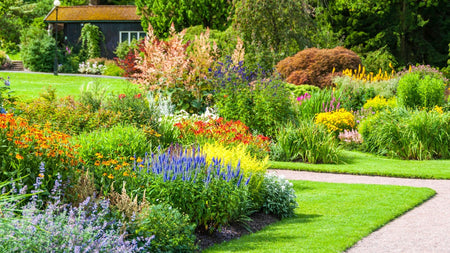
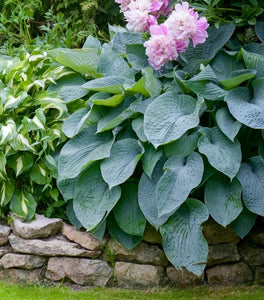
For an attractive garden design, plant several Gold Standard Hostas together along a woodland path, shaded foundation, or mixed perennial border. The golden foliage pairs beautifully with deep green Ferns, blue Hostas, dark purple Coral Bells, and Japanese Forest Grass. Its rounded habit also works well in large decorative containers, where the contrasting leaf colors can be appreciated up close throughout the growing season.
Lavender Summer Flowers Add Height and Hummingbird Appeal
Although Gold Standard Hosta is primarily grown for its beautiful foliage, it also produces attractive summer flowers. In July and August, slender flower stalks rise above the golden leaves, carrying clusters of pale lavender-to-pinkish-lavender funnel-shaped blossoms. The flowering stems can reach approximately 42 inches tall, adding vertical interest above the lower foliage mound.
These delicate summer flowers may attract hummingbirds and other flower-visiting wildlife, providing an additional reason to include Gold Standard in a shade garden. The soft lavender flowers contrast beautifully with the golden foliage without overwhelming the plant's colorful leaves. After flowering, the spent stalks can be removed to maintain a neat appearance, while the variegated foliage continues providing ornamental interest until autumn.
Easy-Care Golden Hosta for Shade and Morning Sun
Gold Standard Hosta performs best in partial shade with organically rich, well-drained soil that remains evenly moist. Some morning sunlight helps develop its brightest golden foliage, while afternoon shade protects the leaves from excessive heat. Plants grown in deeper shade may retain more chartreuse coloring rather than developing the intense golden centers for which the cultivar is known. Avoid planting in exposed locations with intense afternoon sunlight, particularly in warmer climates.
Once established, Gold Standard is a relatively low-maintenance perennial that returns each spring with fresh foliage. Water regularly during dry weather, apply mulch to help conserve soil moisture, and remove damaged leaves as needed. One important consideration is that Hostas are attractive to deer and rabbits, so protection may be necessary where browsing pressure is high. With proper shade, consistent moisture, and occasional protection from wildlife, Gold Standard can become a long-lived and beautiful feature of the landscape.
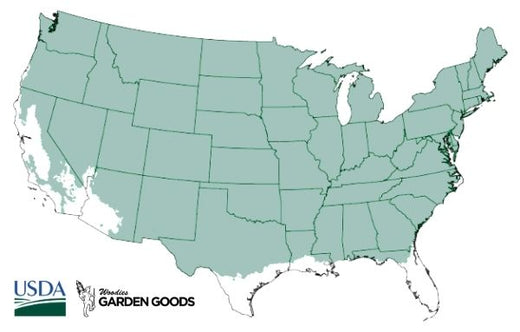
| Hardiness Zone: | 3-8 |
|---|---|
| Mature Height: | 20 to 24 inches tall |
| Mature Width: | Up to 36 inches wide |
| Sunlight: | Partial shade to full shade; morning sun encourages golden color |
| Soil | Organically rich, moist but well-drained soil |
| Water Requirements: | Average to consistent moisture; avoid prolonged drying |
| Bloom Time / Color | July to August; pinkish-lavender flowers |
| Foliage | Chartreuse to yellow-green centers; dark green margins |
| Ornamental Features | Golden variegation; seasonal color change; large leaves; rounded mound; lavender flowers |
| Wildlife Value | Flowers may attract hummingbirds and other nectar-feeding visitors |
| Resistance | Low; deer commonly browse Hostas |
| Landscape Uses | Shade gardens; woodland borders; foundation beds; under-tree plantings; specimen clumps; mass plantings; large containers |
How to Care for Gold Standard Hosta
Be sure to read our planting instructions to ensure a healthy and happy Gold Standard Hosta plant for years to come!

How should I plant Gold Standard Hosta?
Plant Gold Standard Hosta in partial shade to full shade, selecting a location that receives gentle morning sunlight or filtered light for the brightest golden foliage. Prepare a planting hole approximately twice as wide as the root ball and just as deep, then position the plant so its crown remains level with the surrounding soil. Gold Standard prefers organically rich, moist but well-drained soil, so incorporating organic matter may be helpful where the existing soil is especially poor. Backfill gently, water thoroughly, and apply mulch around the root zone without covering the crown. Space plants approximately 36 inches apart to allow the mature foliage mounds to develop naturally. Gold Standard looks particularly attractive when planted with Ferns, Brunnera, Japanese Forest Grass, Hellebores, and contrasting blue or green Hostas. When planting beneath mature trees, avoid damaging major tree roots and remember that the established trees will compete with the Hostas for moisture. Additional watering may be necessary during the first few growing seasons.

How often should I water Gold Standard Hosta after planting?
Water Gold Standard Hosta thoroughly immediately after planting, then keep the soil evenly moist while the root system establishes. During the first growing season, check the soil regularly and water deeply when the upper inch or two begins to dry. Plants growing beneath established trees may require more frequent watering because tree roots compete for available moisture. Direct water toward the soil rather than repeatedly wetting the leaves. Once established, Gold Standard can tolerate occasional periods of dry shade, but the fullest foliage and most attractive golden color develop when soil moisture remains reasonably consistent. Prolonged drought can cause leaf edges to brown or reduce the size of the foliage mound. Mulch helps conserve moisture and moderate soil temperatures, while afternoon shade reduces excessive water loss during hot summer weather.

When should I fertilize Gold Standard Hosta?
Gold Standard Hosta generally requires only moderate fertilization when planted in fertile, organically enriched garden soil. In early spring, as the new shoots begin emerging, apply a light layer of compost or a balanced slow-release perennial fertilizer according to the manufacturer's directions. This provides nutrients for the development of the broad leaves that create the plant's characteristic golden and green foliage display. Avoid excessive fertilization, particularly with high-nitrogen products, which can encourage overly soft growth. Established plants growing well in healthy soil may not require additional fertilizer every year. Consistent moisture, suitable shade, and good soil structure generally have a greater influence on foliage quality than frequent feeding.

When and how should I prune Gold Standard Hosta?
Gold Standard Hosta requires very little pruning because it naturally develops a rounded mound of foliage. During the growing season, remove individual leaves that have become damaged by slugs, storms, or other problems. After the lavender flowers fade in summer, cut the spent flower stalks near the crown to restore the plant's neat appearance. Avoid removing healthy green foliage unnecessarily, since the leaves help the plant store energy for the following spring. As temperatures cool in autumn, the leaves naturally turn yellow and die back. Dead foliage can be removed in late fall after dormancy or in early spring before new shoots begin emerging. Mature clumps may also be divided in early spring when the shoots first appear or in fall if the plant becomes crowded. Healthy Gold Standard Hostas can remain undisturbed for many years, so division is generally optional rather than required annually.