

Best Privacy Plants for Shaded Yards
Published On: Jun 5, 2026
Updated On: Sep 24, 2026
Share:
Understanding Shade Before You Plant
One of the biggest mistakes homeowners make is assuming all shade is the same. Before selecting privacy plants, determine which type of shade you have:
Partial Shade — 3–6 hours of direct sunlight daily, often morning sun with afternoon shade.
Dappled Shade — Filtered sunlight beneath mature trees; bright conditions throughout the day.
Full Shade — Less than 3 hours of direct sunlight, common on the north side of homes or beneath dense tree canopies.
Many privacy shrubs perform beautifully in partial shade and dappled shade but struggle in deep shade. Matching the plant to the site is the first step toward success.
Skip the Fence — Create a Living Privacy Screen
A living privacy screen offers benefits a fence simply can't. Privacy plants soften property lines, reduce noise, provide wildlife habitat, improve curb appeal, add year-round beauty, and can increase property value. Even better, a well-designed privacy planting becomes more attractive with age.
Hollies: The Best Privacy Plants for Shade
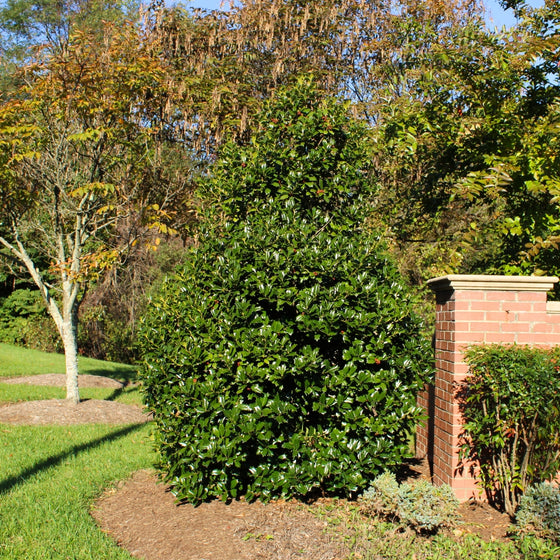
Nellie Stevens Holly
If you had to choose one evergreen privacy shrub for partial shade, Nellie Stevens Holly would be hard to beat. It offers dense evergreen foliage, fast growth, excellent screening ability, attractive red berries, and strong adaptability. Nellie Stevens grows into a beautiful evergreen privacy screen while tolerating conditions that many traditional privacy trees struggle with.
Oakland Holly
For homeowners who want a more upright form, Oakland Holly delivers. Its distinctive oak-shaped foliage provides year-round structure while maintaining excellent screening. Oakland Holly works beautifully along property lines, around patios, and as a backyard privacy hedge.
American Holly
If your goal is a more natural woodland screen, American Holly is difficult to beat. Native, durable, and beautiful, it creates a classic evergreen backdrop while supporting birds and wildlife.
Think Beyond a Single Row — Layer Your Shrubs
One of the best strategies for creating privacy in shade is to think beyond a single row of plants. Layering shrubs creates a much more effective screen. Start with larger anchor plants, then add flowering shrubs and evergreen structure in front. The result feels natural, attractive, and far more interesting than a traditional hedge.
Rhododendrons: Woodland Privacy All-Stars
Few shrubs are better adapted to shade than rhododendrons. Their large evergreen leaves provide excellent year-round screening, while their spring blooms deliver spectacular seasonal color. Benefits include evergreen foliage, excellent shade tolerance, large mature size, beautiful spring flowers, and natural woodland adaptability. A mass planting of rhododendrons can create a surprisingly effective privacy screen beneath mature trees.
Mountain Laurel: Native Beauty and Privacy
For gardeners looking for a native evergreen shrub, Mountain Laurel is a fantastic choice. Its glossy foliage provides year-round screening, while its intricate spring flowers are among the most beautiful blooms in the woodland garden. Mountain Laurel works especially well along woodland property lines, in naturalized landscapes, beneath mature hardwood trees, and in dappled shade gardens.
Camellias: Privacy with Four-Season Interest
In warmer portions of the country, camellias make exceptional privacy plants. Their glossy evergreen foliage provides screening year-round, while their flowers brighten the landscape during seasons when little else is blooming. They bring evergreen structure, fall or spring flowers, excellent shade tolerance, and an elegant appearance. Camellias are especially effective around patios, entryways, and shaded garden rooms.
Don't Overlook Hydrangeas
Not every privacy screen has to be evergreen. Limelight Hydrangea and Little Lime Hydrangea perform well in partial shade, providing seasonal privacy with large summer blooms, dense branching, soft screening, and excellent pollinator value. Combined with evergreen shrubs, they create layered privacy that feels lush and inviting.
Privacy Plant Combinations for Woodland Gardens

Some of the most effective woodland privacy plantings use thoughtful combinations of shrubs at different heights and bloom times. Here are three to consider:
Evergreen Privacy: Nellie Stevens Holly anchors the back, with Oakland Holly and Mountain Laurel layered in front for a dense, year-round screen.
Flowering Privacy Screen: Rhododendrons provide the evergreen mass, with Hydrangeas and Summersweet (Clethra) adding seasonal color and soft texture through summer.
Natural Woodland Screen: American Holly, Mountain Laurel, and native Viburnums create a naturalistic screen that supports birds and pollinators while blending seamlessly into an existing woodland edge.
Don't Forget Ground-Level Privacy
Sometimes privacy isn't about blocking a two-story house. Sometimes it's about creating separation around patios, decks, and outdoor living spaces. Plants like hellebores, ferns, hostas, heuchera, and carex grasses, layered beneath larger shrubs, help create a lush, enclosed feeling that makes outdoor spaces more comfortable.
Care Tips for Shade Privacy Plants
Shade plants generally require less water than plants in full sun, but newly planted shrubs still need consistent moisture as they establish. For best results, mulch around root zones, water deeply during dry periods, avoid excessive fertilization, maintain good airflow, and protect roots from competition with large trees. Most privacy shrubs spend the first few years developing roots before they begin producing significant screening growth. Patience pays off.
Woodie's Take
Some of the most beautiful privacy screens I've ever seen weren't planted in full sun. They were planted beneath mature trees, along woodland edges, and in places where traditional privacy trees would never thrive. The key is to work with the shade rather than fight it.
Use hollies for structure. Add rhododendrons and mountain laurels for evergreen screening. Layer in hydrangeas for seasonal interest. Mix textures, heights, and bloom times to create a living privacy screen that feels natural.
Because shade doesn't have to limit your options. In many cases, it opens the door to some of the most beautiful privacy plantings you'll ever create.