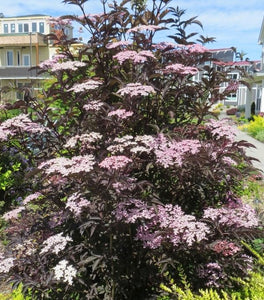
Images Depict Mature Plants
Lemony Lace® Elderberry
Sambucus racemosa 'SMNSRD4'
Lemony Lace® is the elderberry I would use when the landscape needs brightness and texture more than fruit. The golden, finely cut foliage gives you that airy Japanese-maple feel, but in a tough shrub that handles real garden conditions and deer pressure better than many delicate-looking plants. I like it against dark evergreens, purple foliage, or deep green foundation shrubs where the color can really pop. Just remember that this is an ornamental red elderberry, not an edible harvest elderberry, and give it afternoon shade in hotter spots if the foliage starts to stress.

20% Off Sitewide Sale!
Use Code 'ENDOFSEASON20' At Checkout
📦 Free shipping on orders over $99.
Delay shipping by leaving us a message at Checkout.
Share:


Lemony Lace® Elderberry Adds Golden Foliage, Fine Texture, and Easy Color
Golden Cutleaf Foliage That Lights Up the Landscape
Lemony Lace® Elderberry is a colorful ornamental elderberry grown for its finely dissected golden foliage, soft texture, and bright landscape presence. The leaves emerge with red tones in spring, then shift into glowing yellow, chartreuse, and lime-green shades as the season progresses. The look is light, feathery, and dramatic without feeling heavy.
This shrub is especially useful when a planting bed needs contrast. Use it near dark evergreens, purple foliage shrubs, blue-green conifers, burgundy perennials, or deep green foundation plants to make the whole landscape feel more intentional. Its texture gives a Japanese-maple-like effect, but in a hardy, fast-growing shrub form.
White Spring Flowers and Red Berries for Birds
In early spring, Lemony Lace® Elderberry can produce clusters of creamy white flowers before or as the foliage develops. The flowers add a fresh seasonal detail, but the foliage is the main reason gardeners choose this plant. After flowering, red berries may follow later in the season if the shrub is not pruned too heavily.
Those red berries are ornamental and attractive to birds, but they are not for human eating. This is an ornamental red elderberry selection, not an edible American elderberry grown for syrup, jelly, wine, or harvest. If you want elderberries for fruit production, choose edible American elderberry selections instead.
A Deer-Resistant Shrub With Big Foliage Impact
Lemony Lace® Elderberry is valued for being easy to grow, colorful, and very deer-resistant in many landscapes. That combination makes it especially useful in foundation plantings, mixed borders, woodland edges, wildlife gardens, and informal hedges where foliage color matters as much as flowers.
The finely cut leaves give the plant a soft, airy texture that pairs well with broadleaf shrubs and heavier evergreens. Plant it with boxwood, inkberry holly, arborvitae, viburnum, hydrangea, spirea, smokebush, ninebark, ornamental grasses, catmint, heuchera, or coneflowers for contrast in color and leaf shape.
Best Color in Sun, Better Protection in Hot Climates
Lemony Lace® Elderberry grows in full sun to part sun. In cooler northern climates, more sun helps produce the strongest golden foliage color. In warmer regions, part sun or light afternoon shade can help protect the foliage and keep the plant looking fresher through summer heat.
This shrub is adaptable to a range of soil pH and moisture levels, but it performs best in well-drained soil with steady moisture during establishment. Avoid extremely dry, harsh sites until the plant is well rooted. Mulch helps moderate soil moisture and keeps the root zone cooler during hot weather.
Easy Pruning for Shape, Size, and Fresh Growth
Lemony Lace® Elderberry can grow about 4 to 7 feet tall and wide, but it can be pruned to stay smaller. It blooms on old wood, so heavy spring pruning can reduce flowers and fruit. If flowers and berries matter to you, prune lightly after flowering.
If your main goals are golden foliage and a compact size, you can prune more aggressively when the plant is young to encourage a fuller shape. Older plants can be thinned by removing weak, damaged, or older canes. In some landscapes, Lemony Lace® can even be cut back and grown more like a colorful foliage perennial, though that approach reduces flowering and fruiting.
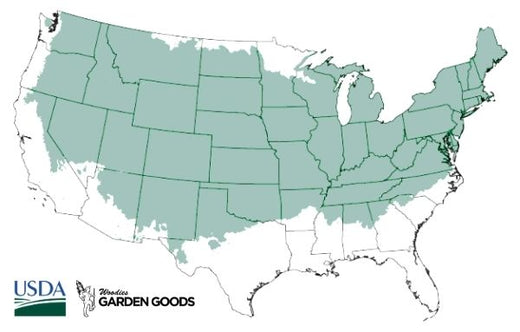
| Growth Zone: | 4-7 |
|---|---|
| Mature Height: | 4 to 7 feet |
| Mature Width: | 4 to 7 feet |
| Sunlight: | Full sun to part sun; light afternoon shade is helpful in warmer climates |
| Soil Condition: | Adaptable to many well-drained soils; tolerates a range of soil pH and moisture levels |
| Water Requirement: | Average moisture; water regularly until established |
| Bloom Time / Color: | Early spring; creamy white flower clusters |
| Fruit / Berries | Red berries may form after flowering; attractive to birds but not edible for humans |
| Foliage | Finely cut golden yellow foliage; red-toned new growth; chartreuse to lime-green seasonal color |
| Ornamental Features | Golden lace foliage, red spring new growth, white spring flowers, red berries for birds, fine texture, mounded habit |
| Wildlife Value: | Flowers support pollinators; red berries support birds and wildlife |
| Resistance (deer/disease/drought/etc.): | Very deer resistant; rabbit resistant; foliage selected for improved sun tolerance |
| Landscape Uses: | Specimen shrub, mixed borders, foundations, informal hedges, woodland edges, wildlife gardens, color accents, bright foliage contrast |
How to Care for Lemony Lace® Elderberry
Be sure to read our planting instructions to ensure healthy and happy Lemony Lace® Elderberry Shrubs for years to come!
-v1784738347178.png?92x91)
How should I plant Lemony Lace® Elderberry?
Plant Lemony Lace® Elderberry in full sun to part sun with well-drained soil. In cooler regions, more sun helps bring out the brightest golden foliage. In warmer regions, choose a site with morning sun and light afternoon shade to help reduce summer stress. Dig a hole two to three times wider than the root ball and about the same depth as the container. Set the top of the root ball level with the surrounding soil, backfill with native soil, water deeply, and apply mulch around the root zone while keeping mulch away from the stems.
-v1784738347762.png?89x84)
How often should I water Lemony Lace® Elderberry after planting?
Water Lemony Lace® Elderberry deeply after planting and keep the soil evenly moist during the first growing season. Newly planted shrubs need consistent moisture while roots establish, especially during heat, drought, wind, or full-sun exposure. Once established, Lemony Lace® is adaptable and easier to maintain, but it still looks best with supplemental water during extended dry periods. Avoid keeping the soil soggy, and avoid letting the plant dry out completely during the first year.
-v1784738348332.png?90x89)
When should I fertilize Lemony Lace® Elderberry?
Fertilize Lemony Lace® Elderberry in early spring if growth is weak or the soil is poor. Use a balanced slow-release shrub fertilizer or topdress with compost around the root zone. In average garden soil, this shrub often grows well without heavy feeding. Avoid late-season fertilizing because tender growth can be more vulnerable to winter damage. Good light, regular establishment watering, mulch, and smart pruning are more important than frequent fertilizer applications.

When and how should I prune / cut back Lemony Lace® Elderberry?
Lemony Lace® Elderberry blooms on old wood, so pruning in early spring can reduce flowers and berries. If you want spring flowers and red berries for birds, prune lightly right after flowering. Remove dead, damaged, weak, crossing, or older canes as needed. If your main goal is bright foliage and a smaller plant, you can prune more aggressively to encourage fresh, dense growth. Young plants benefit from pruning to build a fuller shape. Older plants can be trimmed after bloom or thinned by removing older canes near the base.