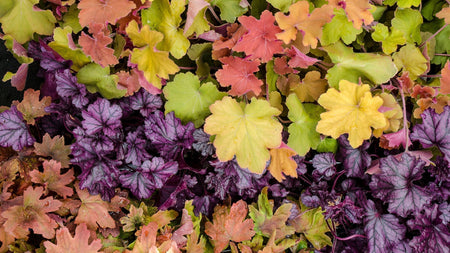


Images Depict Mature Plants
FYRE WING™ Spinel Coral Bells
Heuchera sanguinea 'Spinel'
I've always appreciated Heuchera for its tremendous range of foliage colors, but FYRE WING™ Spinel Coral Bells brings something genuinely different to the table. The finely divided leaves are what catch my attention first. They have a delicate, lace-like appearance that you simply don't see in many traditional Coral Bells, and the combination of purple-bronze foliage with subtle red and silver highlights gives this plant wonderful depth. I particularly like its compact, full-growing habit because it makes Spinel easy to use along the front of a perennial border or in mixed containers. My favorite combination would be Spinel planted beside FYRE WING™ Heliodor Coral Bells or golden Japanese Forest Grass, allowing the contrast between dark and light foliage to do most of the work. One important thing I always recommend with Heuchera is proper drainage. Never bury the crown or allow the roots to remain continuously wet. Unlike varieties purchased mainly for their flowers, Spinel is a foliage plant through and through, and that's precisely why I like it. For gardeners looking for something unusual that provides rich color, fine texture, and a tidy appearance, this is a terrific addition to the Coral Bells collection.
$39.96 with code SAVINGS20 at checkout Save $9.99
📦 Free shipping on orders over $99.
Delay shipping by leaving us a message at Checkout.
Share:Recommended Add-Ons



Discover FYRE WING™ Spinel Coral Bells with intricate purple-bronze foliage, red and silver highlights, and a compact habit for borders and containers.
Discover the Unusual Beauty of FYRE WING™ Spinel Coral Bells
FYRE WING™ Spinel Coral Bells brings an entirely new level of texture to the colorful world of Heuchera. Developed by Terra Nova Nurseries, this exciting perennial features deeply divided, lace-like leaves in rich purple-bronze tones, accented with subtle shades of red and silver. Unlike traditional Coral Bells with broadly rounded foliage, Spinel produces intricately shaped leaves that create an almost delicate, ornamental appearance. The result is a plant that immediately draws attention, especially when positioned where homeowners can appreciate the detail of its foliage. Its exceptionally dense growth gives the mound a full, plush appearance that makes it equally attractive as a standalone accent or part of a mixed planting.
What I particularly like about Spinel is the depth of color. Rather than displaying a single flat shade of purple, its foliage features layered bronze, wine, red, and silvery highlights that shift as the light moves across the leaves. This gives the plant a richness that works beautifully alongside chartreuse, silver, and fresh green foliage. Despite its sophisticated appearance, Spinel remains a relatively compact perennial, making it practical for smaller gardens and decorative containers. For anyone searching for an unusual Coral Bells variety that combines dramatic foliage color with finely detailed leaf texture, this introduction deserves a prominent place in the garden.
Purple-Bronze Leaves with Red and Silver Highlights Create Exceptional Color
The foliage is unquestionably the main attraction of FYRE WING™ Spinel Coral Bells. Each leaf features a striking combination of deep purple and bronze, with hints of red and silver that add contrast and dimension. These colors create a sophisticated appearance that feels particularly effective in mixed perennial borders where green foliage dominates. The leaves are not simply scalloped, as in many familiar Heuchera varieties. They are finely dissected, creating a distinctly lacy appearance that makes the plant look lighter and more intricate than its dense growth habit might suggest.
I especially appreciate the way Spinel combines bold color with delicate texture. Dark-leaved perennials sometimes appear visually heavy when planted in groups, but Spinel's finely cut foliage softens that effect. It provides rich coloration without creating a solid, uninterrupted mass of dark leaves. Place it beside golden Japanese Forest Grass, lime-green Hostas, or silver-leaved perennials, and the individual characteristics of each plant become more noticeable. Spinel also looks beautiful against pale stone, light-colored containers, and natural mulch. Its foliage can remain ornamental beyond the principal growing season in suitable climates, offering extended seasonal interest where winter conditions permit leaf retention.
Delicate Lace-Cut Leaves Add Texture to Borders and Containers
One of the most exciting characteristics of the FYRE WING series is its distinctive leaf shape. Spinel represents Terra Nova Nurseries' work developing reliably expressed lace-like foliage in purple-toned Heuchera. The sharply divided leaves create a completely different impression from the rounded and gently lobed foliage commonly associated with Coral Bells. This makes Spinel particularly useful for gardeners who enjoy combining contrasting plant textures. Its intricately cut leaves provide visual movement and detail, even though the plant itself maintains a compact, mounding form.
In landscape design, texture is every bit as important as color. I often find that a planting becomes more interesting when finely divided foliage is placed beside plants with broader, simpler leaves. Spinel Coral Bells works exceptionally well with Hostas, ferns, and Japanese Forest Grass, helping create a layered planting that feels intentional rather than crowded. It is also an excellent choice for mixed containers, where its unusual foliage can be appreciated up close. Plant it near the edge of a decorative pot or toward the front of a perennial grouping so the intricate leaves remain visible. The combination of rich foliage color and unusually fine texture gives Spinel a distinctive role that many traditional Coral Bells cannot duplicate.
A Compact, Full-Growing Coral Bells for Small Gardens
FYRE WING™ Spinel Coral Bells forms a low, densely packed mound that reaches approximately 7 inches tall and 14 inches wide at maturity. Flowering stems may rise to about 12 inches, but the foliage remains the dominant feature. Its relatively broad spread compared with its height produces a comfortable, cushion-like appearance that looks finished without becoming tall or unruly. This growth habit makes Spinel useful for gardeners who need interesting foliage in limited spaces, particularly along the edges of perennial beds, beside garden paths, or beneath taller companion plants.
Its compact proportions also make Spinel a practical choice for patio planters, decorative containers, and smaller mixed perennial arrangements. In a container, the dense foliage gives the planting immediate visual substance, while the finely divided leaves keep the composition from appearing heavy. I like using dark-leaved Coral Bells near lighter plants because the contrast helps define the shape of the entire arrangement. Spinel is particularly effective with gold, lime, and silver companions. When several plants are used together, allow approximately 12 to 15 inches between centers for a fuller display, adjusting spacing as desired. Whether grown individually or in groups, Spinel delivers substantial ornamental impact without requiring a large planting area.
Subtle Spring Flowers Keep the Focus on Spectacular Foliage
Although FYRE WING™ Spinel Coral Bells does produce flowers, this cultivar is intentionally more about foliage than bloom. During May and June, slender stems can rise above the mound carrying small, pale flowers in white to yellowish tones. The flowering display is relatively restrained, allowing the richly colored leaves to remain the visual centerpiece. For gardeners who prefer perennials with a tidy appearance and little interruption to their foliage display, this is a welcome characteristic. The flowers add a delicate seasonal accent without overwhelming the plant's compact structure.
This makes Spinel especially suitable for formal-looking container arrangements and carefully composed perennial borders where consistent foliage presentation matters more than a dramatic flowering season. The small blossoms may attract visiting insects, although the plant should not be chosen primarily for pollinator performance. Instead, consider the flowers a pleasant addition to an already beautiful foliage plant. Once flowering has finished, the spent stems can be trimmed away to restore the clean mound. Because Spinel generally flowers sparingly, it maintains a neat appearance with relatively little deadheading. For gardeners who appreciate long-lasting foliage color rather than a brief burst of flowers, Spinel offers a particularly appealing option.
Beautiful Color for Sunlit Borders and Partially Shaded Gardens
FYRE WING™ Spinel Coral Bells performs in full sun to partial shade, although the best location depends on climate and summer temperatures. In cooler regions, the plant can tolerate more direct sunlight, especially when soil moisture remains adequate. In warmer areas, morning sun with protection from intense afternoon heat is often a safer choice. This is particularly important for container-grown plants, where roots can dry out more quickly than in an established garden bed. Providing the right balance of sunlight and moisture helps the leaves maintain their attractive color and condition.
Spinel prefers organic-rich soil with moderate drainage, making it well suited to prepared perennial beds and high-quality container mixes. Like many Coral Bells, it is especially important that the crown not be buried below the soil surface. Keeping the crown at the appropriate level helps prevent problems associated with excess moisture. Once established, Spinel generally prefers average watering and should not be kept continuously wet. Allow the upper soil to begin drying before watering again, while avoiding severe drought. With proper drainage, a suitable light exposure, and occasional removal of damaged foliage, this unusual Heuchera can provide beautiful, low-growing color through much of the gardening season.
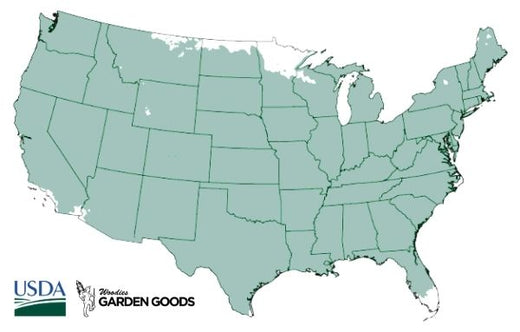
| Hardiness Zone: | 4-9 |
|---|---|
| Mature Height: | 7 inches; foliage mound |
| Mature Width: | 14 inches |
| Sunlight: | Full sun to partial shade; afternoon protection beneficial in hot climates |
| Soil | Moderately well-drained; organic-rich soil preferred |
| Water Requirements: | Average; avoid prolonged saturation |
| Bloom Time / Color | May to June; White to pale yellow |
| Foliage | Purple-bronze; red and silver highlights |
| Ornamental Features | Deeply dissected lace-like leaves; dense colorful mound |
| Wildlife Value | Flowers may attract visiting insects |
| Resistance | Often less preferred by deer than tender perennials; not deer-proof |
| Landscape Uses | Border edging; mixed containers; foliage gardens; accents; contrasting plant combinations |
How to Care for FYRE WING™ Spinel Coral Bells
After purchasing your FYRE WING™ Spinel Coral Bells, be sure to read our care instructions to ensure a happy, healthy plant.

How should I plant FYRE WING™ Spinel Coral Bells?
Plant FYRE WING™ Spinel Coral Bells in full sun to partial shade, selecting a location that receives some afternoon protection in especially hot climates. Prepare the planting area with moderately well-drained soil enriched with organic matter if needed. Dig a hole approximately twice the width of the root ball and no deeper than the root ball itself. Set the plant so the crown remains at or slightly above the surrounding soil level, then backfill gently and water thoroughly. Allow approximately 12 to 15 inches between plants when creating a continuous border or grouped foliage display. Spinel is especially attractive along garden paths, at the front of perennial beds, and in containers with plants that contrast with its dark foliage. When growing it in pots, use a quality, well-draining container mix and ensure drainage holes are present. Avoid covering the crown with excessive mulch.

How often should I water FYRE WING™ Spinel Coral Bells after planting?
Water thoroughly immediately after planting, then monitor soil moisture carefully during establishment. The goal is to maintain lightly moist but well-drained soil, allowing the upper layer to begin drying between waterings. Newly planted Coral Bells may need more frequent watering during hot or windy periods, particularly in containers. Avoid watering on a fixed schedule without checking the soil. Once established, Spinel generally requires average garden moisture and benefits from drying slightly between waterings. Excessively wet soil can be more damaging than modest periods of dryness. In summer, water at the base of the plant rather than repeatedly soaking the foliage. Container-grown plants will need more frequent moisture checks because their root zones can dry relatively quickly.

When should I fertilize FYRE WING™ Spinel Coral Bells?
Fertilize FYRE WING™ Spinel Coral Bells in early spring when active growth resumes. In moderately fertile garden soil, a light application of balanced, slow-release fertilizer or well-finished compost is usually sufficient. The goal is to encourage healthy foliage development without producing excessive, soft growth. Follow the product label and avoid applying fertilizer directly against the crown. Coral Bells generally do not require heavy feeding. Overfertilizing can encourage weak, overly lush growth and may increase the need for additional watering. Container plants may benefit from occasional light feeding during active growth, depending on the potting mix and fertilizer already included. Avoid heavy late-season applications.

When and how should I prune FYRE WING™ Spinel Coral Bells?
FYRE WING™ Spinel Coral Bells requires minimal pruning. In early spring, remove leaves damaged by winter weather and tidy the mound as new foliage begins to emerge. Take care not to cut into or damage the crown, since the new growth develops from that central area. Use clean, sharp pruning tools and remove only material that is dead or unattractive. After flowering, trim spent flower stems back toward the foliage mound to maintain the plant's compact appearance. Because Spinel is a relatively shy bloomer, flower-stem removal is usually a minor task. If older plants become woody or develop raised crowns over time, they may benefit from careful division or resetting at the appropriate planting depth.