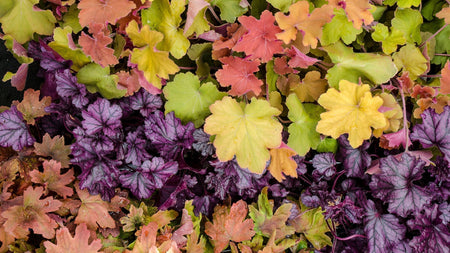


Images Depict Mature Plants
FYRE WING™ Jadeite Coral Bells
Heuchera villosa 'Jadeite'
Jadeite Coral Bells requires very little routine pruning. In early spring, inspect the plant and remove foliage damaged by winter weather. Use clean pruning shears and avoid cutting into the crown. If the plant retains attractive leaves through winter, leave them in place until they naturally deteriorate or until spring cleanup becomes necessary. Once the white flowers have faded, remove spent flower stems close to the foliage mound to restore a tidy appearance. Older Heuchera plants may eventually develop woody or elevated crowns. If that happens, consider carefully lifting, dividing, or resetting the plant in an appropriate location. Avoid cutting back all healthy foliage unnecessarily in autumn.
$39.96 with code SAVINGS20 at checkout Save $9.99
📦 Free shipping on orders over $99.
Delay shipping by leaving us a message at Checkout.
Share:Recommended Add-Ons


FYRE WING™ Jadeite Coral Bells – Fresh Green Lace-Like Foliage with an Exceptionally Soft, Textured Appearance
FYRE WING™ Jadeite Coral Bells Brings an Entirely New Look to Green Heuchera
FYRE WING™ Jadeite Coral Bells proves that a perennial doesn't need brilliantly colored leaves to become a standout in the garden. Developed by Terra Nova Nurseries, this exciting introduction features fresh green foliage with broad, deeply divided leaves and an exceptionally fuzzy surface. The unusual leaf shape creates a softly textured appearance that is noticeably different from conventional Coral Bells. Instead of relying on broad, rounded leaves, Jadeite offers a finely detailed foliage display that adds interest even when the plant is not flowering. Its dense, mounding growth gives it a lush appearance, making it a beautiful choice for gardeners who appreciate the quieter, more natural side of ornamental foliage.
What I particularly like about Jadeite is how easily it can become part of a well-designed planting. Green foliage sometimes gets overlooked because it doesn't immediately command attention like purple or red leaves, but a well-chosen green perennial can make every surrounding plant look better. Jadeite does exactly that. Its unusual leaf texture adds visual interest, while its fresh coloring complements darker Coral Bells, flowering perennials, and ornamental grasses. It works beautifully in containers and along the front of mixed borders, where the distinctive foliage can be appreciated up close. For homeowners seeking an unusual green Heuchera with exceptional texture and a full-growing habit, Jadeite offers something genuinely refreshing.
Exceptionally Fuzzy, Deeply Divided Leaves Add Remarkable Texture
The defining characteristic of FYRE WING™ Jadeite Coral Bells is its foliage. Terra Nova Nurseries developed this cultivar with broadly palmate leaves that have a noticeably fuzzy surface, giving the plant a soft, richly textured appearance. The divided leaves create a delicate pattern, although they retain a somewhat broader shape than the most intricately dissected members of the FYRE WING series. This balance makes Jadeite especially attractive: it combines the recognizable fullness of traditional Coral Bells with the exciting leaf characteristics of newer breeding introductions.
One of the most interesting effects appears when moisture settles on the foliage. The fine hairs on Jadeite's leaves can catch droplets of rain or morning dew, making the leaf surface look especially detailed. I think this is the sort of characteristic that encourages gardeners to stop and look more closely at a plant they might otherwise walk past. The fuzzy texture also contributes to the visual softness of the mound. Place Jadeite beside smooth-leaved Hostas, glossy evergreen shrubs, or upright ornamental grasses, and the difference in leaf surfaces becomes particularly effective. Its combination of fresh green color and unusually tactile-looking foliage makes this a wonderful choice for gardeners who appreciate plant details beyond simple flower color.
Fresh Green Foliage Creates Beautiful Contrast with Colorful Perennials
FYRE WING™ Jadeite Coral Bells has an important role in garden design because its fresh green foliage provides a natural transition between plants with stronger colors. While red, purple, bronze, and golden foliage can create dramatic combinations, too many intense colors can make a planting feel visually crowded. Jadeite provides a comfortable resting point for the eye while still offering its own distinctive texture. Its green leaves work particularly well beside burgundy Coral Bells, blue-green Hostas, silver foliage, and flowering perennials in shades of pink, lavender, and white.
I especially like the idea of pairing Jadeite with other FYRE WING varieties. Plant it beside Jet for a dramatic green-and-black foliage combination, or with Rhodonite to bring out the latter's rosy and purple tones. Jadeite can also provide a more natural-looking contrast against Hematite's deep red foliage. In a mixed container, its lush green mound helps connect plants with different colors and growth habits. This ability to unify a planting is one of Jadeite's strongest selling points. Rather than becoming just another green perennial, Jadeite adds structure, texture, and balance to combinations that depend on foliage for their lasting ornamental value.
A Full, Mounding Coral Bells for Borders and Decorative Containers
FYRE WING™ Jadeite Coral Bells is a relatively full-growing selection within the series. The breeder's primary published measurements indicate a foliage mound approximately 10 inches tall and 14 inches wide, with flower stems reaching around 14 inches. Its substantial growth gives the plant enough presence to function as a small specimen while remaining compact enough for edging and mixed containers. The dense mound creates an appealing cushion of green foliage that fills spaces between taller plants without dominating the arrangement.
This growth habit makes Jadeite especially useful for decorative patio planters, front-of-border plantings, and small perennial groupings. In a container, the green foliage provides a strong foundation for contrasting plants with upright or trailing growth. Along a garden path, several plants can create a softly textured edge that remains interesting between flowering seasons. I also like Jadeite beneath larger shrubs, where its distinctive leaves provide detail near ground level. Allow approximately 12 to 15 inches between plants for a fuller planting, adjusting the spacing to accommodate the final design. With its compact proportions and relatively vigorous growth, Jadeite offers an attractive balance between decorative impact and practical landscape size.
Delicate White Flowers Add a Fresh Spring Accent
Although Jadeite is primarily grown for its foliage, it also produces small white flowers during May and June. These blossoms appear on slender stems that rise above the green foliage mound, adding a delicate seasonal accent. The flowers are understated compared with those of perennials grown specifically for a dramatic floral display, but they complement Jadeite's fresh green leaves beautifully. Their light color continues the plant's clean, natural appearance and helps reinforce its value in mixed spring plantings.
The flowers also provide an additional reason to enjoy Jadeite during the early growing season. Visiting pollinating insects may use the blossoms, although the cultivar should be chosen primarily for its foliage rather than a guaranteed level of wildlife activity. After flowering, spent stems can be removed to maintain a tidy appearance. The attractive foliage remains the centerpiece long after the flowers fade, giving Jadeite a much longer period of ornamental usefulness than plants valued only for their blooms. For gardeners who prefer a perennial with subtle flowers and dependable-looking foliage interest, Jadeite is an excellent option for both containers and garden borders.
Grow FYRE WING™ Jadeite Coral Bells in Sun or Partial Shade
FYRE WING™ Jadeite Coral Bells performs in full sun to partial shade, giving gardeners several options for planting locations. In cooler climates, the plant can tolerate more direct sunlight, provided the soil does not become excessively dry. In areas with hot summers, morning sunshine and afternoon shade are often preferable. This combination supplies useful light while reducing stress from intense heat. The fresh green foliage makes Jadeite especially attractive in partially shaded borders where darker foliage may become less noticeable.
Like other Coral Bells, Jadeite appreciates organic-rich soil with good drainage. It should never be planted with the crown buried below the surrounding soil surface, and the roots should not remain continuously saturated. Once established, Jadeite generally prefers average moisture and can tolerate modest drying between waterings. The breeder also notes that fuzzy-leaved Heuchera varieties tend to appreciate relatively dry conditions compared with varieties that require consistently moist soil. In containers, choose a well-draining potting mix and monitor moisture regularly. With good drainage, appropriate sunlight, and occasional spring cleanup, Jadeite can provide beautiful green foliage and distinctive texture throughout much of the growing season.
| Hardiness Zone: | 4-9 |
|---|---|
| Mature Height: | Approximately 10 inches |
| Mature Width: | Approximately 14 inches |
| Sunlight: | Full sun to partial shade; afternoon shade helpful in hot climates |
| Soil | Moderately well-drained; organic-rich soil preferred |
| Water Requirements: | Average; allow slight drying between waterings once established |
| Bloom Time / Color | May to June; small white flowers |
| Foliage | Evergreen to semi-evergreen depending on winter climate |
| Ornamental Features | Exceptionally fuzzy leaves; broad palmate divisions; distinctive lace-like texture |
| Wildlife Value | Flowers may attract visiting pollinating insects |
| Resistance | Generally less preferred by deer; not deer-proof |
| Landscape Uses | Containers; border edging; foliage gardens; mixed perennial beds; contrasting plant combinations |
How to Care for FYRE WING™ Jadeite Coral Bells
After purchasing your FYRE WING™ Jadeite Coral Bells, be sure to read our care instructions to keep your plant happy and healthy.

How should I plant FYRE WING™ Jadeite Coral Bells?
Plant FYRE WING™ Jadeite Coral Bells in full sun to partial shade, selecting a location with protection from intense afternoon sun in warmer climates. Prepare the soil so it is moderately well-drained and contains adequate organic matter. Dig a hole approximately twice as wide as the root ball but no deeper than its height. Position the plant with the crown at or slightly above the surrounding soil level. Backfill carefully, water thoroughly, and avoid burying the crown under soil or mulch. Space Jadeite approximately 12 to 15 inches apart for a relatively full border planting, or allow additional room when individual plants need more separation. This Heuchera is especially attractive in mixed containers, at the front of perennial beds, or alongside darker foliage plants. Containers must have drainage holes, and the potting mix should allow excess water to escape freely.

How often should I water FYRE WING™ Jadeite Coral Bells after planting?
Water Jadeite Coral Bells thoroughly immediately after planting. During establishment, maintain lightly moist but well-drained soil, checking moisture regularly rather than watering on a rigid schedule. Newly installed plants may need more frequent watering during hot weather, particularly in containers. Avoid allowing the root ball to dry completely before the roots have extended into the surrounding soil. Once established, Jadeite generally prefers average moisture with some drying between waterings. Fuzzy-leaved Heuchera varieties can be less tolerant of persistently wet conditions, so drainage is especially important. Water at the soil level when possible, and reduce irrigation during cool, rainy periods. In containers, check the potting mix frequently because it can dry faster than garden soil.

When should I fertilize FYRE WING™ Jadeite Coral Bells?
Apply fertilizer in early spring when new growth begins. In fertile garden soil, a light application of compost or a balanced, slow-release fertilizer is usually sufficient. Jadeite is not a particularly heavy-feeding perennial, so the objective is to maintain healthy foliage rather than force rapid growth. Follow the fertilizer label and keep concentrated products away from the crown. For container-grown Jadeite, occasional light feeding during active growth may be beneficial, depending on the nutrients already present in the potting mix. Avoid excessive nitrogen, which can encourage soft growth and unnecessary maintenance. Heavy late-season fertilization is generally unnecessary as the plant prepares for cooler weather.

When and how should I prune FYRE WING™ Jadeite Coral Bells?
Jadeite Coral Bells requires very little routine pruning. In early spring, inspect the plant and remove foliage damaged by winter weather. Use clean pruning shears and avoid cutting into the crown. If the plant retains attractive leaves through winter, leave them in place until they naturally deteriorate or until spring cleanup becomes necessary. Once the white flowers have faded, remove spent stems near the foliage mound to restore a tidy appearance. Older Heuchera plants may eventually develop woody or elevated crowns. If that happens, consider carefully lifting, dividing, or resetting the plant in an appropriate location. Avoid cutting back all healthy foliage unnecessarily in autumn.