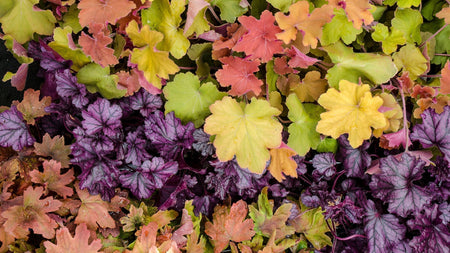
Images Depict Mature Plants
FYRE WING™ Heliodor Coral Bells
Heuchera villosa 'Heliodor'
I've always appreciated coral bells for the tremendous variety of foliage colors they bring to the garden, but FYRE WING™ Heliodor Coral Bells is exciting because its texture is every bit as interesting as its color. TERRA NOVA® Nurseries has developed something genuinely unusual with this series, and Heliodor is a beautiful example. The foliage is deeply cut and heavily frilled, giving it an almost lace-like appearance, while the bright lime-green color can really bring a shaded planting to life. I particularly like the way the new leaves emerge with a hint of orange before changing to that fresh green color. At only about 11 inches tall and 12 inches wide, I see this as a wonderful plant for the front of a shaded border or a decorative container where you can appreciate the leaf detail up close. My favorite combination would be Heliodor planted alongside dark-purple coral bells or a compact fern, allowing the contrast in both color and texture to do the work. One thing I always emphasize with Heuchera is drainage. Give this plant morning light or filtered shade, don't bury the crown, and avoid keeping the roots constantly wet. For gardeners looking for an unusual, compact foliage perennial that brings real personality to shade gardens, Heliodor deserves a spot on the list.

15% Off Sitewide Sale!
Use Code 'SEASON15' At Checkout
📦 Free shipping on orders over $99.
Delay shipping by leaving us a message at Checkout.
Share:Recommended Add-Ons


FYRE WING™ Heliodor Coral Bells – Brilliant Lime-Green Lace-Leaf Foliage for Shade Gardens
Brighten Shady Gardens with FYRE WING™ Heliodor Coral Bells
FYRE WING™ Heliodor Coral Bells brings a remarkable combination of brilliant foliage color and delicate texture to shaded landscapes. Developed by TERRA NOVA® Nurseries, this distinctive Heuchera features deeply cut, intricately frilled leaves in a vibrant lime-green color that immediately catches the eye. Its finely divided foliage creates a lace-like appearance that sets it apart from the more familiar rounded leaves of traditional coral bells. The plant forms a dense, compact mound, providing homeowners with an exciting way to introduce bright color and unusual foliage texture into woodland gardens, shaded borders, and decorative containers.
What makes FYRE WING™ Heliodor Coral Bells especially appealing is its ability to deliver substantial ornamental interest without relying on large or showy flowers. The foliage itself becomes the primary attraction, adding a luminous quality to garden spaces where darker green leaves often dominate. New spring growth emerges with warm orange tones before transitioning to its characteristic fresh lime coloring. Delicate white flowers appear above the foliage in late spring, providing another attractive feature. With its compact size, dependable perennial habit, and preference for partial to full shade, Heliodor is an excellent choice for gardeners seeking something genuinely different in their shade plantings.
Discover Brilliant Lime-Green Foliage with an Extraordinary Lace-Like Texture
The most distinctive characteristic of FYRE WING™ Heliodor Coral Bells is its extraordinary foliage. Unlike the broad, rounded leaves commonly associated with Heuchera, 'Heliodor' produces deeply cut leaves with intricate frilled edges, creating a remarkably delicate, almost ornamental-lace appearance. The fresh lime-green coloring highlights every curve and division of the foliage, making the plant particularly attractive when viewed up close. This combination of vivid color and unusual leaf structure gives the plant a refined appearance that works beautifully in both contemporary and traditional gardens.
Its bright foliage is especially effective when used against darker plants or shaded backgrounds. Deep-purple coral bells, dark-green hostas, and finely textured ferns provide beautiful contrasts, allowing the lime coloring to stand out without overwhelming the planting. Repeating 'Heliodor' along a shaded pathway or near the front of a perennial border can create a coordinated ribbon of bright foliage. For gardeners who appreciate unusual plant forms, this variety offers a new level of texture within the familiar coral bells family, making it an excellent specimen plant and a useful companion for other shade perennials.
Enjoy Warm Orange Spring Growth That Develops into Fresh Lime Green
FYRE WING™ Heliodor Coral Bells provides an especially attractive display as its foliage develops during spring. Young leaves emerge with a warm orange tint, creating a subtle contrast with the plant's more mature growth. As the foliage expands and develops, the orange tones give way to the cultivar's characteristic bright lime-green coloring. This transition adds seasonal depth to the planting and makes the plant particularly interesting during the active spring growing period, when its foliage mound is developing fresh new leaves.
Once the foliage matures, the bright lime-green color becomes the dominant ornamental feature, creating a vivid accent that remains useful throughout the growing season. The deeply frilled leaves catch light in different ways, enhancing the appearance of their intricate edges and giving the plant an almost sculptural quality. In protected locations, the foliage may also contribute winter interest, although the amount retained depends on climate and winter conditions. This combination of changing new growth and persistent ornamental foliage makes 'Heliodor' much more than a short-season flowering perennial.
Add Delicate White Flowers Above Colorful Foliage in Late Spring
Although FYRE WING™ Heliodor Coral Bells is primarily grown for its foliage, it also produces small, delicate white flowers during late spring, generally around May and June. The flowers appear on slender stems that rise above the compact foliage mound, creating a light, airy contrast with the dense leaves below. Their understated appearance complements the brilliant lime-green foliage without distracting from its intricate shape. The flower stems can reach approximately 15 inches tall, giving the planting an attractive layered effect.
These delicate flowers are particularly appealing in woodland-style gardens, where smaller blooms contribute a soft, natural appearance. White-flowering stems pair beautifully with bright green leaves, creating a fresh combination that works well alongside hostas, ferns, hellebores, and other shade-loving perennials. The flowers are a secondary ornamental feature rather than the primary reason to select the plant, but they provide welcome seasonal interest. After flowering, the compact mound of frilled lime-green foliage continues to deliver color and texture long after the blossoms have finished.
Create Beautiful Shade Plantings with a Compact Mounding Heuchera
FYRE WING™ Heliodor Coral Bells has a compact mounding habit, reaching approximately 11 inches tall and 12 inches wide, making it particularly useful for smaller garden spaces. Its dense foliage creates an attractive, rounded plant that fits naturally near the front of shaded perennial borders, along pathways, or beneath larger woodland plants. Because it remains relatively compact, it can provide strong ornamental impact without crowding neighboring perennials. Its moderate growth rate also makes it easy to incorporate into established garden designs.
For a cohesive landscape, plant several Heliodor Coral Bells in repeated groups, leaving sufficient room for each mound to reach its mature width. Its bright foliage works especially well as a contrast plant, drawing attention to darker-colored perennials and adding definition to shaded planting beds. In larger woodland gardens, use it to create small areas of light among deeper green foliage. In more formal borders, repeat the plants at regular intervals to establish a clear planting pattern. Its combination of compact growth and unusual foliage texture makes it a versatile option for many different garden styles.
Bring Fresh Color and Intricate Texture to Mixed Shade Containers
FYRE WING™ Heliodor Coral Bells is an outstanding candidate for decorative containers, where its bright lime-green foliage and deeply frilled leaves can be appreciated up close. Its naturally compact growth makes it particularly well suited to mixed plantings in patio pots, shaded entryway containers, and outdoor arrangements that receive morning sunlight or filtered shade. The unusual foliage adds detailed texture to container combinations and helps brighten arrangements dominated by darker green or burgundy plants.
For an attractive container design, combine Heliodor with dark-leaved Heuchera, compact ferns, or shade-tolerant sedges. The contrast between the foliage colors can create a striking display without relying on constant flower production. Choose a container with drainage holes and a high-quality potting mix that retains some moisture without remaining soggy. Because container soil dries faster than garden soil, monitor moisture regularly, especially during warm weather. With proper care, Heliodor provides a beautiful foliage-centered alternative to traditional flowering container plants and can be incorporated into seasonal combinations throughout the growing season.
Grow Beautiful Coral Bells in Partial Shade to Full Shade
FYRE WING™ Heliodor Coral Bells performs best in partial to full shade, making it a valuable perennial for gardeners seeking bright foliage in locations with limited direct sunlight. Its lime-green leaves benefit from protection against intense afternoon sun, particularly in warmer climates where excessive exposure can cause leaf scorching. Morning sunlight or filtered light beneath high-branched trees is often ideal. The plant's ability to perform in shade makes it particularly useful for woodland borders, shaded foundation beds, and protected garden spaces.
Good drainage is essential for long-term success. Plant Heliodor Coral Bells in organically enriched soil that drains well, and avoid burying the crown beneath the surrounding soil surface. Maintain moderate moisture while the plant establishes, but do not keep the root zone continuously saturated. Once established, coral bells generally tolerate occasional periods of drier soil better than prolonged wet conditions. In colder regions, winter conditions may affect how much foliage remains attractive, so remove damaged leaves in early spring. Proper shade placement and good drainage are the two most important considerations for maintaining the beautiful foliage that makes this cultivar special.
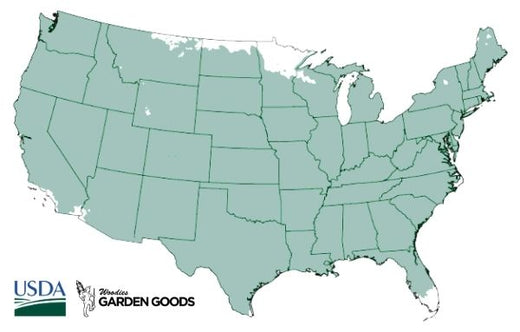
| Hardiness Zone: | 4-9 |
|---|---|
| Mature Height: | 11 inches; foliage mound |
| Mature Width: | 12 inches |
| Sunlight: | Partial shade to full shade; protect from intense afternoon sun |
| Soil | Moderately well-drained; organic-rich soil preferred |
| Water Requirements: | Average; moderate during establishment; avoid prolonged saturation |
| Bloom Time / Color | May to June; White |
| Foliage | Bright lime green; Evergreen in favorable conditions; winter foliage retention varies |
| Ornamental Features | Deeply cut, frilled lace-like foliage; lime-green color; orange-tinted new growth; white flowers |
| Wildlife Value | Flowers may attract visiting insects |
| Resistance | Generally less preferred by deer; not deer-proof |
| Landscape Uses | Shade borders; woodland gardens; edging; mixed containers; accent plantings |
How to Care for FYRE WING™ Heliodor Coral Bells
aAfter purchasing your FYRE WING™ Heliodor Coral Bells, be sure to read our care instructions to ensure a happy, healthy plant.

How should I plant FYRE WING™ Heliodor Coral Bells?
Plant FYRE WING™ Heliodor Coral Bells in partial shade to full shade, choosing a location protected from intense afternoon sunlight. Morning sun or bright filtered shade provides favorable growing conditions while helping protect the delicate lime-green foliage from scorching. Select well-drained soil containing organic matter and loosen the surrounding planting area before installation. Dig a hole approximately twice the width of the root ball, but no deeper, and place the plant so that the crown remains at or slightly above the surrounding soil level. Backfill carefully and water thoroughly after planting. For grouped plantings, space Heliodor Coral Bells approximately 12 to 18 inches apart, allowing the foliage mounds to develop without unnecessary crowding. This compact perennial works beautifully along woodland paths, near the front of shaded borders, or in mixed containers. A thin layer of organic mulch can help maintain soil moisture and moderate temperature, but avoid piling mulch against the crown. Good drainage is essential, particularly during winter, because Heuchera roots and crowns can suffer when exposed to prolonged wet conditions.

How often should I water FYRE WING™ Heliodor Coral Bells after planting?
Water FYRE WING™ Heliodor Coral Bells thoroughly after planting and maintain moderate, consistent moisture during the establishment period. Newly planted coral bells need enough moisture to encourage healthy root development, especially during warm weather or when planted beneath established trees. Check the soil regularly and water when the upper portion begins to dry. Avoid allowing new plants to remain severely dry for extended periods, but do not keep the root zone continuously saturated. Once established, Heliodor Coral Bells generally tolerates occasional drier conditions better than persistently wet soil. Water deeply during extended dry spells, allowing excess moisture to drain away. Container-grown plants require closer monitoring because potting mix dries more quickly than garden soil. Yellowing, wilting, or declining foliage can sometimes indicate watering problems, so check actual soil moisture before adding more water. Proper drainage and avoiding overwatering are especially important for keeping the crown and root system healthy.

When should I fertilize FYRE WING™ Heliodor Coral Bells?
Fertilize FYRE WING™ Heliodor Coral Bells lightly in early spring as fresh growth begins. An annual topdressing of compost or a modest application of balanced, slow-release fertilizer is generally sufficient for maintaining healthy foliage. This perennial is valued primarily for its ornamental leaves, so the goal is to support steady, balanced growth rather than force rapid development. If the planting area contains fertile, organic-rich soil, additional fertilizer may be unnecessary. Avoid applying excessive fertilizer, particularly products high in nitrogen, because overfeeding can encourage soft growth without improving the plant's natural form. For container-grown Heliodor Coral Bells, use a balanced fertilizer according to the manufacturer's directions and adjust applications to the plant's growth and the condition of the potting mix. Water after fertilizing when recommended by the product label. Moderate fertility and excellent drainage generally produce better results than aggressive feeding.

When and how should I prune FYRE WING™ Heliodor Coral Bells?
The best time to prune FYRE WING™ Heliodor Coral Bells is early spring, when winter-damaged foliage can be identified and new growth is beginning to emerge. Remove dead, flattened, discolored, or damaged leaves individually using clean pruners. Avoid cutting deeply into the crown because fresh growth develops from this area. If the plant has retained attractive foliage through winter, only minimal cleanup may be necessary. After flowering, spent flower stems can be removed near their bases if a tidier foliage mound is desired. The plant does not require extensive pruning or routine shaping because it naturally maintains a compact, rounded habit. As established Heuchera plants age, their crowns may gradually become elevated above the soil; inspect the crown periodically and refresh or divide aging plants when necessary. Preserving healthy foliage and protecting the crown are more important than aggressive pruning.