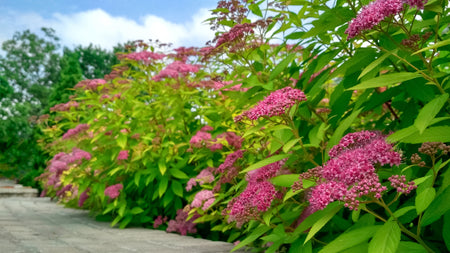
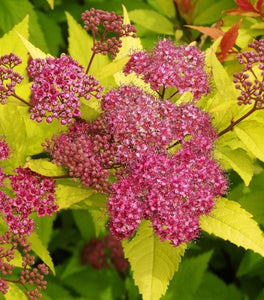
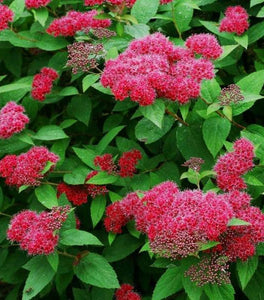
Images Depict Mature Plants
Double Play® Doozie® Spirea
Spiraea x ‘NCSX2’
I've worked with a lot of spireas over the years, and Double Play Doozie is one of the most interesting improvements I've seen in this group of shrubs. Most gardeners know spirea as a dependable spring or early-summer flowering plant, but what makes this variety special is that it keeps producing those beautiful red-pink flowers from late spring right through much of autumn. I particularly appreciate the fact that it's sterile, so it doesn't produce viable seeds, which addresses one of the concerns associated with some older Japanese spirea selections. The colorful red new growth in spring is another bonus, giving homeowners something attractive before the main flower display even begins. I especially like using Double Play Doozie in groups of three or five along foundation beds or as a low flowering hedge where you want season-long color without constant pruning. Give it plenty of sunlight and good drainage, and water it regularly while the roots establish. Once mature, it's a remarkably easy shrub to maintain. If you're looking for a compact flowering plant that delivers exceptional color with very little work, I think Double Play Doozie deserves a place near the top of your list.

15% Off Sitewide Sale!
Use Code 'SEASON15' At Checkout
📦 Free shipping on orders over $99.
Delay shipping by leaving us a message at Checkout.
Share:



Double Play® Doozie® Spirea – Brilliant Red-Pink Flowers That Keep Blooming from Spring Through Fall
Double Play Doozie Spirea Delivers Nonstop Color Without the Fuss
Double Play® Doozie® Spirea is a remarkable flowering shrub that combines continuous red-pink blooms, colorful spring foliage, and a compact, naturally rounded growth habit in one easy-care landscape plant. Known botanically as Spiraea × 'NCSX2', this innovative hybrid was developed to provide an extended flowering season while eliminating the viable seed production associated with conventional spirea cultivars. The result is a flowering shrub that produces colorful blossoms from late spring into autumn, creating exceptional ornamental value in foundation beds, mixed borders, low hedges, and residential gardens. Its naturally manageable size makes it particularly useful for homeowners who want abundant seasonal color without the maintenance requirements of larger flowering shrubs.
What makes Double Play Doozie especially impressive is its ability to keep producing flowers without regular deadheading. Because the cultivar is sterile, it does not invest energy in developing viable seeds, allowing continued flower production throughout the growing season. Its vibrant flowers appear against attractive green foliage, while the fresh spring leaves emerge in rich shades of red before transitioning to green. Mature plants generally reach approximately 2 to 3 feet tall and wide, providing a full, mounded appearance without overwhelming smaller planting areas. For homeowners looking for a long-blooming, seedless flowering shrub with outstanding landscape versatility, Double Play Doozie is an exceptional choice.
Brilliant Red-Pink Flowers Keep Coming from Spring Through Fall
One of the most impressive characteristics of Double Play Doozie Spirea is its extended flowering season, which begins in late spring and can continue until autumn frost. The shrub produces clusters of vivid red-pink to deep pink flowers that stand out beautifully against its green foliage. Unlike traditional spireas that concentrate their flowering into one major seasonal display, Double Play Doozie continues developing new flower clusters throughout the growing season. This provides a dependable source of color during summer, when many early-flowering shrubs have already finished blooming.
The continuous flowering habit makes Double Play Doozie especially valuable in highly visible landscape areas where seasonal appearance matters. Plant it along entrance walkways, in foundation beds, or near patios where its bright flower clusters can be enjoyed throughout much of the growing season. The rich pink-red flowers also combine beautifully with white flowering perennials, blue salvias, purple catmint, and ornamental grasses. Since the shrub naturally produces new blooms without requiring spent flowers to be removed, it provides an attractive option for homeowners who prefer a colorful garden with relatively little routine maintenance. Occasional light trimming can refresh the plant's appearance, but deadheading is not necessary for reblooming.
A Sterile Spirea That Won't Spread Through Unwanted Seedlings
Double Play Doozie Spirea was developed to address one of the most significant concerns associated with some traditional Japanese spirea cultivars: unwanted seed production. This cultivar is sterile and does not produce viable seeds, making it a particularly valuable option for gardeners who want colorful spirea flowers without contributing to the spread of seed-producing ornamental spireas. The plant develops into a compact, established shrub rather than spreading through self-sown seedlings. This distinction is especially important in landscapes where conventional Japanese spirea has raised environmental concerns.
Its seedless nature also contributes to the shrub's unusual flowering performance. Because Double Play Doozie does not divert energy into producing viable seeds, it can continue developing flower clusters throughout much of the growing season. This combination of reduced seed-spread risk and extended flowering gives the cultivar a practical advantage over many conventional spireas. Homeowners can enjoy the familiar rounded shape and colorful flowers of spirea while choosing a modern hybrid bred for improved ornamental and environmental traits. For gardeners interested in responsible landscape choices with long-lasting flowering performance, Double Play Doozie is a particularly appealing selection.
Colorful Red Spring Foliage Adds Another Season of Interest
Double Play Doozie offers ornamental value even before its first flowers appear. During early spring, new foliage emerges in rich shades of deep red, creating an attractive display as the shrub begins its growing season. The reddish young leaves contrast with the developing green foliage, giving the plant a colorful appearance before the flower buds begin to open. As the leaves mature, they gradually transition to green, providing a fresh backdrop for the brilliant red-pink flowers that follow. This changing foliage color is an important part of the cultivar's double-season ornamental appeal.
The plant's compact branching habit helps maintain a full appearance throughout the summer, while fresh growth may introduce additional reddish foliage tones following light pruning. This makes Double Play Doozie particularly effective in mixed shrub borders where foliage color and texture are just as important as flowers. Pair its red spring growth with golden evergreens, blue-green ornamental grasses, or purple-leaved companion plants to create interesting seasonal contrasts. As autumn approaches, foliage may develop yellow tones before the shrub enters winter dormancy. Because Double Play Doozie is deciduous, it sheds its leaves during winter and returns with fresh, colorful growth the following spring.
Compact Growth Makes Double Play Doozie Ideal for Small Gardens
Double Play Doozie Spirea develops a naturally rounded, mounded growth habit approximately 2 to 3 feet tall and wide. This manageable size makes it an excellent choice for smaller residential landscapes where larger shrubs would require frequent pruning. Its dense branching creates an attractive appearance in foundation beds, low borders, and flowering hedges, while the colorful blooms provide substantial visual impact without excessive height. Because the shrub maintains a relatively uniform form, it fits easily into both traditional and contemporary landscape designs.
For low hedges or mass plantings, space Double Play Doozie shrubs approximately 2 to 3 feet apart, depending on the desired density and mature appearance. Repeating the cultivar along a walkway or foundation bed can create a continuous display of red-pink flowers throughout the growing season. Individual plants also work well as colorful accents near patios, garden entrances, and outdoor seating areas. In mixed borders, position Double Play Doozie toward the front or middle, where its compact growth and extended flowering can be appreciated without being obscured by taller shrubs. Its relatively small size makes it especially appealing to homeowners who want colorful flowering shrubs that remain easy to manage.
A Deer-Resistant Flowering Shrub for Sunny Landscapes
Double Play Doozie Spirea is generally considered resistant to deer browsing, making it a useful selection for residential landscapes where deer activity is a concern. Its foliage and growth habit are typically less appealing to browsing animals than many tender ornamental plants. This allows homeowners to incorporate colorful flowering shrubs into foundation plantings, borders, and garden beds without relying exclusively on foliage plants. However, deer resistance should never be interpreted as complete protection, since hungry deer may occasionally browse even less-preferred species.
The shrub's flowers can also attract bees, butterflies, and other visiting pollinators, adding seasonal wildlife value to the landscape. Its extended bloom period offers flowering opportunities beyond spring, particularly when paired with other pollinator-friendly perennials. Plant Double Play Doozie alongside coneflowers, catmint, salvias, and other sun-loving plants to create a colorful landscape that supports beneficial insects. Because the cultivar is sterile, its ecological value comes primarily from its ornamental flowers and associated insect visitation rather than seed production. For homeowners seeking deer-resistant shrubs with extended flowering and a compact form, Double Play Doozie offers an attractive combination.
Excellent Drought Tolerance and Adaptability Once Established
Double Play Doozie Spirea is a durable landscape shrub that performs best in full sun and well-drained soil, although it can tolerate partial sunlight. For the strongest flowering and most attractive foliage color, choose a location that receives at least 6 hours of direct sunlight daily. The plant adapts to a variety of soil types, including loamy, sandy, and moderately heavy soils, provided drainage is sufficient. Its ability to tolerate normal residential growing conditions makes it suitable for foundation beds, landscape borders, and mass plantings where reliable performance is important.
Once established, Double Play Doozie develops good drought tolerance and generally requires less supplemental watering than many moisture-dependent flowering shrubs. Newly planted shrubs should receive regular irrigation while their root systems develop, but established plants can usually tolerate ordinary periods of reduced rainfall. Occasional deep watering during extended drought helps maintain attractive foliage and continued flowering. Avoid planting in locations where water remains around the roots for prolonged periods, since consistently saturated soil can compromise plant health. With appropriate sunlight, drainage, and establishment care, Double Play Doozie provides long-lasting color with relatively modest maintenance requirements.
Easy Pruning and Low Maintenance for Long-Term Flowering
One of the greatest advantages of Double Play Doozie Spirea is its naturally manageable growth habit and minimal pruning requirements. The shrub flowers on new growth, allowing gardeners to perform light shaping in early spring without sacrificing the entire season's flower display. Remove dead, damaged, or weak stems as new growth begins, then selectively trim branches as necessary to maintain an attractive rounded form. Because the shrub remains relatively compact, extensive pruning is generally unnecessary when planted in an appropriately sized location.
For homeowners who want to encourage fresh reddish foliage, a light trim after the first major flower flush in late spring can stimulate colorful new growth and help maintain a tidy appearance. However, regular pruning or deadheading is not required for continued flowering. Every few years, removing some of the oldest woody stems near the base can help rejuvenate the plant and encourage healthy branching. Fertilizer should be applied only as needed, preferably in early spring, since excessive feeding can encourage unnecessary leafy growth. With minimal attention, Double Play Doozie continues providing colorful flowers, attractive foliage, and a polished landscape appearance from spring through autumn.
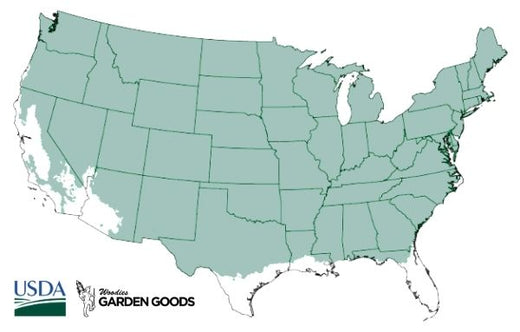
| Hardiness Zone: | 3-8 |
|---|---|
| Mature Height: | 2 to 3 Feet |
| Mature Width: | 2 to 3 Feet |
| Sunlight: | Full sun to part sun; best flowering with 6+ hours of sun |
| Soil: | Average; well-drained; adaptable |
| Water: | Moderate during establishment; lower once established |
| Bloom Time / Color: | Late spring to fall; Rich red-pink to deep pink |
| Foliage: | Red and lime-green new spring growth maturing to dark green |
| Ornamental Features: | Extended flowering; red spring foliage; compact rounded shape |
| Wildlife Value: | Flowers attract bees, butterflies, and other visiting insects |
| Resistance (deer/disease/drought/etc.): | Generally resistant; not deer-proof |
| Landscape Uses: | Low hedges; foundations; borders; mass plantings; containers |
How to Care for Double Play® Doozie® Spirea
Be sure to read our planting instructions to ensure a healthy and happy Double Play® Doozie® Spirea for years to come!

How should I plant Double Play Doozie Spirea?
Plant Double Play Doozie Spirea in a location receiving full sun to partial sun, ideally with six or more hours of direct sunlight for the strongest flowering and best foliage color. The shrub adapts to a variety of soil types but requires good drainage to prevent prolonged root saturation. Dig a planting hole approximately twice as wide as the root ball and no deeper than its original planting depth. Position the top of the root ball at or slightly above the surrounding soil level, loosen any circling roots, and backfill with the original soil. Water thoroughly after planting to settle the soil around the roots. For low hedges or mass plantings, space shrubs approximately 2 to 3 feet apart to accommodate their mature rounded shape. Double Play Doozie works particularly well in foundation beds, sunny borders, along walkways, and near patios where its continuous flowers can be appreciated. Apply a 2 to 3-inch layer of organic mulch around the root zone to conserve moisture and reduce weed competition, keeping mulch several inches away from the main stems. Avoid areas with standing water or persistently saturated soil. Adequate sunlight and reliable drainage are the most important planting considerations for long-term performance.

How often should I water Double Play Doozie Spirea after planting?
Water Double Play Doozie Spirea thoroughly immediately after planting, then maintain evenly moist, well-drained soil while the root system becomes established. During the first growing season, check soil moisture regularly and water when the upper few inches begin to dry. Newly planted shrubs may require additional irrigation during hot weather, particularly in sandy soil or exposed locations. Deep watering encourages roots to expand into the surrounding soil and generally provides better results than frequent shallow irrigation. Avoid keeping the planting area continuously saturated, since prolonged wet conditions can damage the roots. Once established, Double Play Doozie becomes relatively drought tolerant and requires less frequent supplemental watering. During ordinary growing conditions, natural rainfall may provide much of the moisture the shrub needs. However, extended drought can reduce flowering or cause temporary foliage stress, so occasional deep irrigation remains beneficial during prolonged dry periods. Container-grown plants require closer moisture monitoring because potting soil dries more quickly than garden soil. Mulching can help conserve moisture and moderate root-zone temperatures throughout the growing season.

When should I fertilize Double Play Doozie Spirea?
If additional nutrients are needed, early spring is the preferred time to fertilize Double Play Doozie Spirea. A balanced, slow-release fertilizer formulated for flowering shrubs can support healthy foliage and abundant flowers when applied according to the manufacturer's instructions. Many established shrubs perform well in average garden soil without regular fertilization, so assess growth and soil conditions before feeding. A modest layer of compost may also help maintain soil structure and fertility without encouraging excessive vegetative growth. Avoid applying excessive nitrogen because heavy fertilization can stimulate leafy growth without improving flowering performance. Do not apply large amounts of fertilizer late in summer or autumn, when encouraging tender growth may interfere with winter preparation. If the shrub is growing vigorously and flowering consistently, additional feeding may not be necessary. Adequate sunlight, proper drainage, and appropriate watering generally contribute more to successful long-term growth than frequent fertilizer applications.

When and how should I prune Double Play Doozie Spirea?
Double Play Doozie Spirea requires very little pruning to maintain its naturally compact, rounded shape. If shaping is necessary, prune in early spring before vigorous new growth begins. Remove dead, damaged, weak, or crossing branches, then selectively shorten shoots to maintain the desired outline. Because this cultivar flowers on new growth, early-spring pruning can encourage fresh shoots that produce flowers during the growing season. Avoid unnecessary severe pruning when the shrub already has an attractive form. For additional foliage color, lightly trim the shrub after its first major flowering period in late spring. This may encourage another flush of colorful reddish new growth while maintaining a tidy appearance. However, deadheading is not required for continued flowering because the cultivar is sterile and does not develop viable seed. Every few years, older woody stems can be removed near the base to encourage fresh, vigorous branching. Regular heavy shearing is unnecessary and may temporarily reduce the number of flowers on display.