

Images Depict Mature Plants
Big Twister Corkscrew Rush.
Juncus effusus 'Big Twister'
I don't think there's another plant in the garden that creates quite the same conversation as Big Twister Corkscrew Rush. Those green stems twist and curl in every direction, and the whole clump almost looks like someone took a handful of springs and planted them in a pot. I particularly like using Big Twister as a centerpiece in a decorative water bowl or next to a pond, where people can see those unusual stems up close. The bigger, more upright curls give it a stronger presence than some of the smaller Corkscrew Rush selections. One thing I would stress is water, water, and more consistent water. This isn't the plant I'd recommend for a dry perennial border or an exposed planter that gets forgotten for a week. Keep the soil moist, give it full sun or light shade, and remove the old brown stems when spring approaches. I also like combining it with broad-leaved moisture-loving plants because the contrast really shows off the twisted growth. For homeowners who want something unusual, architectural, and relatively easy to maintain in a wet location, Big Twister is one of the most entertaining plants you can grow.
$25.46 with code NOVEMBER15 at checkout Save $4.49
📦 Free shipping on orders over $99.
Delay shipping by leaving us a message at Checkout.
Share:Recommended Add-Ons



Big Twister Corkscrew Rush – Dramatic Spiral Stems for Gardens and Water Features
Big Twister Corkscrew Rush Creates Dramatic Spiral Texture in the Garden
Big Twister Corkscrew Rush is one of those unusual plants that immediately catches your attention. Instead of producing straight leaves or graceful arching blades like a traditional ornamental grass, this distinctive perennial develops thick green stems that twist, curl, and spiral into remarkable corkscrew shapes. The stems grow upward and outward from a dense central crown, creating a sculptural display of loops and curves that looks almost like a living piece of garden art. Its deep green color provides attractive contrast against stone, mulch, water, and brightly colored flowering plants. Whether grown in a decorative patio container or alongside a water feature, Big Twister introduces an architectural character that makes it stand apart from ordinary foliage plants.
What makes Big Twister Corkscrew Rush especially valuable is the combination of unusual form and practical suitability for wet landscape locations. Many attractive ornamentals struggle in consistently damp soil, but this rush is naturally adapted to moisture-retentive environments. Its curly stems provide interest throughout the active growing season without depending on showy flowers. Compared with smaller Corkscrew Rush selections, Big Twister develops a more substantial mound that is easier to appreciate from a distance. For homeowners looking for a unique ornamental plant that combines personality, texture, and wet-soil tolerance, Big Twister is an excellent choice.
Large Twisted Green Stems Give Big Twister Its Distinctive Appearance
The most recognizable feature of Big Twister Corkscrew Rush is its tangle of glossy green, cylindrical stems that form spirals and loops. Unlike traditional grass foliage, the ornamental effect comes primarily from these unusual stems rather than flat leaf blades. Each stem follows a slightly different path, twisting around neighboring growth and creating a naturally irregular appearance. The result is a dense, textured clump that changes visually depending on the direction from which it is viewed. Against a smooth ceramic planter or flat stone surface, the curly stems become particularly striking. Their deep green color also complements lighter-colored paving and water-garden materials, making Big Twister useful in landscape designs where foliage shape takes priority over flower color.
Big Twister generally has a larger, more upright growth habit than compact Juncus Spiralis selections, helping distinguish it from smaller corkscrew rush plants. The tightly curled stems can form interesting patterns of overlapping green spirals, while the overall clump remains relatively manageable in an ornamental garden. Because the stems are the main decorative feature, Big Twister does not require large flowers to create impact. Its shape works well in contemporary landscapes, Japanese-inspired container gardens, and unusual planting arrangements where individual plants are meant to stand out. For homeowners seeking an architectural rush with dramatic curls and rich green color, Big Twister provides an appearance that few other perennials can match.
Big Twister Thrives in Rain Gardens, Pond Edges, and Wet Soil
Big Twister Corkscrew Rush is especially valuable in consistently moist-to-wet landscape conditions. As a selection of Juncus effusus, it grows naturally in the kinds of damp soils associated with marshy areas, streambanks, pond margins, and wet depressions. This makes it a useful ornamental choice for rain gardens, bog gardens, decorative water features, and planting beds that remain wetter than ordinary perennial borders. Its curly green stems introduce texture where moisture-loving flowering perennials may have broader leaves or more traditional growth habits. In a pondside planting, the twisting foliage looks particularly attractive against the still surface of the water and the natural colors of rocks or gravel.
Big Twister can also tolerate shallow standing water when properly established and positioned, making it suitable for certain marginal water-garden applications. The plant should not be treated as a fully submerged aquatic species; its green stems need to remain above the water surface. In rain gardens, it can be planted where temporary pooling is common, and the soil remains reasonably moist between storms. However, a rain garden that becomes extremely dry for prolonged periods may require additional irrigation. The most important planting consideration is providing dependable moisture throughout the growing season, especially during establishment. In the right location, Big Twister can transform an otherwise difficult wet area into an attractive ornamental feature.
A Sculptural Container Plant for Patios, Entrances, and Water Gardens
Big Twister Corkscrew Rush is particularly appealing in decorative containers where its unusual spiraling stems can be viewed up close. The dense, curly growth creates a natural focal point that works well in modern ceramic planters, water bowls, patio pots, and mixed container arrangements. Its green color coordinates easily with flowering annuals and trailing foliage plants, while the dramatic stems provide contrast with softer shapes. Big Twister can also be used as the upright centerpiece of a container arrangement, adding height and texture without overwhelming the entire planting. For the best visual effect, choose a container with enough room for the clump to develop naturally while allowing the curling stems to remain visible.
The most important container-care consideration is keeping the root zone consistently moist. Unlike many container perennials that prefer their potting mix to dry somewhat between waterings, Big Twister generally performs best when its roots have dependable access to moisture. A moisture-retentive potting mix and careful irrigation can help maintain the healthy green stems that make the plant so attractive. Water-garden containers may also be used where appropriate for the potting system and the intended water depth. In colder climates, exposed patio pots may need additional winter protection because roots in containers experience greater temperature fluctuations than those planted in the ground. For homeowners seeking a unique centerpiece in a consistently moist planter, Big Twister offers outstanding ornamental appeal.
Compact Growth Makes Big Twister Ideal for Garden Accents and Small Wet Areas
Although Big Twister creates a bold visual impression, it remains a relatively manageable perennial. Mature plants generally reach approximately 18–24 inches tall and 18–24 inches wide, forming a compact but substantial clump of twisted stems. This makes the plant suitable for smaller pond margins, water features, and decorative planting beds where a large wetland grass would require too much space. The stems grow in numerous directions, giving the plant a lively appearance while the central crown keeps the growth relatively concentrated. Big Twister is especially useful where its distinctive shape can be appreciated at close range rather than disappearing among taller plants.
For grouped plantings, space Big Twister approximately 18–24 inches on-center, adjusting for mature width and the desired effect. A single plant can serve as an unusual accent, while several arranged along a wet border create a repeating pattern of curls and spirals. Older plants may gradually expand through short underground rhizomes, so monitor clumps in confined planting areas. In contained water gardens, pots can help manage the spread and simplify maintenance. Because Big Twister is cultivated primarily for its twisting stems, it is better suited to focal points, small groups, and architectural accents than to large-scale privacy screens or conventional groundcover.
Moisture and Sunlight Keep Big Twister's Corkscrew Stems Healthy
Big Twister Corkscrew Rush grows best in full sun to partial shade with consistently moist or wet soil. Strong sunlight can encourage vigorous green growth when the roots have sufficient moisture, while partial shade can be beneficial in hot locations or exposed containers. The plant adapts to a range of soil textures, including clay and loam, and performs particularly well where moisture is more reliable than in ordinary sunny garden beds. Its natural affinity for wet ground makes it valuable in planting areas that might be unsuitable for drought-oriented ornamental grasses such as Little Bluestem or Prairie Dropseed. For dependable performance, place Big Twister where moisture is an intentional part of the garden design.
A common mistake is treating Big Twister like a dry-site ornamental grass. Allowing the root zone to dry out repeatedly can cause browning, weakened stems, and reduced ornamental quality, especially in containers. Newly planted specimens need regular watering until the roots establish in the surrounding soil. In water gardens, moisture may be supplied naturally, while ordinary planting beds may need supplemental irrigation during hot weather. Heavy fertilizer applications are generally unnecessary; consistent moisture and suitable exposure matter much more. With reliable watering, healthy roots, and adequate light, Big Twister can maintain its unusual sculptural appearance with relatively little additional care.
Seasonal Green Stems and Subtle Flowers Provide Long-Lasting Interest
Big Twister Corkscrew Rush is primarily grown for its curled green stems, but it can also produce small greenish-brown to tan flowers during summer. The flowers develop in modest clusters that are much less noticeable than the showy plumes of Fountain Grass or the colorful blossoms of flowering perennials. They are primarily wind-pollinated and do not serve as a major nectar source for butterflies or hummingbirds. Instead, the twisted stems remain the dominant ornamental feature. Their unusual shapes create movement and texture throughout summer, while the small flower clusters contribute subtle seasonal detail.
In mild climates, Big Twister may remain evergreen or semi-evergreen, preserving attractive green stems during portions of winter. In colder regions, the stems may become yellow, brown, or dormant as temperatures fall. This seasonal variation is normal and should not be mistaken for failure when healthy roots are protected and growing conditions remain suitable. In late winter or early spring, remove damaged stems before new shoots begin appearing. Because Big Twister's appearance depends on the health of its green stems, selective cleanup is generally preferable to unnecessary heavy pruning when much of the foliage remains attractive. Its combination of unusual form and potentially long-lasting green growth makes the plant a rewarding ornamental accent.
Pair Big Twister With Moisture-Loving Flowers and Colorful Foliage
Big Twister Corkscrew Rush creates beautiful contrasts when combined with plants that have broader foliage, bright flowers, or softly cascading growth. Its twisted green stems look particularly attractive beside flowering plants adapted to moist soil, including Cardinal Flower, Blue Flag Iris, and Swamp Milkweed. These plants provide contrasting colors and flower forms, while Big Twister introduces architectural texture between them. In a rain garden, a small group of corkscrew rush plants can help connect flowering areas and add year-round structure in suitable climates. The unusual stems also provide a pleasing contrast against flat stones, pond surfaces, and rounded landscape rocks.
For decorative containers, consider combining Big Twister with moisture-loving flowering annuals or foliage plants that share its preference for consistent watering. Its green stems work particularly well with purple, pink, white, or yellow flowers, allowing the twists and curls to remain the focal point. In a woodland-edge water feature, a contrasting plant with dark foliage can make the green spirals even more noticeable. Avoid pairing Big Twister with drought-loving plants in the same planting pocket that require the soil to dry between waterings. The most successful combinations balance foliage shape, plant height, flower color, and compatible moisture requirements, creating an attractive garden that remains healthy throughout the growing season.
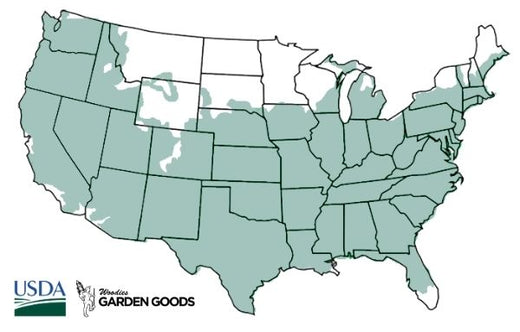
| Hardiness Zone: | 5-9 |
|---|---|
| Mature Height: | Approximately 18–24 inches |
| Mature Width: | Approximately 18–24 inches |
| Sunlight: | Full sun to partial shade |
| Soil | Consistently moist to wet soil, including moisture-retentive clay, loam, and sandy soils; mildly acidic to neutral preferred |
| Water Requirements: | High; maintain consistent moisture, with shallow standing water tolerated in suitable settings |
| Bloom Time / Color | Summer, generally June–September; flowering may be inconspicuous or variable / Greenish-yellow, tan, or brown |
| Ornamental Features | Large twisting and spiraling green stems, compact sculptural habit, dark green foliage appearance, subtle summer flower clusters, wet-garden texture |
| Resistance | Deer, Wet Soil, Heavy Clay, Temporary Flooding, Shallow Standing Water, Moderate Wind; prolonged drought is not recommended |
| Landscape Uses | Rain gardens, pond margins, bog gardens, wet borders, water gardens, patio containers, decorative water bowls, architectural accents, and cut-foliage arrangements |
How to Care for Big Twister Corkscrew Rush.
Before purchasing your Big Twister Corkscrew Rush, read all of the recommended care instructions to ensure a successful transition to its new home.

How should I plant Big Twister Corkscrew Rush?
Plant Big Twister Corkscrew Rush in full sun to partial shade with consistently moist to wet soil. Its unusual twisted stems are especially attractive near pond edges, in rain gardens, water features, or decorative containers where they can be appreciated up close. The plant adapts to moisture-retentive clay, loam, and sandy soil, but it should not be treated like a drought-loving ornamental grass. Choose a location where watering is naturally reliable or can be maintained throughout the growing season. Around ponds and water gardens, shallow standing water is suitable, provided the green stems remain above the water surface. For a typical garden bed, choose an area where the soil remains evenly moist rather than drying completely between watering. Dig a planting hole approximately twice as wide as the root ball and no deeper than its height, unless installing the plant in a specifically designed marginal aquatic container. Gently remove the plant from its nursery pot, loosen tightly circling roots if necessary, and set the crown near the surrounding soil level. Backfill and water thoroughly. For grouped plantings, space plants approximately 18–24 inches apart on center. In water gardens where expansion is a concern, use a suitably sized planting basket or contained aquatic pot. Apply mulch around in-ground plantings only where it will not float into waterways or bury the crown. Consistent root-zone moisture from the beginning is essential for healthy establishment.

How often should I water Big Twister Corkscrew Rush after planting?
Big Twister Corkscrew Rush needs consistently moist soil throughout establishment and active growth. Water thoroughly immediately after planting and check the root zone frequently, particularly during warm or windy weather. Unlike many perennial grasses, Big Twister is adapted to wet conditions and should not be allowed to dry completely for prolonged periods. In ordinary landscape beds, watering frequency depends on rainfall, soil texture, and evaporation. A fixed weekly allowance may be insufficient in hot, exposed containers, so monitor actual soil moisture rather than relying on a rigid schedule. Plants installed along pond margins or in naturally wet areas may need little additional irrigation. Once established, Big Twister continues to prefer a dependable supply of moisture. The species can tolerate some fluctuations in soil wetness, but repeated severe drying may produce browned stems and reduce its characteristic corkscrew appearance. Container-grown plants require especially careful monitoring because pots can lose moisture quickly. A water-garden planter or moisture-retentive potting system can make watering easier when correctly designed. During winter, water needs often decline as growth slows, but the root ball should not become severely desiccated. The easiest way to keep Big Twister healthy is to treat it as a wet-site ornamental rush, not as a dry-site grass.

When should I fertilize Big Twister Corkscrew Rush?
Big Twister Corkscrew Rush generally requires little supplemental fertilizer in healthy garden soil or established water-garden plantings. If a soil test identifies a nutrient deficiency, apply an appropriate balanced slow-release fertilizer in spring as new growth begins, following the product label. A modest amount of finished compost may help maintain soil quality in ordinary landscape beds. Plants grown in soilless container mixes may require occasional light feeding because nutrients are gradually depleted. However, the relatively intensive fertilizer schedules used for commercial nursery production should not automatically be applied to established homeowner plantings. Avoid excessive fertilizer, particularly in rain gardens, ponds, and other locations where nutrient runoff could enter nearby water. Heavy feeding rarely improves the distinctive twisting habit and can encourage unnecessary growth. If the stems become yellow or unattractive, check moisture, seasonal temperatures, root health, and sunlight before assuming the plant needs fertilizer. Big Twister is grown primarily for its ornamental stems rather than flowers, so repeated bloom-promoting fertilizers are not necessary. Reliable moisture and proper placement contribute more to attractive growth than frequent feeding.

When and how should I prune Big Twister Corkscrew Rush?
The best time to prune Big Twister Corkscrew Rush is late winter or early spring before vigorous new growth begins. In mild climates, the plant may retain many attractive green stems through winter, requiring only selective cleanup. In colder regions, some or all of the stems may yellow, turn brown, or die back. These damaged stems can be removed to make room for fresh spring growth. Because the plant's ornamental value comes from its twisted appearance, avoid cutting healthy green stems unnecessarily, especially when the clump remains attractive. Use clean, sharp pruners to remove brown, broken, or unattractive stems near the crown. If most of the plant has died back after a cold winter, a more complete cutback may be appropriate before new growth emerges. During summer, individual damaged stems can be removed without disturbing the entire clump. Established plants may gradually expand through rhizomes, and division in spring can help manage their size. In small water gardens, keeping Big Twister in a contained planting basket can make root management easier. One careful spring cleanup and occasional selective trimming are generally all the pruning this ornamental rush needs.