
Oakleaf Hydrangeas
Native hydrangeas with summer flowers, bold foliage, and exceptional fall color.
Oakleaf hydrangeas are one of the best choices when you want a flowering shrub to earn its space for more than one season. The white, cone-shaped flowers are beautiful in early summer, but they are only part of the story. The large, deeply lobed leaves give the shrub a bold texture all season, then turn shades of red, burgundy, mahogany, orange, and purple in fall. As the plant matures, older stems develop peeling cinnamon-brown bark that keeps the shrub interesting even after the leaves drop. Hydrangea quercifolia is native to the southeastern United States, so it fits naturally into woodland gardens, native-inspired borders, shaded foundations, and more relaxed landscapes. The current collection also gives gardeners a useful choice between compact varieties such as Munchkin and Ruby Slippers and larger selections such as Snow Queen and Gatsby Pink.
What I especially like about oakleaf hydrangeas is that they look substantial without needing constant attention. They tolerate more dryness after establishment than many hydrangeas, grow well from full sun into part shade, and naturally develop an attractive mounded form. The main thing to remember is pruning: they flower on old wood, so any meaningful shaping should happen shortly after the flowers finish. Otherwise, they usually look best when you let their natural framework develop. Choose the right mature size, give them good drainage and steady moisture while they establish, and you get summer flowers, fall foliage, winter bark, and native shrub character from one planting. The We Grow Together Promise adds another layer of confidence when choosing the right variety for your landscape.
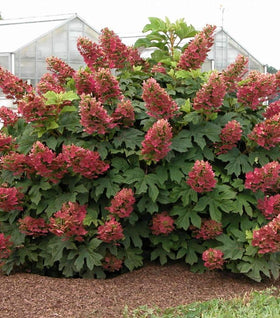
Ruby Slippers Oakleaf Hydrangea
$89.95
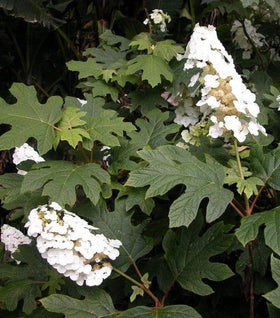
Snow Queen Oakleaf Hydrangea
$89.95
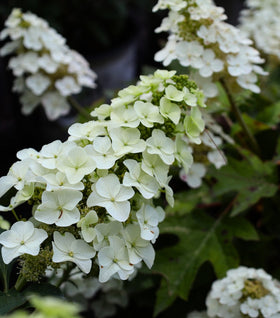

Gatsby Pink Oakleaf Hydrangea
$89.95
Bring home more than a summer flower show.
Oakleaf hydrangeas stand apart from other hydrangeas because their foliage is nearly as important as the flowers. The leaves are large, coarse-textured, and deeply lobed like an oak leaf, giving the shrub a strong architectural quality from spring through fall. Even before the first flower opens, an established plant brings enough texture and mass to anchor a mixed border or woodland planting.
Flowering generally begins in late spring to early summer, with large upright or gently arching panicles opening creamy white. As the flowers age, many cultivars take on soft pink, rose, or deeper ruby tones before eventually drying to tan. That natural progression gives the shrub a much longer visual season than plants whose flowers simply open and disappear. Ruby Slippers is especially useful when you want a stronger white-to-pink-to-ruby transition, while Gatsby Pink was selected for flowers that develop a deeper pink finish.
Fall is when oakleaf hydrangeas really separate themselves from the rest of the group. Their green summer leaves can shift into burgundy, wine red, purple, orange, and mahogany as temperatures cool. Instead of disappearing into the background after flowering, the plant often becomes one of the strongest fall-color shrubs in the bed. This makes it especially useful near patios, walkways, entry gardens, and woodland edges, where you can enjoy the seasonal change up close.
The winter framework adds another layer. Mature stems develop exfoliating reddish-brown to cinnamon bark that becomes more visible once the leaves fall. Leave some dried flower heads in place, and the combination of tan blooms, textured stems, and peeling bark gives an established oakleaf hydrangea real cold-season character.
Choose compact or full-size oakleaf color.
The current collection makes it much easier to fit oakleaf hydrangeas into landscapes of different sizes. Munchkin is a compact selection that typically grows to about 3 to 4 feet tall and wide. That smaller footprint gives gardeners the signature oakleaf foliage, white flowers, and mahogany fall color without requiring the space of the full-sized species.
Ruby Slippers is another compact choice, generally reaching about 3 to 4 feet tall and 4 to 5 feet wide. Its flowers emerge white, then mature through pink into richer ruby-red tones. It is especially useful for smaller foundations, mixed borders, compact hedges, and spots near walkways where a 6- or 8-foot shrub would simply be too much plant.
Snow Queen moves into a much larger scale, reaching roughly 6 to 8 feet tall and wide. Its big white panicles are held upright above the foliage and soften toward pink as they age. This is a better choice when you want a substantial specimen, a large flowering anchor, or enough shrub mass to fill the back of a mixed border.
Gatsby Pink is also a full-size oakleaf hydrangea, generally reaching around 6 to 8 feet tall and wide. Its large white flowers age to a deeper pink, while the broad oak-shaped foliage turns mahogany-red to burgundy in fall. Because of that mature size, it works best where it can develop its natural form rather than being constantly cut back to fit a tight foundation space.
Oakleaf hydrangeas are relatively slow-growing compared with some other flowering shrubs, so choosing the correct mature size at the beginning is better than relying on pruning to keep a naturally large variety small. Give the plant enough room, and its layered branching, foliage, flowers, and bark become better with age.
Plant them where foliage and flowers can shine.
Oakleaf hydrangeas grow in full sun to part shade, but morning sun with afternoon shade is an excellent default placement in warmer climates. They need enough light to flower well, yet protection from intense afternoon heat can reduce stress and help the foliage hold up better through summer. In cooler regions, they can tolerate more direct sun when soil moisture remains consistent.
Their natural habitat gives a good clue to where they perform best. Oakleaf hydrangeas are native to southeastern woodland slopes, moist woods, streambanks, and similar protected sites. In the landscape, that translates into organically rich, well-drained soil that holds some moisture without staying soggy. They can tolerate occasional dry periods once established, but newly planted shrubs still need consistent watering while their root systems spread into the surrounding soil.
Spacing should follow the mature size of the specific cultivar. Munchkin can usually be given about 3 to 4 feet of room, while Ruby Slippers needs closer to 4 to 5 feet. Snow Queen and Gatsby Pink should be allowed roughly 6 to 8 feet or more so their mature canopies can develop naturally. Crowding a full-sized oakleaf hydrangea into a small bed usually means unnecessary pruning and less attractive growth later.
These shrubs are excellent for woodland edges, native gardens, mixed shrub borders, large foundation beds, specimen plantings, informal hedges, mass plantings, and partially shaded garden corners. Compact varieties can also work in substantial containers when drainage is excellent, and watering is consistent. Their coarse foliage pairs especially well with finer-textured plants such as ferns, carex, hostas, hellebores, woodland perennials, and smaller evergreens.
Prune after bloom and let the shrub mature naturally.
Oakleaf hydrangeas bloom on old wood, which means next year’s flower buds develop on stems produced during the current growing season. That makes pruning timing important. If you cut the shrub back heavily in fall, winter, or early spring, you may remove much of the coming season’s flower display before it has a chance to open.
If shaping is necessary, prune shortly after flowering. Remove dead, damaged, crossing, or poorly placed branches first, then shorten only the stems that truly need to be controlled. Mature shrubs can occasionally benefit from removing one or two of the oldest stems near the base to encourage fresh growth, but oakleaf hydrangeas generally do not need routine heavy pruning.
Winter-damaged stems are the exception. If part of the plant has clearly died back, wait until spring growth makes the extent of the damage easy to see, then remove dead wood back to healthy tissue. Keep the rest of the framework intact so you preserve as many flower buds as possible.
Water deeply and consistently during the first growing season. After establishment, oakleaf hydrangeas tolerate short dry spells better than many other hydrangea types, although they still perform best when severe drought is avoided. A 2- to 3-inch mulch layer over the root zone helps conserve moisture, moderates soil temperatures, and reduces stress during hot weather. Keep the mulch slightly away from the stems.
These shrubs are light to moderate feeders. Compost or a balanced slow-release fertilizer in spring is generally enough for healthy plants growing in reasonably fertile soil. Heavy fertilization is unnecessary and can encourage excess soft growth. Their white-to-pink flower progression is genetically determined, so there is no need to manipulate soil pH in an attempt to change bloom color the way you might with some bigleaf hydrangeas.
Oakleaf hydrangeas usually have relatively few serious pest problems. Aphids and spider mites can occasionally appear, while leaf blight and powdery mildew may occur under favorable conditions. Proper spacing and good airflow help reduce disease pressure. Avoid repeatedly soaking the foliage late in the day, and remove heavily damaged leaves when necessary.
Deer resistance should be treated cautiously. Oakleaf hydrangeas may experience less browsing in some landscapes, but deer can still eat tender shoots, leaves, and flower buds where pressure is high. Protect young plants if deer are a persistent problem. Browsing is especially frustrating on oakleaf hydrangeas because removing stem tips can also remove the flower buds carried on old wood.
The species supports wildlife as well. Its flowers attract butterflies and other insects, and songbirds may feed on the seeds later in the season. Because Hydrangea quercifolia is native to the southeastern United States, it can be a useful woody component in native and habitat-oriented landscapes, particularly when paired with other regionally appropriate flowering plants.