
Juncus Plants
Bold Texture For Rain Gardens, Pond Edges, And Wet Spots That Need A Win
If you’ve got a spot that stays damp, floods after storms, or never quite drains the way it should, Juncus is the “finally, yes” plant. These rushes bring clean vertical lines and strong texture to rain gardens, pond edges, bog gardens, and low areas—turning a problem zone into a feature you actually want to look at. And the best part? Many juncus options keep their form without fuss, standing upright and tidy even when conditions swing from wet to merely moist.
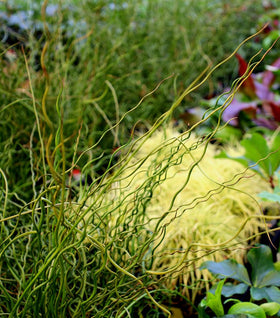
Shopping juncus plants for sale is also a design cheat code: go straight and blue-toned for modern structure (like Blue Arrow/Blue Arrows), or go curly and playful for containers and “conversation piece” beds (like corkscrew rush—Spiralis/Big Twister). Order with confidence: fast shipping, clear guidance, and real horticultural support—backed by the We Grow Together Promise.


Buy Juncus for bold texture in wet soil.
Juncus is a smart add-to-cart choice when you need plants that can handle consistently moist to wet conditions—including areas that hold water after heavy rain. Common soft rush (Juncus effusus) is frequently used in rain gardens, wetlands, and pondside plantings because it stays upright and clumping while tolerating waterlogged soil. If you’ve tried “regular perennials” in a soggy spot and watched them fade out, Juncus is a practical pivot.
It’s also an easy way to bring structure to mixed plantings. Juncus reads like ornamental grass from a distance, but it’s a rush—those round stems give a cleaner, more architectural look that pairs beautifully with irises, sedges, and flowering moisture-lovers. And because many options are low-maintenance once established, you’re buying long-term performance, not a weekly chore.
If your goal is quick visual impact, this collection includes distinct “signature” picks: Big Twister for dramatic curls, Blue Arrow for crisp blue-green vertical lines, and classic effusus for clean green stems in wetland-style plantings.
Choose straight lines or corkscrews for instant style.
Juncus gives you two standout looks. The first is sleek and upright: Blue Arrow/Blue Arrows rush delivers stiff, blue-green stems that look modern, calm, and intentional—perfect for contemporary beds, rain garden “spines,” and clean-lined container combos. The second is curly and playful: corkscrew rush (often sold as Spiralis and selections like Big Twister) brings tight spirals that look like living sculpture—especially in pots and patio planters.
These plants also earn their keep beyond summer. Many designers leave the stems up for winter structure, then tidy them in late winter or early spring—so you get shape even when flowers are gone, and beds feel bare.
For shoppers who want something genuinely different, corkscrew rush is also noted as an excellent container plant that can even be overwintered indoors in some situations—another reason it’s a favorite for “one plant, many uses” buyers.
Plant it where water collects, and roots stay happy.
Think like a rain garden: Juncus performs best where soil stays consistently moist, and many types tolerate wet feet extremely well—making them ideal for pond margins, bog gardens, downspout dispersal areas, and low spots that stay damp. For corkscrew rush specifically, guidance notes it can grow with about 1–6 inches of water over the crown and works well in larger containers.
Spacing depends on the selection and the look you want, but a practical planning range for many clumping rushes is roughly 18–24 inches apart for a full, rhythmic planting (wider for big statements, tighter for faster “knit”). If you’re using juncus for erosion control near a water edge, massing plants in repeated groups is often more effective (and looks more designed) than scattered singles.
One more useful nuance: while juncus is associated with wet sites, some forms (like Blue Arrows) are also described as drought-tolerant once established, giving you flexibility in beds that swing between wet spells and dry stretches.
Keep it thriving with simple, water-smart care.
Juncus care is refreshingly straightforward: keep moisture consistent during establishment, then let the plant do what it’s built to do. Corkscrew rush prefers full sun but tolerates some shade and needs consistently moist soil; it can also be grown in pots, and division is a common way to propagate and refresh clumps.
Maintenance is mostly seasonal cleanup. Many growers recommend leaving stems for winter interest, then cutting back or combing out old growth in late winter/early spring to make room for fresh new stems. Keep fertilizer minimal—excess fertility can soften the habit and reduce that crisp, upright look you’re buying Juncus for.
If you’re planting corkscrew types and want to keep the spread contained, one practical approach is to keep plants in pots (or sink pots in beds with the rim slightly above grade) so you get the look without unwanted wandering. Do those basics, and juncus becomes the reliable “wet spot fixer” that still looks like a designer choice—backed by the We Grow Together Promise.