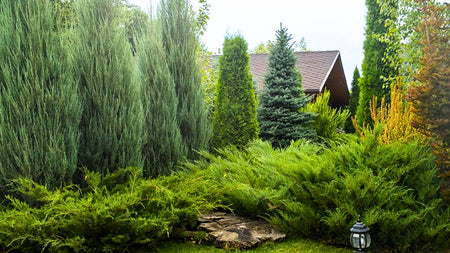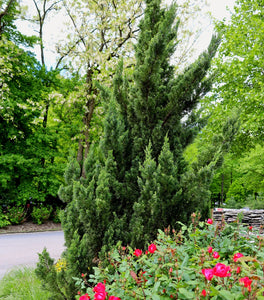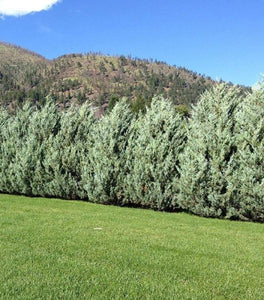
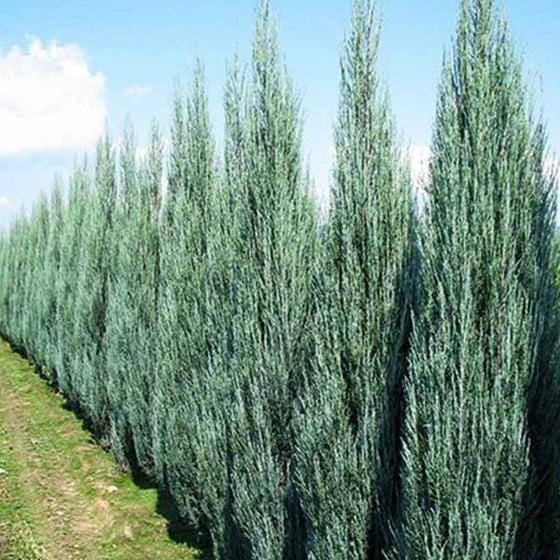
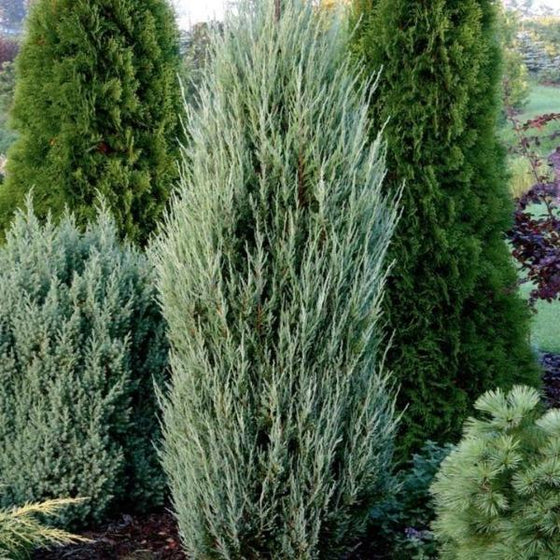
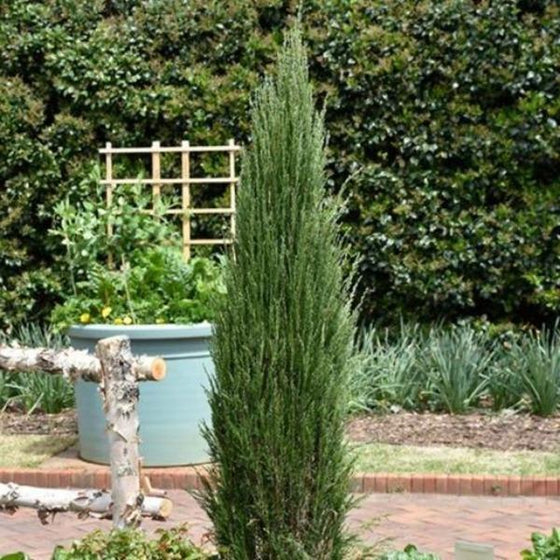
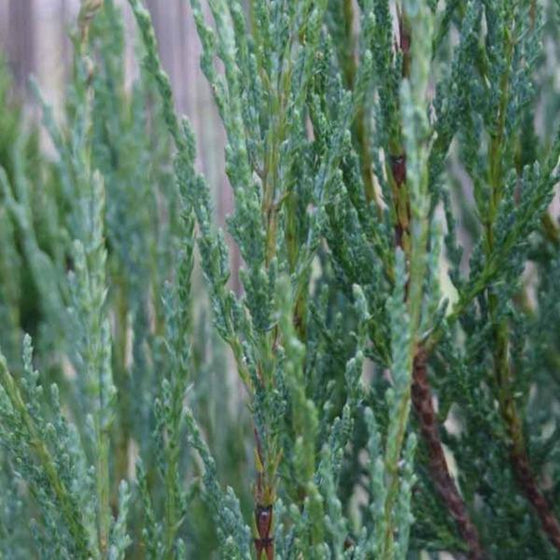


Images Depict Mature Plants
Blue Arrow Juniper
Juniperus scopulorum 'Blue Arrow'
I've always had a soft spot for Blue Arrow Juniper because it solves a landscaping problem that broader evergreens simply cannot. Sometimes a homeowner needs height, privacy, or a strong vertical accent but only has a couple of feet of planting space available. Blue Arrow gives you that beautiful, narrow column of silvery-blue foliage without spreading halfway across the walkway or lawn. I particularly like using it in pairs beside an entrance or repeating it along a sunny property line where a larger evergreen would become overwhelming. Its blue color is another real advantage because it looks terrific against green shrubs, ornamental grasses, and flowering perennials. One thing I always emphasize is planting it in well-drained soil. Junipers are remarkably durable once established, but they do not appreciate sitting in soggy ground. If you have the right sunny location and want a cold-hardy evergreen with strong architectural character, Blue Arrow is an excellent choice.
$31.96 with code SAVINGS20 at checkout Save $7.99
📦 Free shipping on orders over $99.
Delay shipping by leaving us a message at Checkout.
Share:

Striking Silvery-Blue Evergreen Color in a Remarkably Narrow Shape
Blue Arrow Juniper Adds Beautiful Vertical Structure Without Taking Up Space
When homeowners need an evergreen that provides height without spreading into valuable yard space, Blue Arrow Juniper is one of the most attractive choices available. This outstanding selection of Rocky Mountain juniper develops a remarkably slim, upright silhouette that brings architectural structure to nearly any sunny landscape. Its closely arranged branches grow upward rather than outward, creating a tall, elegant column of silvery-blue evergreen foliage. The result is a tree that makes a strong visual statement without the broad footprint associated with many traditional privacy evergreens. Blue Arrow is especially useful for narrow garden beds, property lines, entryways, and smaller residential landscapes where every foot of planting space matters.
At maturity, Blue Arrow Juniper typically reaches 12 to 15 feet tall and approximately 2 to 3 feet wide. This tall, slender proportion makes it particularly valuable for creating vertical accents without overcrowding neighboring plants or walkways. Unlike larger conifers that gradually dominate their surroundings, Blue Arrow maintains a naturally compact silhouette that fits beautifully into structured landscape designs. Plant it individually to draw attention to an important garden feature, use a matching pair to frame an entrance, or repeat several trees to create a narrow evergreen screen. Its unusual shape and distinctive foliage color make it both a practical landscape solution and an exceptional ornamental plant.
Silvery-Blue Foliage Creates Exceptional Year-Round Color
One of the most compelling reasons to choose Blue Arrow Juniper is its striking blue-green to silvery-blue foliage. The tree's tightly arranged evergreen branches create a dense column of cool-toned color that stands out beautifully against darker green shrubs, brick walls, natural stone, and richly colored mulch. Its fine-textured foliage brings a refined appearance to the landscape, providing contrast without overwhelming surrounding plantings. While many evergreen trees primarily offer traditional shades of green, Blue Arrow introduces a more distinctive color that can become a defining feature of the garden.
Because Blue Arrow is a true evergreen, its attractive foliage remains visible year-round. During winter, when many flowering shrubs and perennials have disappeared from view, the tree continues providing vertical interest and color. This is particularly valuable in northern landscapes where winter structure plays an important role in garden design. The silvery-blue foliage also complements white flowers, purple perennials, pink flowering shrubs, and ornamental grasses. Whether used as a single specimen or planted in a repeating pattern, Blue Arrow Juniper adds a cool, elegant evergreen presence that remains attractive through every season.
A Narrow Evergreen Privacy Tree for Small Yards and Tight Spaces
Blue Arrow Juniper is an excellent solution for homeowners who want evergreen screening without sacrificing valuable landscape space. Its naturally columnar growth allows it to fit into planting areas where broad arborvitae, spruce, and other large evergreen trees would eventually become too wide. This makes it especially useful along side yards, beside driveways, near garden walls, and in relatively narrow property-line planting strips. Several trees planted in a row can create an attractive vertical screen that softens unwanted views while maintaining a clean, orderly appearance.
For a continuous screen, Blue Arrow Juniper is commonly planted approximately 2 to 3 feet on-center, depending on the desired density and long-term landscape plan. Because individual plants remain narrow, closely spaced trees can eventually create a wall of upright blue foliage. However, homeowners should recognize that a row of Blue Arrow Junipers offers a different type of privacy than a broad evergreen hedge. Its greatest strength is vertical screening in a small footprint, particularly where a traditional privacy tree would require too much room. Careful spacing and good sunlight exposure help maintain dense growth from the lower branches upward.
Elegant Columnar Growth Brings Architectural Beauty to the Landscape
Few evergreens create the same architectural effect as Blue Arrow Juniper. Its tall, narrow, almost pencil-like silhouette introduces a formal design element that works beautifully in traditional, contemporary, and Mediterranean-inspired landscapes. The tree's naturally upright branches form a clean column that can define an entrance, emphasize a pathway, or provide a strong vertical accent within a mixed planting. Because its mature width remains relatively limited, Blue Arrow can deliver that architectural effect without requiring extensive pruning to maintain its shape.
One of my favorite ways to use narrow evergreens is to repeat them strategically throughout a landscape. A pair of Blue Arrow Junipers can frame an entryway or garden feature, while a series of trees planted along a walkway creates rhythm and visual continuity. They also work beautifully beside ornamental grasses and flowering perennials, where their upright blue foliage contrasts with softer, rounded plant forms. Unlike broad evergreens that can make a small garden feel crowded, Blue Arrow adds height while preserving an open, uncluttered appearance. This combination of structure, color, and compactness makes it especially valuable in thoughtfully designed residential gardens.
Blue Arrow Juniper Thrives in Sunny, Well-Drained Landscapes
Blue Arrow Juniper performs best when planted in full sun and well-drained soil. As a selection of Rocky Mountain juniper, it is well adapted to sunny conditions and generally tolerates a range of soil textures, including leaner soils where some moisture-loving evergreens may struggle. Once its root system becomes established, the tree demonstrates good drought tolerance, making it useful for homeowners seeking a relatively water-efficient evergreen. However, newly planted specimens still require regular watering, and extended drought can stress even an established juniper.
The most important growing consideration is avoiding poor drainage and consistently waterlogged soil. Junipers generally perform poorly when roots remain saturated for extended periods, so planting in a well-drained location is essential. In heavy clay soils, improve the planting area's drainage or choose a naturally elevated location rather than creating a planting hole that collects water. Apply a light mulch layer to help conserve moisture during establishment, keeping mulch away from the trunk. With adequate sun, proper drainage, and sensible watering, Blue Arrow Juniper can become a resilient, low-maintenance addition to many residential landscapes.
Cold-Hardy Evergreen Beauty for Four-Season Landscapes
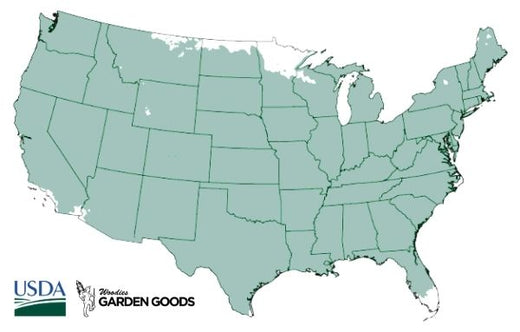
Blue Arrow Juniper is commonly recommended for USDA Growing Zones 4 through 9, providing a broad range of planting possibilities. Its cold hardiness makes it particularly appealing to gardeners who appreciate the narrow, upright appearance of Mediterranean-style evergreens but live in climates where less hardy species may not survive winter. The tree maintains its strong vertical form throughout the year, adding structure even after deciduous plants have lost their leaves. This makes Blue Arrow a valuable choice for winter gardens and landscapes that need consistent visual interest.
Its foliage generally retains an attractive blue-green to silvery-blue appearance during winter, helping the tree stand out against snow, bare branches, and dormant garden beds. Although Blue Arrow is adaptable, exposed locations can still create challenges. Newly installed plants benefit from proper watering before the ground freezes, and branches should be protected from heavy snow accumulation when practical. The cultivar's naturally narrow branching helps maintain its distinctive shape, but unusually heavy ice or snow can still cause damage. With thoughtful placement, Blue Arrow provides lasting evergreen color and structure through changing seasons.
A Low-Maintenance Juniper That Naturally Keeps Its Shape
One of the most appealing characteristics of Blue Arrow Juniper is that its naturally narrow form requires very little pruning. The tree develops a dense, upright silhouette without the frequent shearing associated with some formal hedges. This makes it especially attractive for homeowners who appreciate clean, architectural landscaping but prefer not to spend excessive time shaping evergreen plants. Its slow-to-moderate spread also makes it easier to maintain in tight planting areas, provided sufficient room has been allowed for mature growth.
If pruning is needed, remove damaged or poorly positioned branches in late winter or early spring. Light trimming of the outermost green growth can help maintain a tidy silhouette, but extensive cutting is usually unnecessary. Avoid pruning deeply into old, leafless wood because junipers generally do not regenerate foliage readily from bare interior branches. Regular watering during establishment, good drainage, and occasional inspection for pests are more important than frequent trimming. Once established in a suitable location, Blue Arrow Juniper offers an attractive combination of distinctive color, dependable structure, and relatively simple maintenance.
A Beautiful Choice for Entryways, Privacy Rows, and Mixed Garden Borders
Blue Arrow Juniper is remarkably versatile despite its specialized upright shape. It works beautifully as a vertical accent beside an entryway, where a pair of trees can create symmetry and emphasize architectural features. In narrow garden borders, it adds height without overwhelming smaller plants. Along property lines, a series of Blue Arrow Junipers can establish a formal evergreen screen with a relatively small planting footprint. Its silvery-blue foliage also makes it an exceptional companion for flowering shrubs, ornamental grasses, and colorful perennial combinations.
For the most attractive design, use Blue Arrow where its narrow growth habit and blue foliage can be appreciated. Pair it with plants that offer contrasting shapes, such as rounded flowering shrubs or softly mounding perennials, while preserving adequate space for airflow and root development. Its color is especially effective alongside purple, white, pink, and yellow blooms. Homeowners searching for a tree that combines narrow evergreen privacy, distinctive foliage color, and architectural beauty will find Blue Arrow Juniper an outstanding option for smaller gardens and carefully planned landscapes.
| Hardiness Zone: | 4-9 |
|---|---|
| Mature Height: | 12 to 15 Feet |
| Mature width: | 2 to 3 Feet |
| Sunlight: | Full sun |
| Soil Condition: | Well-drained; adaptable to various soil textures |
| Water Requirement: | Moderate during establishment; low to moderate afterward |
| Wildlife Value | Evergreen cover; berry-like cones may provide food for birds |
| Resistance | Generally resistant; browsing possible |
| Landscape Uses | Narrow privacy screens; entry accents; formal gardens; foundation beds |
How to Care for Blue Arrow Juniper
Before you buy a Blue Arrow Juniper Tree, make sure to read our care instructions to keep this plant healthy and flourishing.

How should I plant Blue Arrow Juniper?
Choose a location that receives at least six hours of direct sunlight daily and has well-drained soil. Blue Arrow Juniper performs best where its roots will not remain saturated after heavy rain. Dig a planting hole approximately twice as wide as the root ball but no deeper than the root ball itself. Carefully remove the plant from its container, loosen any tightly circling roots, and position it with the top of the root ball level with or slightly above the surrounding soil. Backfill with the original soil and water thoroughly to settle the root zone. For a narrow evergreen screen, Blue Arrow Junipers can be spaced approximately 2 to 3 feet apart on center, depending on the intended appearance. Allow additional clearance from walls, fences, and pavement so the trees can develop their natural form. Apply a 2-inch layer of organic mulch, keeping it several inches away from the trunk. In heavy soils, prioritize improving drainage across the planting area rather than adding a small pocket of loose amendment that may collect water.

How often should I water Blue Arrow Juniper after planting?
Immediately after planting, water thoroughly to moisten the entire root ball. Continue checking soil moisture regularly throughout the first growing season. Newly installed plants need dependable moisture while their roots expand into surrounding soil, but the root zone should not remain constantly wet. When the upper few inches of soil begin to dry, water slowly and deeply. The exact frequency depends on rainfall, temperature, drainage, and container size. Once established, Blue Arrow Juniper develops good drought tolerance and generally needs less supplemental irrigation than many moisture-loving evergreens. During prolonged hot, dry periods, occasional deep watering helps preserve attractive foliage and healthy growth. Avoid frequent shallow irrigation and do not allow water to accumulate around the roots. Excellent drainage is particularly important during winter, when cold, saturated soils may increase the risk of root problems.

When should I fertilize Blue Arrow Juniper?
Blue Arrow Juniper generally requires little supplemental fertilizer when planted in suitable soil. If growth is weak and a soil test indicates a nutrient deficiency, apply an appropriate slow-release, balanced fertilizer in early spring before new growth begins. Follow the manufacturer's recommended application rate rather than increasing the amount in an effort to accelerate growth. Apply fertilizer over the root zone, away from the trunk, and water it in thoroughly. Avoid excessive fertilization because rapid, soft growth can compromise the plant's naturally compact appearance. Established junipers growing in reasonably fertile soil often perform well without annual feeding. Proper sunlight, drainage, and moderate irrigation are usually more important than fertilizer for long-term success. Do not apply heavy nitrogen treatments late in the growing season.

When and how should I prune Blue Arrow Juniper?
Blue Arrow Juniper naturally develops a very narrow, upright columnar form, so extensive pruning is rarely necessary. If you notice dead, damaged, or unusually long branches, remove or lightly shorten them in late winter or early spring. Use clean, sharp pruning tools and preserve the tree's natural vertical silhouette. In most landscapes, occasional minor cleanup is enough to maintain an attractive shape. Avoid cutting deeply into old, leafless wood because junipers generally do not regenerate foliage readily from bare branches. Heavy shearing can also spoil the cultivar's distinctive appearance. If you want a formal screen, begin with appropriate spacing and allow the plants to develop their natural density. Light corrective trimming is preferable to aggressive pruning.