


Images Depict Mature Plants
Blue Chiffon Rose of Sharon
Hibiscus syriacus 'Notwoodthree'
If you're trying to bring more color into the garden during the hottest part of summer, Blue Chiffon Rose of Sharon is a shrub worth considering. What catches my attention is the flower structure. The outer petals have that beautiful lavender-blue coloring, but the center is filled with smaller, ruffled petals that give each bloom a soft, almost lace-like appearance. It's quite different from the traditional single-flowering Rose of Sharon. I especially like using Blue Chiffon as a large flowering specimen or along a sunny property border, where its height and abundant flowers can really make an impact. One thing I always tell homeowners is to give it plenty of room. This isn't a little three-foot shrub; it can grow 8–12 feet tall, so you want to choose the right location from the beginning. Give it at least six hours of sunlight, keep it watered during establishment, and remember that it flowers on new wood, making early spring the right time for any shaping. I also appreciate the activity its summer flowers can bring to the garden. If you want an elegant flowering shrub with unusual blue-lavender blooms that carries color into early fall, Blue Chiffon is an excellent option.
$93.46 with code NOVEMBER15 at checkout Save $16.49
📦 Free shipping on orders over $99.
Delay shipping by leaving us a message at Checkout.
Share:Recommended Add-Ons



Blue Chiffon Rose of Sharon – Beautiful Lavender-Blue Flowers With Delicate Lacy Centers
Blue Chiffon Rose of Sharon Delivers Spectacular Lavender-Blue Summer Flowers
Blue Chiffon Rose of Sharon is an outstanding flowering shrub for homeowners who want beautiful color in the landscape long after many spring-blooming plants have finished their display. This Proven Winners selection produces large lavender-blue flowers with delicate, lacy centers that create a soft, elegant appearance unlike the blooms of traditional Rose of Sharon varieties. Each flower features broad outer petals surrounding a cluster of smaller, ruffled petals, producing a distinctive semi-double, anemone-like flower form. The blossoms display cool blue-lavender tones with deeper violet coloring near the center, creating an attractive contrast against the shrub's rich green foliage. When the plant reaches maturity, its upright branches can become decorated with numerous flowers, making Blue Chiffon a beautiful focal point in sunny residential landscapes.
What makes this shrub especially valuable is its ability to provide an extended flowering display from summer into early fall. Rather than producing one brief flush of flowers, Blue Chiffon continually develops new buds along its growing stems. Individual flowers are relatively short-lived, but the succession of blooms creates weeks of ornamental interest. The unusual flower color also works beautifully with white flowering shrubs, yellow perennials, and dark green evergreens. For homeowners seeking a substantial blue-flowering shrub with elegant blossoms and impressive seasonal color, Blue Chiffon Rose of Sharon offers a distinctive alternative to more familiar pink- and white-flowering summer plants.
Large Semi-Double Flowers Create an Elegant, Long-Lasting Garden Display
The flowers of Blue Chiffon Rose of Sharon are its most remarkable ornamental feature. Each blossom opens with broad, lavender-blue outer petals surrounding a delicate center of smaller, ruffled petaloids. This creates a layered flower that resembles a combination of a traditional Hibiscus blossom and a softly ruffled double flower. The deeper violet-blue coloring near the center adds visual depth, while the lighter outer petals give the flowers an elegant, almost translucent appearance. Blooms commonly reach approximately 3 to 4 inches across, although actual size varies with growing conditions. The individual flowers are especially attractive when viewed up close, making this shrub a wonderful choice near sunny patios, garden entrances, and outdoor seating areas.
Blue Chiffon generally begins flowering during midsummer and continues into early fall, with the strongest display often occurring from July through September or October depending on the region. Because the shrub flowers on new growth, fresh stems can continue producing buds throughout the flowering season. The large blossoms also bring welcome color to the garden at a time when many early-season flowering shrubs have mostly turned green. In a mixed planting, the cool lavender-blue flowers contrast beautifully with golden Black-Eyed Susans, white Shasta Daisies, and late-blooming ornamental grasses. The combination of unusual flower color, a delicate semi-double form, and an extended bloom season makes Blue Chiffon a particularly rewarding flowering shrub.
Tall Upright Growth Creates Beautiful Flowering Hedges and Privacy Screens
Blue Chiffon Rose of Sharon develops a vigorous, upright-to-broadly rounded growth habit, making it particularly useful for homeowners seeking substantial flowering height. Mature shrubs commonly reach approximately 8 to 12 feet tall and 6 to 10 feet wide, although mature dimensions can vary with climate, soil conditions, and pruning. This makes Blue Chiffon much larger than compact flowering shrubs typically used beneath low windows. Its height allows it to function as a flowering screen along property boundaries, behind perennial beds, or near outdoor living areas. During summer, its green foliage and abundant flowers create an attractive visual barrier while adding color and texture.
For a flowering hedge, plant Blue Chiffon with enough space to accommodate its mature growth. Spacing of approximately 6 to 8 feet between plants can be appropriate for a connected hedge, while wider spacing allows individual shrubs to develop a more natural shape. The exact distance should reflect the available space and desired coverage. Unlike an evergreen privacy shrub, Blue Chiffon loses its foliage during winter, so its screening value is primarily seasonal. It is especially attractive when used as a flowering backdrop for lower-growing shrubs, ornamental grasses, and perennial borders. Its naturally upright habit also makes it suitable as a single specimen where the full height and distinctive flower display can be appreciated.
Blue Chiffon Rose of Sharon Attracts Pollinators and Adds Wildlife Interest
Blue Chiffon Rose of Sharon provides more than attractive flowers. Its large summer blossoms can attract bees, butterflies, and occasional hummingbirds, making it a useful addition to gardens designed around seasonal flowering interest. The flowers develop while many early-blooming shrubs have finished blooming, providing additional floral resources during the middle and later portions of summer. While the extra petals make Blue Chiffon's blossoms more elaborate than those of single-flowering Hibiscus varieties, pollinator access can vary from flower to flower. Combining Blue Chiffon with other nectar-rich plants creates a more complete garden for pollinating insects.
This shrub is particularly effective when planted near Purple Coneflowers, Black-Eyed Susans, Catmint, and other sun-loving flowering perennials. These companions offer varied flower shapes and bloom periods, while Blue Chiffon adds height and large lavender-blue blossoms. The green foliage also provides some seasonal shelter for small birds and garden wildlife. As a cultivated selection of Hibiscus syriacus, Blue Chiffon is not native to North America, so homeowners designing strictly native gardens should take that into account. It can nonetheless contribute ornamental flowers and seasonal habitat to mixed residential landscapes. For the best results, combine it with diverse flowering plants rather than relying on a single shrub for all pollinator needs.
Full Sun and Good Drainage Encourage Abundant Summer Flowering
Blue Chiffon Rose of Sharon performs best in full sun, ideally receiving at least six hours of direct sunlight daily. Strong sunlight promotes healthy branching and abundant flower production, while excessive shade can reduce the number of blooms and encourage weaker, elongated stems. The shrub is adaptable to a variety of soil types, including clay, loam, and sandy soil, provided the planting location drains adequately. Once established, Blue Chiffon develops good tolerance for summer heat and occasional drought, making it useful in many residential landscapes where conditions become warm and dry during summer. Newly planted shrubs, however, need consistent watering while their root systems develop.
Another advantage of Blue Chiffon is that it flowers on new wood, meaning the blooms develop on shoots produced during the current growing season. This allows homeowners to perform necessary pruning in late winter or early spring without sacrificing the upcoming summer flower display. The shrub generally requires little fertilizer when growing in healthy garden soil, although moderate spring feeding may be beneficial when soil tests indicate a need. Avoid excessive nitrogen because it can encourage leafy growth without improving flowering. Blue Chiffon also tends to leaf out relatively late in spring, which is normal for Rose of Sharon. With full sun, appropriate soil moisture, and minimal seasonal pruning, this shrub can produce attractive flowers year after year.
Create Stunning Landscape Combinations With Blue Chiffon Rose of Sharon
Blue Chiffon Rose of Sharon is particularly valuable when used as a colorful focal point, a substantial flowering hedge, or a backdrop for mixed perennial plantings. Its cool lavender-blue flowers complement both warm and cool color palettes, making it easy to incorporate into established gardens. For a bright summer display, combine Blue Chiffon with yellow Black-Eyed Susans, golden Coreopsis, or white Shasta Daisies. The yellow flowers create strong contrast against the lavender-blue Hibiscus blossoms, while white flowers produce a softer, more elegant appearance. In larger borders, the tall shrub provides useful height behind lower-growing perennials.
Blue Chiffon also pairs beautifully with ornamental grasses that contribute fine texture and seasonal movement. Prairie Dropseed, Shenandoah Switchgrass, and Karl Foerster Feather Reed Grass can provide contrasting foliage forms, provided adequate spacing is maintained. Prairie Dropseed creates a lower fountain-shaped foreground, while Switchgrass adds upright texture and autumn interest. For more formal designs, a row of Blue Chiffon plants can create a colorful summer backdrop near a property boundary or outdoor entertaining area. Remember to provide enough room for the shrub's substantial mature height and spread rather than planting it too close to foundations or walkways. With thoughtful placement, Blue Chiffon delivers striking late-season color, graceful flowers, and impressive landscape presence.
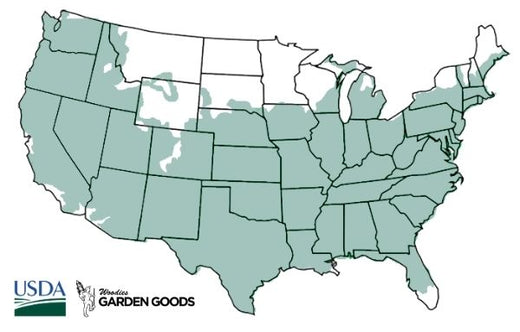
| Hardiness Zone: | 5-9 |
|---|---|
| Mature Height: | Approximately 8–12 feet |
| Mature Width: | Approximately 6–10 feet; narrower sizes reported in some grower references |
| Sunlight: | Full sun preferred, at least 6 hours daily; partial shade tolerated with reduced flowering |
| Soil | Fertile, well-drained clay, loam, or sandy soil; tolerates acidic to alkaline soil conditions |
| Water Requirements: | Moderate during establishment; low to moderate once established; water during prolonged drought |
| Bloom Time / Color | Midsummer to early fall, commonly July–October depending on climate / Lavender-blue to violet-blue with deeper purple-red central markings |
| Ornamental Features | Large lavender-blue semi-double flowers, ruffled anemone-like centers, long summer bloom season, upright flowering branches |
| Wildlife Value | Bees, butterflies, hummingbirds, and occasional other flower visitors |
| Resistance | Heat, Drought Once Established, Clay Soil, Black Walnut, Moderate Salt Exposure, and Urban Conditions; some deer resistance |
| Landscape Uses | Flowering hedges, seasonal privacy screens, specimen shrubs, sunny borders, mixed shrub plantings, pollinator gardens, large foundation beds, flowering backdrops |
How to Care for Blue Chiffon Rose of Sharon
Before you purchase your Blue Chiffon Rose of Sharon, be sure to read the care instructions to keep your plant happy and healthy for years to come!

How should I plant Blue Chiffon Rose of Sharon?
Plant Blue Chiffon Rose of Sharon in a location receiving full sun for at least six hours daily, preferably where its mature height and spread can develop without crowding structures or neighboring shrubs. This large flowering Hibiscus performs best in fertile, well-drained soil but adapts to clay, loam, and sandy soils when drainage is adequate. Before planting, remove weeds and loosen compacted soil throughout the surrounding planting area. When installing a flowering hedge, plan for the mature width rather than spacing the shrubs according to their initial container size. Blue Chiffon can reach 8–12 feet tall, making it more appropriate for larger beds, property boundaries, and substantial flowering screens than narrow foundation spaces. Dig a hole twice as wide as the root ball and no deeper than its height. Carefully remove the shrub from the nursery container and loosen any circling roots. Position the upper surface of the root ball level with or slightly above the surrounding soil, backfill with the original soil, and water thoroughly. Apply 2–3 inches of organic mulch, keeping it several inches away from the main stems. For flowering hedges, space plants approximately 6–8 feet apart, adjusting for the desired mature appearance. During establishment, monitor the root zone carefully and maintain consistent moisture without creating continuously saturated conditions.

How often should I water Blue Chiffon Rose of Sharon after planting?
During the first growing season, Blue Chiffon Rose of Sharon needs regular, deep watering while its root system becomes established. Immediately after planting, thoroughly soak the root ball and surrounding soil. Continue checking moisture regularly, especially during hot weather. Approximately 1 inch of water per week, including rainfall, is a reasonable starting guideline in many garden soils, although actual requirements depend on temperature, drainage, soil texture, and plant size. Water slowly enough to reach the developing roots rather than merely wetting the soil surface. Avoid allowing newly planted shrubs to become severely dry, since drought stress can slow establishment and reduce healthy new growth. Once established, Blue Chiffon demonstrates good tolerance for occasional drought and summer heat, although supplemental watering during prolonged dry periods helps maintain healthy foliage and flower production. Newly developed flower buds and tender growth may be affected by severe water stress, particularly during unusually hot summers. A layer of organic mulch helps conserve moisture and regulate root-zone temperatures. Avoid keeping the soil continuously waterlogged, even though the shrub tolerates occasional wet periods. For dependable flowering, provide sufficient moisture during active growth while allowing excess water to drain away.

When should I fertilize Blue Chiffon Rose of Sharon?
Blue Chiffon Rose of Sharon generally benefits from balanced nutrition during its active growing season, particularly when growing in soils with limited fertility. Begin with a soil test before establishing a regular fertilizer program. If nutrients are needed, apply an appropriate slow-release fertilizer in early spring after the ground has thawed and growth is beginning, following the manufacturer's label. The plant's introducer notes that Blue Chiffon may benefit from spring feeding where flowering performance is limited by nutrient availability. However, fertilizer needs should be determined by actual soil conditions rather than assuming every established shrub requires the same application. Avoid excessive nitrogen because heavy feeding can encourage vigorous green foliage without a corresponding improvement in flowers. When a shrub produces abundant leaves but relatively few blooms, inspect sunlight exposure, pruning history, and growing conditions before adding more fertilizer. A suitable balanced fertilizer or flowering-shrub fertilizer may be used when indicated by soil testing, but excessive phosphorus should not be applied without evidence of need. Established shrubs growing vigorously in fertile soil may require little additional feeding. Adequate sunlight, proper watering, and moderate fertility are the foundations of a strong summer bloom display.

When and how should I prune Blue Chiffon Rose of Sharon?
Blue Chiffon Rose of Sharon flowers on new wood, meaning the current season's growth produces the flower buds. For this reason, the best time for routine shaping and size control is late winter or early spring before vigorous new growth begins. Pruning at this time allows the plant to develop fresh stems that can bloom during summer. Unlike hydrangeas that flower primarily on older stems, Blue Chiffon does not depend on preserving the previous year's flower buds. Regular pruning is not required to maintain its natural upright habit, but selective shaping can help keep the shrub balanced and remove unwanted branches. Use clean, sharp pruning tools to remove dead, damaged, crossing, or poorly positioned stems. For a natural specimen, concentrate on selective thinning rather than severe annual shearing. When growing Blue Chiffon as a flowering hedge, shorten branches as needed in early spring while allowing adequate room for new growth. Heavy summer pruning can remove developing buds and delay or reduce flowering, so avoid substantial cutting during the bloom season. Blue Chiffon often leafs out later than many other shrubs, so allow time for new growth to emerge before assuming the plant has suffered winter damage.


