
Miscanthus Grass
Tall texture, graceful movement, and late-season plumes for sunny landscapes.
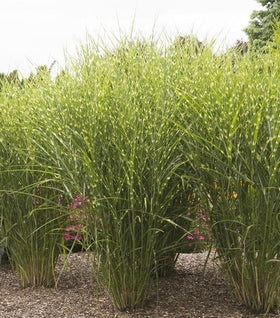
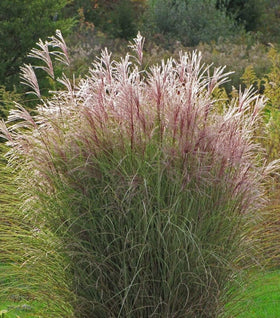
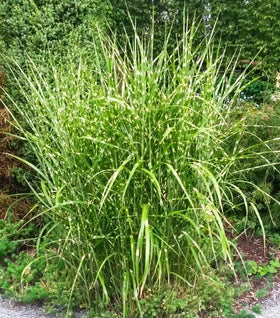
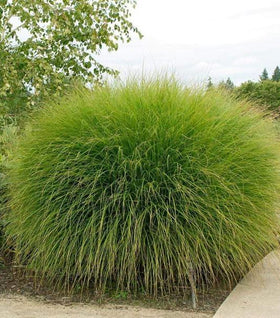
Miscanthus is one of the ornamental grasses I reach for when a landscape needs height, movement, or structure without adding another woody shrub. These warm-season grasses form dense clumps of arching foliage that look good through summer, then send up airy plumes in late summer and fall. Leave those stems standing, and the plants will continue to add movement and texture through winter. The current assortment gives gardeners several different looks to work with. Adagio stays relatively compact with fine foliage; Gracillimus adds more height and a classic maiden-grass form; Morning Light adds fine white-edged leaves; and Little Zebra and Bandwidth bring bold horizontal gold banding. That range makes Miscanthus useful for everything from smaller foundation beds to property-line screens and larger mixed borders.
The important part is choosing the right cultivar and checking your local regulations before planting. Miscanthus sinensis can escape cultivation and is considered invasive or regulated in several regions. Some newer selections, including Bandwidth, were developed with greatly reduced fertility and provide the ornamental look with lower seed-production concerns, but local rules may still apply to the species and its cultivars. Where planting is permitted, give Miscanthus plenty of sun, enough room for the mature clump, and average well-drained soil. Once established, most selections are drought-tolerant, deer-resistant, and very low maintenance. Leave them standing through winter, then cut them back before fresh growth begins in spring. The We Grow Together Promise adds another layer of confidence when choosing the right ornamental grass for your landscape.

Miscanthus Bandwidth
As Low As $39.95

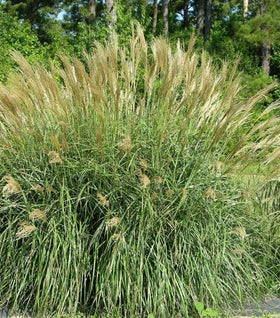
Add height and movement without another shrub.
Miscanthus is especially useful when a planting needs vertical structure but you still want the landscape to feel light and natural. The foliage grows in dense clumps and arches outward rather than creating the heavy visual mass of a broad evergreen. Even a small breeze moves the leaves and plumes, giving borders and foundation plantings more life.
Different cultivars solve different landscape problems. Adagio is a good choice when you want the fine texture and plumes of maiden grass in a more manageable 3- to 4-foot plant. Little Zebra stays in roughly the same height range but adds bold horizontal gold bands. Bandwidth is even more compact at around 2½ to 3 feet and works especially well where a larger grass would overwhelm the bed.
For more height, Morning Light generally reaches about 4 to 6 feet and has narrow green leaves edged in white that create a silvery appearance from a distance. Gracillimus is another taller selection with very fine, arching foliage and enough height to work as a backdrop, specimen, or soft seasonal screen.
The foliage is valuable all summer, but the late-season plumes extend the display. Depending on the cultivar, flowers may emerge pink, reddish-purple, bronze, copper, or silvery before fading to softer cream or tan. Leave them standing through winter and the dried foliage continues catching light, snow, and wind long after most perennials have gone dormant.
Choose compact stripes or tall, fine texture.
Adagio is one of the easier Miscanthus varieties to fit into residential landscapes. It typically grows around 3 to 4 feet tall and wide, with plumes rising somewhat higher. Its narrow silver-green foliage creates a refined texture, while pink-tinged late-summer flowers mature toward creamy white. Use it where you want the look of maiden grass without committing to a 6-foot clump.
Little Zebra grows about 3 to 4 feet tall and 2 to 3 feet wide. The green leaves are marked by horizontal gold bands, making the foliage itself the main attraction even before the reddish-purple plumes appear. Its compact habit makes it useful beside patios, in sunny foundation beds, and as a repeating accent through a perennial border.
Bandwidth is smaller again, typically around 2½ to 3 feet tall and wide. Its upright leaves feature bright gold horizontal banding, creating a strong architectural accent without overpowering the planting. Bandwidth is also notable because it was selected for greatly reduced fertility, making it a more responsible option where regional rules permit its use.
Morning Light usually matures around 4 to 6 feet tall and 3 to 4 feet wide. Its fine green blades have thin white margins, which give the whole plant a soft silver glow when backlit. It is an excellent option when you want something taller than the dwarf forms but more visually refined than a coarse screening grass.
Gracillimus is the classic taller maiden grass. Its narrow arching leaves form a large fountain-like clump, and late-season plumes rise above the foliage. Use it where you have enough room for the mature plant and want stronger height for a backdrop, property line, large border, or specimen planting.
Give Miscanthus sun and enough breathing room.
Full sun is the best location for most Miscanthus. Six or more hours of direct light encourages stronger stems, fuller clumps, better foliage color, and more reliable flower plumes. Light part shade is tolerated by some cultivars, but too much shade can reduce flowering and cause the plant to become looser or more prone to flopping.
Miscanthus is adaptable to average garden soil as long as drainage is reasonable. It handles loam, clay, and poorer soils better than many ornamental plants once established. Water regularly through the first growing season so the roots develop well. After establishment, most cultivars tolerate dry periods and generally require supplemental watering only during extended drought.
Spacing should reflect mature width. Bandwidth and Little Zebra may need only about 2½ to 3 feet between plants. Adagio benefits from roughly 3 to 4 feet. Morning Light and larger maiden grasses need additional space, particularly when you want individual fountain-shaped clumps rather than a continuous screen.
Use compact varieties around patios, sunny foundations, driveways, containers, and mixed perennial beds. Taller selections work well at the back of borders, along property lines, as specimens, or in loose screening plantings. Miscanthus pairs naturally with coneflowers, black-eyed Susans, sedum, salvia, asters, catmint, and other sun-loving plants that peak during summer and fall.
Miscanthus is a warm-season grass, so do not be concerned if it is slower to wake up than cool-season grasses in spring. The soil needs to warm before new shoots become active. Once growth starts, the clump develops quickly through the warm part of the season.
Cut it back once and know your local rules.
Leave Miscanthus standing through fall and winter if you enjoy its dried foliage and plumes. The dormant clumps add movement, structure, and soft color when much of the perennial garden is bare. They can also provide seasonal cover for wildlife.
Cut the old stems down in late winter or early spring before fresh shoots emerge. A height of roughly 4 to 6 inches above the soil is usually sufficient. Hedge trimmers, pruning shears, or tied bundles can make cleanup easier on larger clumps. Gloves and long sleeves are a good idea because the narrow leaves can have rough or sharp edges.
Miscanthus generally needs little fertilizer. A light spring application of compost or balanced slow-release fertilizer is enough in average soil. Heavy nitrogen feeding can create excessive, soft growth that is more likely to lean or flop. Sunlight and proper spacing are more important than aggressive fertilization.
Mature clumps can eventually become dense. If the center begins to lose vigor or the plant becomes too large for its location, divide the clump in spring, as new growth begins. Miscanthus develops a substantial root mass, so older plants may require a sharp spade or saw to separate.
Deer generally avoid Miscanthus, and established plants tolerate heat and periods of drought well. Serious pest problems are uncommon, though rust, leaf spots, and other fungal issues can occur under certain conditions. Good airflow and avoiding excessive irrigation over the foliage help keep plants healthier.
There is one important caution that deserves more attention than ordinary maintenance. Miscanthus sinensis, also called Chinese or Japanese silvergrass, has escaped cultivation in parts of the United States and can spread into roadsides, fields, forest edges, and other disturbed habitats. Wind-dispersed seed is one of the main ways it moves beyond gardens.
For that reason, Miscanthus is regulated or discouraged in several regions. Some states restrict its sale or planting, and regulations can apply to cultivars as well as the straight species. Always check current state and local requirements before purchasing or planting Miscanthus, particularly if you live near natural areas.
Cultivar choice can reduce risk. Bandwidth is a compact selection developed with greatly reduced fertility, while some other modern selections also produce less viable seed than older forms. Reduced fertility, however, should not be treated as permission to ignore local invasive-plant regulations. If your state prohibits Miscanthus sinensis or requires a cultivar exemption, follow those rules.
Gardeners should also consider fire placement. Dormant Miscanthus leaves and stems become dry and highly combustible during winter. Avoid using large clumps directly against structures or in wildfire-defensible zones where dry ornamental grasses would increase fuel near a building.
With the right cultivar, a legal planting location, full sun, and a single annual cutback, Miscanthus can provide outstanding movement and late-season structure. The key is to treat cultivar selection and regional suitability as seriously as height, color, and plume style.