
Hydrangea Paniculata for Cone-Shaped Blooms & Lasting Summer Color
Big summer blooms, easy pruning, and reliable color in sun or part shade.
Panicle hydrangeas are the hydrangeas I recommend when someone wants big flowers but does not want to worry quite as much about winter-damaged buds or complicated pruning. These shrubs bloom on the current season’s growth, which means the flowers are produced after spring growth begins rather than waiting for buds formed the year before. That makes them particularly dependable in colder climates and gives gardeners much more freedom to prune in late winter or early spring. The flowers are different from classic mophead hydrangeas, too. Panicle hydrangeas produce upright, cone-shaped flower clusters that usually begin white, cream, or lime green before taking on shades of blush, pink, raspberry, or red as summer moves toward fall.
The collection has become especially useful because there is now a panicle hydrangea for almost every size landscape. Compact selections such as Bobo® and Fire Light Tidbit® can work in smaller foundation beds, front borders, and larger containers, while Little Lime®, Limelight, Fire Light®, Pinky Winky® Prime, Quick Fire Fab®, and other full-sized selections can become impressive specimens, flowering hedges, or anchors in a mixed shrub border. They tolerate more sun than most hydrangeas, are among the cold-hardiest hydrangeas available, and provide flowers through a part of summer when the landscape can use a fresh burst of color. Give them decent drainage, regular moisture while establishing, and room to reach their mature size, and they are remarkably straightforward shrubs to grow. The We Grow Together Promise adds another layer of confidence when choosing the right variety for your space.
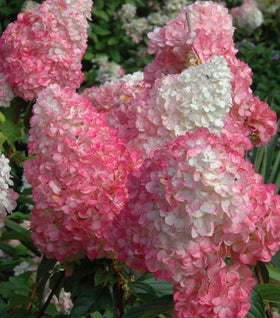
First Editions® Vanilla Strawberry™ Hydrangea
$99.95
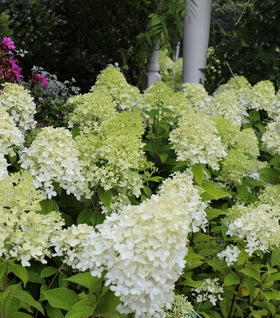
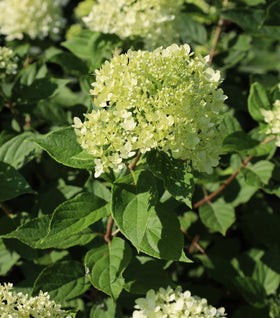
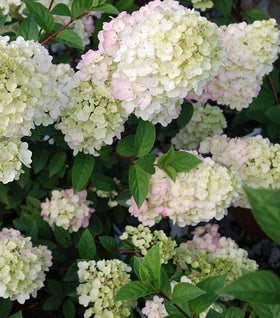
Strawberry Sundae® Hydrangea
As Low As $45.95
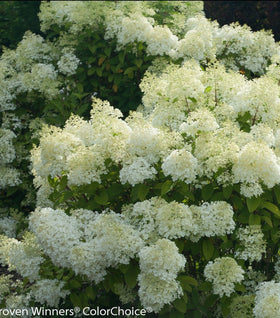
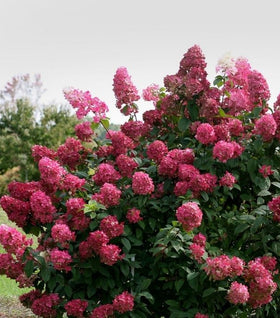

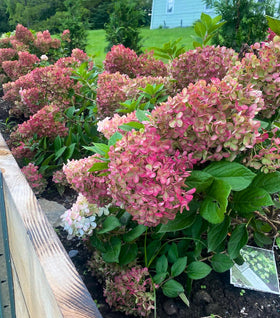


Fill the landscape with dependable summer blooms.
Panicle hydrangeas are built for gardeners who want a long, noticeable flower display without the uncertainty that comes with old-wood-blooming hydrangeas. Most selections flower from summer into fall, with earlier-blooming cultivars starting ahead of the traditional panicle season. Because the flower buds develop on new growth each spring, a cold winter is far less likely to eliminate the coming summer’s flowers. That makes these shrubs especially useful in northern gardens where bigleaf hydrangea flower buds can sometimes struggle through winter.
The blooms themselves make an immediate landscape statement. Instead of round mopheads, panicle hydrangeas carry elongated, cone-shaped flower clusters at the ends of the stems. Many begin creamy white or lime green and gradually develop pink, rose, raspberry, or red tones as the flowers mature and temperatures begin to cool. A shrub can carry more than one color at the same time as newer and older flower clusters move through different stages, giving the planting a changing look from midsummer into fall.
Unlike blue and pink bigleaf hydrangeas, the flower color of panicle hydrangeas is determined primarily by the cultivar and maturity of the bloom, not by manipulating soil pH. If you want lime-to-white flowers, strong pink aging, or deeper late-season reds, choose a variety bred to produce that color progression rather than trying to change it with soil amendments.
Their long-lasting flowers also make excellent cut material. Fresh panicles can fill large arrangements through summer, while mature blooms can be left to dry naturally on the shrub or cut for dried arrangements later in the season. Leaving some dried flowers in place through winter also adds texture when most deciduous shrubs have lost their leaves.
Find the right size for your garden.
One of the biggest improvements in modern panicle hydrangeas is the range of mature sizes available. You no longer need a large landscape to enjoy them. Dwarf selections such as Fire Light Tidbit® can remain around 2 to 3 feet tall, while Bobo® stays compact at roughly 3 feet. These smaller plants work beautifully near walkways, at the front of shrub borders, in compact foundation beds, and in large patio containers.
Mid-sized varieties give gardeners more flexibility for traditional residential landscapes. Little Lime® and other compact-to-medium selections provide the substantial bloom display people expect from panicle hydrangeas without reaching the size of old-fashioned PeeGee types. They can be repeated in a foundation planting, grouped in a mixed border, or used to create a lower-flowering hedge.
Full-sized selections such as Limelight, Fire Light®, Pinky Winky® Prime, Vanilla Strawberry™, and Quick Fire Fab® can reach roughly 6 to 8 feet or more, depending on the cultivar and conditions. These are better choices when you need enough height and width to anchor a corner, create a flowering screen, fill the back of a shrub border, or stand alone as a specimen. Older species forms can grow much larger, so always shop by the mature dimensions of the individual cultivar rather than assuming every panicle hydrangea has the same footprint.
Growth is generally moderate to fast once established. Plants develop a multi-stemmed, upright-to-rounded framework with large flowers carried at the ends of the new growth. Many modern cultivars have been selected for stronger stems, but oversized blooms, excessive fertilizer, wind, or overly aggressive pruning can still create stems that bow under the weight of the flowers.
Give them enough sun and room to shine.
Panicle hydrangeas tolerate more direct sun than most other hydrangea species. In cooler climates, many perform beautifully in full sun with six or more hours of direct light. In hotter areas, morning sun followed by afternoon shade can help reduce heat stress and keep flowers and foliage looking fresher. Too much shade usually means fewer flowers and a looser, less substantial plant.
They prefer moist, well-drained soil and are adaptable to a range of soil textures, including loam, clay, and sand, when drainage is adequate. Consistent moisture is especially important during establishment and prolonged summer heat. A layer of mulch over the root zone helps conserve soil moisture and protects the shallow roots, but avoid piling mulch directly against the stems.
Spacing should always follow the mature width of the cultivar. Dwarf varieties may need only about 3 feet of room, while larger panicle hydrangeas commonly need 5 to 8 feet or more. If you are creating a hedge, you can position plants closer to encourage the canopies to meet, but allow enough room for airflow and maintenance. A compact hydrangea planted three feet from a walkway may fit beautifully; a six- or eight-foot variety in that same location can become a constant pruning project.
Use panicle hydrangeas as flowering foundation shrubs, specimens, informal hedges, screens, driveway accents, mixed-border anchors, and mass plantings. Dwarf selections are excellent near patios and walkways where the changing flower colors can be enjoyed up close. Larger varieties create enough mass to pair effectively with evergreens, ornamental grasses, coneflowers, asters, and other late-season plants.
Prune with confidence and keep the blooms coming.
One of the biggest advantages of panicle hydrangeas is their forgiving pruning schedule. Because they flower on new wood, you can prune them in late winter or early spring before new growth begins without sacrificing that summer’s flower display. Remove dead or damaged stems first, then shorten healthy growth as needed to maintain a balanced framework and appropriate size.
You do not need to cut panicle hydrangeas to the ground every year. In fact, leaving a strong framework of established stems can produce a better-structured shrub and reduce the risk of soft new shoots struggling to support heavy flowers. Older plants can be thinned periodically by removing weak, crossing, or poorly positioned branches. If you enjoy the tan dried flower heads through winter, simply leave them in place and do your pruning before spring growth starts.
Water newly planted shrubs deeply and consistently while they establish. Once rooted in, panicle hydrangeas are relatively adaptable, but prolonged drought can reduce flowering and cause leaves to wilt or scorch. Check soil moisture before watering rather than following a rigid calendar, and focus on deep watering at the root zone rather than frequent shallow sprinkling.
Feed lightly in spring if the soil needs it. Too much nitrogen can push excessive leafy growth at the expense of strong flowering and sturdy stems. Compost or a moderate, slow-release fertilizer is usually enough for plants growing in reasonably fertile garden soil. The flower color does not require special acidifiers or lime, so fertilization should focus on healthy growth rather than on manipulating bloom color.
Panicle hydrangeas are generally dependable shrubs, but they are not completely trouble-free. Aphids, mites, and scale may occasionally appear, while leaf spot, powdery mildew, rust, bud blight, and bacterial wilt can occur under favorable conditions. Proper spacing, good airflow, and watering at the soil level rather than regularly soaking the foliage can help reduce disease pressure. Deer may also browse the stems and foliage, so panicle hydrangeas should not be treated as deer-resistant shrubs in landscapes with heavy pressure.
Panicle hydrangeas are also considered toxic if enough plant material is eaten. Leaves, flowers, and other plant parts should not be treated as edible, and shrubs should be placed thoughtfully around pets or children who routinely chew plants. They are not generally considered invasive landscape shrubs, but they are non-native to North America. With the right size selection and basic care, they remain one of the most reliable ways to bring large-scale summer and fall flowers into the landscape.