
Fountain Grass
Soft arching foliage and fluffy plumes for easy summer-to-fall movement.
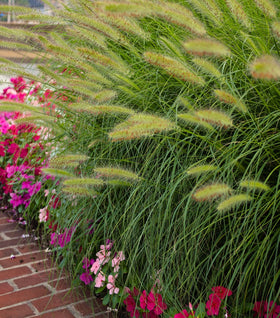
Fountain grass is one of those ornamental grasses that immediately makes a landscape feel softer and more finished. The foliage grows in rounded, arching clumps, and then fuzzy, bottlebrush-like plumes rise above the leaves in late summer and sway even in a light breeze. The current collection offers different ways to wear that look. Little Bunny stays extremely compact and works beautifully along walkways, around patios, and at the front of perennial beds. Hameln gives you a fuller 2- to 3-foot mound that is easy to repeat through borders and foundation plantings. Purple Fountain Grass takes the same flowing shape in a completely different direction with burgundy-purple foliage and dusky pink-purple plumes that make it a strong seasonal accent.
The biggest thing to understand is that these plants are not all interchangeable. Hameln and Little Bunny are hardy forms of Chinese fountain grass in many temperate gardens, while Purple Fountain Grass is a much more tender species and is commonly grown as an annual or seasonal accent in colder climates. Regional rules matter too. Some fountain grass species and cultivars can reseed beyond the garden and are invasive or regulated in parts of the United States, so always check local requirements before planting. Where they are appropriate, full sun, good drainage, and a simple late-winter cutback are usually all they need. Once established, they are generally drought-tolerant, resistant to deer browsing, and remarkably easy to enjoy. The We Grow Together Promise adds another layer of confidence to your choice of grass for your landscape.

Purple Fountain Grass
$19.95
Add soft movement without taking over the garden.
Fountain grass gets its name from the way the foliage arches outward from the center of the plant like water spilling from a fountain. That rounded shape makes it much softer than a rigid upright grass and especially easy to combine with flowering perennials and shrubs. Instead of creating a heavy visual block, the leaves and plumes move in the wind, giving a bed more texture.
Little Bunny is the best choice when space is tight. It generally stays around 12 to 18 inches tall and wide, making it one of the smallest fountain grasses available. Use it along the front of a border, beside stepping stones, around a patio, in a rock garden, or in a container where a larger ornamental grass would quickly become too much.
Hameln moves into the middle of the size range. It usually reaches approximately 18 to 36 inches tall and 18 to 30 inches wide, developing a fuller, fountain-shaped mound. That makes it a strong choice for sunny foundations, perennial borders, low mass plantings, slopes, and repeated plantings along walks and driveways.
Purple Fountain Grass usually reaches around 2 to 4 feet tall and 2 to 3 feet wide. Its burgundy-purple foliage gives it a much stronger color presence than the green hardy fountain grasses. I especially like it in containers and mixed seasonal beds where the dark leaves can contrast with chartreuse, silver, orange, yellow, or bright pink plants.
Choose cream plumes or dramatic purple foliage.
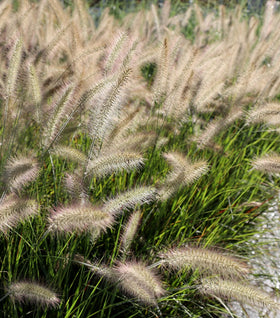
Little Bunny produces small cream-to-buff flower spikes in late summer into early fall. Because the plant stays so low, the plumes sit just above the foliage and look almost oversized compared with the compact mound beneath them. The effect is soft rather than flashy, which makes it easy to mix with sedum, coneflowers, asters, and compact shrubs.
Hameln produces larger pinkish-white to buff bottlebrush plumes from late summer into fall. It tends to bloom slightly earlier than many larger fountain grasses, which gives gardeners the classic Pennisetum look without waiting as long for the flowers. As the season progresses, both foliage and seed heads mature into warm tan and golden tones.
Purple Fountain Grass is grown as much for its leaves as for its flowers. The foliage ranges from burgundy and reddish-purple to nearly black-purple, while arching purplish-pink plumes appear from summer into fall. The plant develops even richer bronze and copper tones as the season progresses.
The plume texture is useful beyond the landscape. Fountain grass seed heads can be cut for fresh or dried arrangements, and those left on the plant provide movement and texture well into fall. On hardy varieties, the dried foliage and seed heads can remain standing through winter before the entire clump is cut back in spring.
That gives the collection a much longer season of interest than a plant grown only for flowers. Fresh green or purple foliage carries the planting through summer, soft plumes take over later in the season, and dried stems continue providing texture after frost.
Give fountain grass plenty of sun.
Full sun is the best location for fountain grass. Six or more hours of direct sunlight helps produce compact growth, more abundant plumes, and stronger foliage color. Hameln and Little Bunny tolerate some part sun, but flowering can become lighter when plants receive too much shade.
Purple Fountain Grass also performs best in full sun. Strong light helps maintain the deep burgundy-purple leaf color and keeps the plant dense rather than stretched. It tolerates some light shade, particularly in very hot climates, but the richest color usually develops in sunnier sites.
These grasses are adaptable to a wide range of soils as long as drainage is reasonable. Hameln and Little Bunny can handle average garden soil and become drought tolerant once established. They also tolerate periods of additional moisture better than many ornamental grasses, making them useful on slopes, around rain-garden edges, and in beds where moisture levels fluctuate.
Spacing should follow the mature size. Little Bunny can usually be planted about 12 to 18 inches apart. Hameln generally needs around 2 to 3 feet between plants. Purple Fountain Grass benefits from approximately 2 to 3 feet of space so its arching foliage can develop without being crowded.
Use fountain grass in sunny perennial borders, foundation plantings, containers, rock gardens, slopes, mass plantings, patio beds, and along walkways. Hameln and Little Bunny are particularly effective when repeated in groups because the individual fountain-shaped clumps create a consistent rhythm through the planting.
Cut it back once and check your local rules.
Fountain grasses are warm-season plants, so they may be relatively slow to emerge in spring. That is normal. The soil needs to warm before fresh shoots begin developing from the crown. Once temperatures rise, growth accelerates through summer.
Water regularly after planting until the root system is established. After the first season, Hameln, Little Bunny, and Purple Fountain Grass can tolerate dry periods better, although plants in containers will always need more frequent watering than those growing in the ground. Deep, occasional watering is generally better than constantly keeping established plants wet.
Fertilizer requirements are low. A light application of compost or a balanced slow-release fertilizer in spring is usually enough. Too much nitrogen can create excessive leafy growth and reduce the compact, upright-to-arching form that makes fountain grass attractive.
Leave hardy fountain grasses standing through fall and winter if you enjoy the dried seed heads and tan foliage. Cut the old stems down to roughly 3 to 6 inches in late winter or early spring before new growth appears. This single annual cleanup is usually the biggest maintenance job.
Purple Fountain Grass needs different winter expectations. It is hardy only in warm climates and is generally treated as an annual or seasonal plant where winter temperatures fall below its hardiness range. In colder regions, do not assume that a Purple Fountain Grass planted in the landscape will return the following spring.
Deer and rabbits generally avoid fountain grass, and serious pest and disease problems are uncommon. Good sun exposure and airflow help the plants maintain stronger stems and better flowering. Established plants also tolerate drought well, although prolonged severe dryness can reduce foliage quality and plume production.