
Carex Sedges
Fine-textured foliage for shade, groundcover, edging, containers, and naturalistic gardens.
Carex is one of the plant groups I recommend when gardeners want the texture of ornamental grass in places where traditional grasses often struggle. Carex plants are sedges rather than true grasses, and that difference opens up many useful landscape possibilities. Many perform beautifully in partial or full shade, several stay evergreen or semi-evergreen, and the current assortment offers much more than plain green foliage. Evergold brings cream-yellow and green striping; Everillo gives you a brighter chartreuse-gold look; Ice Dance adds crisp white-edged foliage; Blue Zinger brings cool steel-blue color; and Red Rooster gives you copper, bronze, and reddish-brown tones. Pennsylvania Sedge goes in another direction entirely as a low-growing North American native that can form a soft, natural-looking groundcover beneath trees.
The important thing to understand is that Carex is a broad genus, so there is no single care rule that fits every plant in the collection. Pennsylvania Sedge is outstanding in relatively dry shade, while Evergold, Everillo, and Ice Dance generally appreciate more consistent moisture. Blue Zinger handles sun or part shade and works beautifully in low groundcover sweeps, while Red Rooster develops its strongest bronze color with more light and good drainage. Most require very little maintenance once established, and many are generally avoided by deer. Match the species to the site rather than treating every sedge the same, and Carex becomes one of the most useful foliage groups in the landscape. The We Grow Together Promise adds another layer of confidence when choosing the right sedge for your garden.



Give difficult garden spaces a finished look.
Carex is especially valuable in places where you need ground-level texture. The narrow foliage creates a soft transition between shrubs, perennials, pathways, stone, and mulch without forming the heavy visual mass of another woody plant. Plant a few as accents, and they soften hard edges. Repeat them through a bed, and they begin tying the entire planting together.
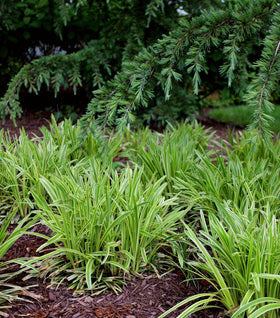
The collection also offers several ways to brighten shaded spaces without relying on flowers. Evergold produces arching leaves with creamy-yellow centers and green margins. Everillo takes that idea further with predominantly chartreuse-to-golden foliage. Ice Dance uses green leaves edged in clean white, making it particularly effective where a dark woodland planting needs a lighter edge.
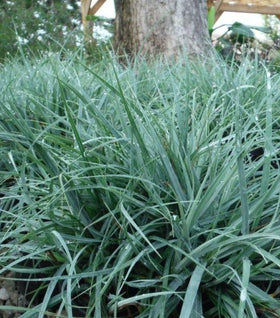
Blue Zinger provides a different look with steel-blue to blue-gray foliage. That cooler color is especially effective beside dark evergreens, stone, burgundy foliage, and plants with orange, red, or yellow flowers. It can slowly develop into a broader groundcover and works particularly well when several plants are repeated through a border rather than used as isolated specimens.
Red Rooster is the most unusual color choice in the group. Its foliage naturally ranges from copper, bronze, and reddish-brown to mahogany. That brown tone is the ornamental feature, not an indication that the plant is dying. Use it where the foliage can contrast against bright green, silver, blue, gold, or dark evergreen plants.
Pennsylvania Sedge provides the most natural woodland look. Its fine green leaves stay low and gradually form loose colonies, making it useful as living mulch, beneath trees, along woodland paths, and as a low-traffic lawn alternative. It is especially valuable where conventional turf becomes thin because of shade and competition from tree roots.
Choose the color and growth habit that fit.
Evergold is one of the smallest selections in the current assortment, generally reaching around 9 to 12 inches tall and 12 to 18 inches wide. Its arching cream-yellow and green foliage forms a tidy mound that works beautifully along the front of shaded borders, beside walkways, and in containers.
Everillo generally grows around 12 to 18 inches tall and 12 to 24 inches wide. It produces a better, more solid golden effect than Evergold and can make a shaded planting look noticeably lighter. Its mounding habit is useful along paths, beneath shrubs, and in containers where the foliage can arch over the edge.
Ice Dance usually stays around a foot tall but can spread 18 to 24 inches or more as underground rhizomes gradually expand the planting. The green leaves have strong white margins, and its spreading habit makes it particularly useful when you want more of a groundcover effect instead of individual clumps.
Blue Zinger typically reaches about 12 to 18 inches tall and 18 to 24 inches wide. It forms low, steel-blue clumps that gradually creep outward. This makes it a good middle ground between a strict clumping accent and a more aggressive spreading groundcover.
Red Rooster grows to around 18 to 24 inches tall, with a spread of roughly 12 to 24 inches. Its upright, fine-textured foliage eventually arches with age, giving containers and mixed borders a more vertical accent than the lower Japanese sedges.
Pennsylvania Sedge stays especially low at approximately 6 to 10 inches tall and 12 to 18 inches wide before gradually spreading into colonies. The individual plants are subtle, but in mass the foliage creates a soft lawn-like carpet that works especially well in naturalistic and native landscapes.
Flowers are not the main attraction with most Carex. Small brown, tan, greenish, or otherwise inconspicuous flower spikes generally appear from spring into early summer depending on species. The foliage is what provides the season-long ornamental value.
Match the sedge to the light and moisture.
This is where shopping for Carex by species becomes important. Evergold, Everillo, and Ice Dance are excellent choices for part shade, bright shade, and woodland-style conditions. Morning sun or filtered light can enhance foliage color, while protection from harsh afternoon heat helps keep the leaves from scorching.
Those Japanese sedges generally prefer moist, well-drained soil. They appreciate regular water during establishment and tend to look their best when the soil does not remain dry for long stretches. They should not, however, sit in stagnant water constantly. Good drainage and consistent moisture work together.
Pennsylvania Sedge is very different. It is naturally adapted to eastern North American woodlands and is especially valuable in dry to moderately moist shade. Once established, it can better handle the root competition and drier soil beneath mature trees than many ornamental sedges. It also tolerates light foot traffic, making it useful around stepping stones and in lightly used no-mow areas.
Blue Zinger gives you more light flexibility. It performs from full sun into partial shade and handles average to moist soil as long as drainage is adequate. Once established, it also tolerates some dryness. That makes it useful in sunny-to-partly-shaded borders, on slopes, along rain-garden edges, and in areas where conditions vary across the planting.
Red Rooster also tolerates full sun to part shade. More sun generally strengthens its copper-bronze coloration in cooler climates, while afternoon protection can be useful in hotter regions. Moist, organically rich, well-drained soil produces the best growth, but established plants tolerate some dryness.
Spacing varies with mature width. Evergold can generally be placed about 12 to 18 inches apart, while Everillo can be spaced around 12 to 18 inches when you want a fuller group planting. Ice Dance and Blue Zinger generally need about 18 to 24 inches of space as their clumps spread. Red Rooster also works well around 18 to 24 inches apart. Pennsylvania Sedge can be planted more closely when the goal is a continuous woodland carpet or lawn-like effect.
Keep cleanup light and let the foliage do the work.
Carex usually needs less aggressive pruning than many true ornamental grasses. Several varieties in this collection are evergreen or semi-evergreen, so cutting the entire plant to the ground every year can remove healthy foliage, leaving the plant looking bare as it slowly recovers.
Instead, inspect the plants in late winter or early spring. If the foliage is still attractive, simply pull or trim away brown and damaged leaves. If winter has left the plant severely tattered, a more substantial cleanup can be done before fresh growth begins. Avoid waiting until new shoots have filled in because you can easily cut the new foliage along with the old.
Pennsylvania Sedge can be left completely natural or lightly mowed once a year when used as a lawn alternative. Regular weekly mowing is unnecessary. Its naturally low habit is one reason it works so well under trees and in low-maintenance woodland settings.
Water new Carex consistently while the roots establish, but adjust long-term irrigation to the species. Evergold, Everillo, and Ice Dance appreciate steady moisture. Pennsylvania Sedge prefers a drier woodland pattern after establishment. Blue Zinger and Red Rooster fall somewhere in between and tolerate moderate dryness once rooted.
Heavy feeding is rarely necessary. A light topdressing of compost or a mild slow-release fertilizer in spring is usually enough where the soil is poor. Too much fertilizer can produce overly soft growth and may make the foliage less tidy. Proper light, moisture, and drainage matter much more than aggressive feeding.
Spreading behavior also differs. Evergold and Red Rooster are primarily used as clumping accents, while Ice Dance spreads gradually by rhizomes. Blue Zinger can slowly creep outward to create a broader groundcover, and Pennsylvania Sedge naturally develops colonies. None of those habits is automatically a problem—the key is choosing the growth pattern you actually want. Edge or divide spreading forms if they move beyond their intended space.
Most Carex plants have relatively few serious pest problems. Aphids, mealybugs, and slugs can occasionally appear, while rust and crown or root rots may occur when conditions remain excessively wet. Good drainage and avoiding unnecessary overwatering are among the easiest ways to prevent trouble.
Deer resistance is another advantage of the group. The current selections are generally considered resistant to deer browsing, although no plant should be treated as completely deer-proof during periods of heavy pressure. Their fine, tougher foliage makes sedges less appealing than many soft-leaved perennials.
Carex also provides useful habitat value. Seeds from many species feed birds and small mammals, while the foliage gives ground-level cover and nesting material. Native Pennsylvania Sedge is especially useful when you are trying to create a more functional woodland ground layer rather than relying entirely on ornamental nonnative groundcovers.