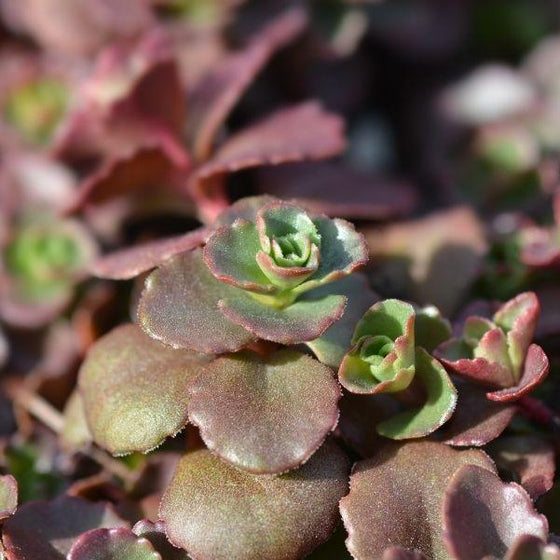
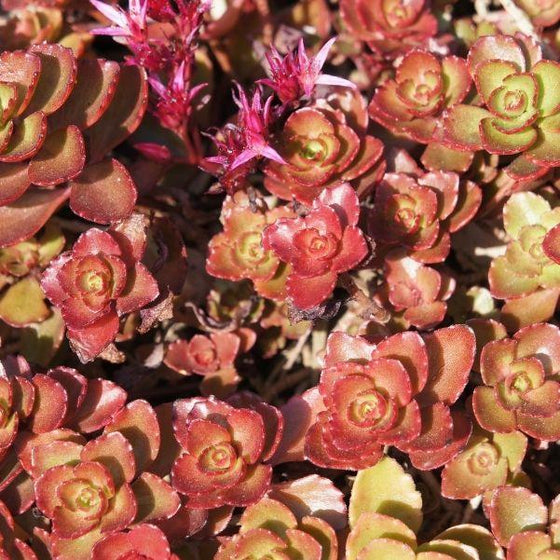


Images Depict Mature Plants
Dragon's Blood Sedum
Sedum spurium 'Dragon's Blood'
Dragon’s Blood Sedum is a great choice when you need a tough, colorful groundcover for a hot, sunny spot. The red foliage gives you interest before and after bloom, and the plant looks especially good around stone, gravel, edging, and containers. I like it where taller perennials would be too much, especially near walkways, rock gardens, and dry slopes. Give it sun, drainage, and less water than you think, and it will do the rest.

15% OFF SITEWIDE SUMMER SALE
Use Code HELLOSUMMER15 at Checkout!
📦 Free shipping on orders over $99.
Delay shipping by leaving us a message at Checkout.
Share:



Red Creeping Sedum for Sunny Groundcover, Rock Gardens, and Dry Borders
A Colorful Low-Growing Stonecrop.
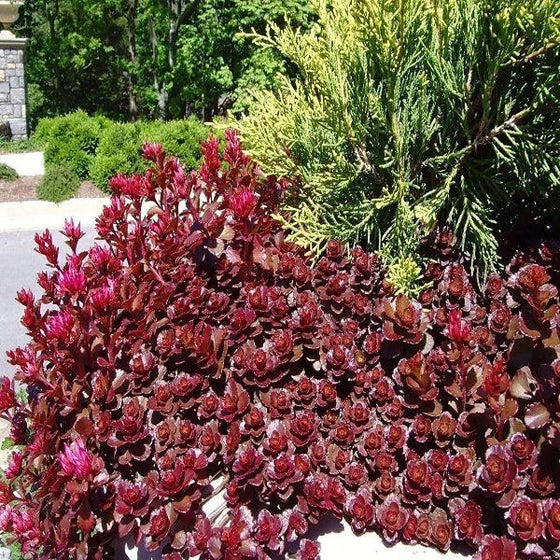
Dragon’s Blood Sedum is a low-growing stonecrop grown for its spreading mat of succulent foliage and rich red to burgundy seasonal color. This creeping sedum is ideal for sunny garden spaces where you want colorful groundcover without constant watering or maintenance. Use it along border fronts, between stones, on slopes, in rock gardens, at wall edges, in containers, or anywhere a tough, low plant can soften hard lines.
Red Foliage with Seasonal Interest.
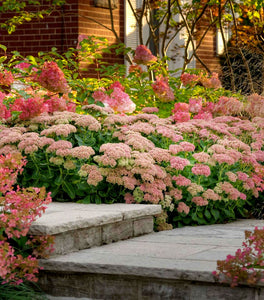
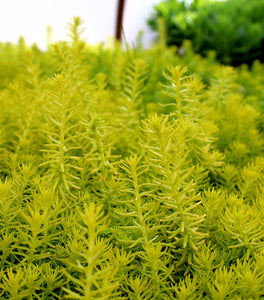
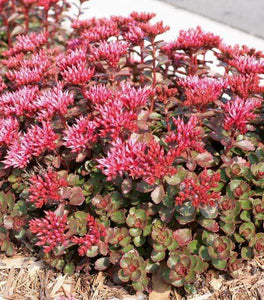
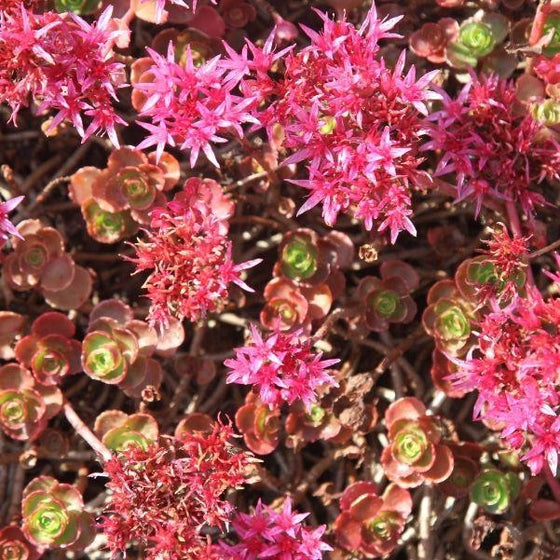
The foliage starts green to bronze-red and deepens into richer red and burgundy tones, especially with strong sun and cooler fall weather. Its small succulent leaves form a dense carpet that helps cover bare soil and adds color even when the plant is not blooming. Dragon’s Blood is especially useful near gravel, stone, pavers, and edging where its color can contrast against hardscape.
Pinkish-Purple Flowers for Pollinators.
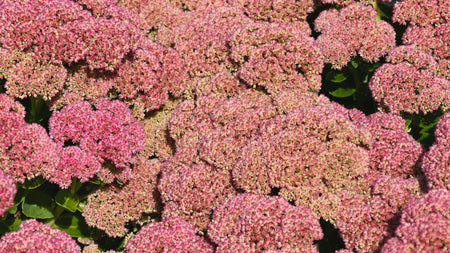
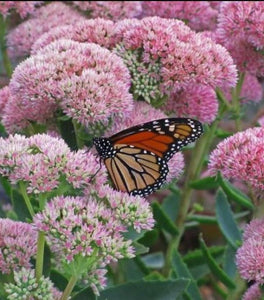
In summer, Dragon’s Blood Sedum produces small star-shaped pinkish-purple flowers that rise just above the foliage. The flowers attract bees, butterflies, and other beneficial pollinators, making this groundcover useful in pollinator-friendly and water-wise plantings. Plant it in groups for the best carpet effect, or repeat it through sunny beds for a ribbon of red-toned foliage.
Drought-tolerant and Low Maintenance.
Once established, Dragon’s Blood Sedum is drought-tolerant and performs well in sunny, dry, well-drained sites. Its succulent leaves store moisture, helping it handle hot, exposed planting areas better than many traditional groundcovers. It is a strong choice for rock gardens, gravel beds, curbside plantings, dry slopes, and low-water landscapes.
Best in Full Sun and Sharp Drainage.
Plant Dragon’s Blood Sedum in full sun with well-drained soil. Sandy, gravelly, lean, or average soil is usually better than rich, wet soil. Avoid overwatering, heavy fertilizer, and soggy winter conditions, which can cause rot or weak growth. Trim or divide as needed to refresh the planting, control spread, or fill new areas with easy-care groundcover color.
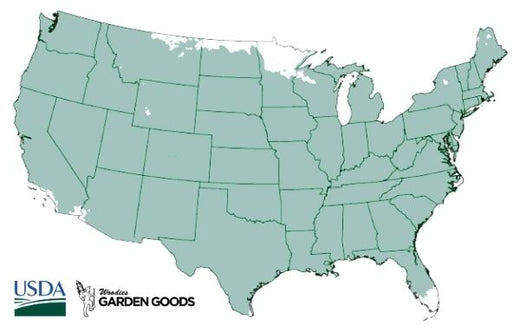
| Hardiness Zone: | 4 to 9 |
|---|---|
| Mature Height: | 4 to 6 inches |
| Mature Width: | 12 to 18 inches |
| Sunlight: | Full sun; tolerates light part shade with less intense foliage color |
| Soil | Lean, sandy, gravelly, average, or well-drained soil |
| Water | Low once established; water regularly during establishment |
| Bloom Time / Color | Midsummer into late summer; pinkish-purple star-shaped flowers |
| Foliage | Semi-evergreen to evergreen in mild climates; may die back or bronze in colder areas |
| Ornamental Features | Red-toned foliage, creeping mat habit, pink flowers, year-round texture in mild climates |
| Wildlife Value | Attracts bees, butterflies, and other pollinators during bloom |
| Landscape Uses | Groundcover, rock gardens, slopes, border fronts, walkway edges, containers, wall edges, gravel gardens, curbside beds, green roof-style plantings, low-water landscapes |
How to Care for Dragon's Blood Sedum
Be sure to read our planting instructions to ensure a healthy and happy Dragon's Blood Sedum for years to come!

How should I plant Dragon’s Blood Sedum?
Plant Dragon’s Blood Sedum in full sun with well-drained soil. Choose a site that receives at least 6 hours of direct sun per day for the richest foliage color, strongest growth, and best flowering. Light part shade is tolerated, but foliage color may be less intense. Dig a hole just deep enough to keep the crown level with the surrounding soil. Backfill gently and water thoroughly after planting. Space plants about 12 to 18 inches apart if you want them to knit together into a colorful groundcover mat.

How often should I water Dragon’s Blood Sedum after planting?
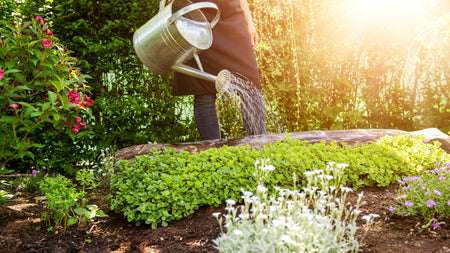
Water Dragon’s Blood Sedum deeply after planting and keep the soil lightly moist while roots establish. During the first growing season, water when the top few inches of soil become dry, especially during hot, windy, or dry weather. Once established, Dragon’s Blood Sedum is drought-tolerant and usually needs little supplemental water. Avoid frequent shallow watering and never allow the plant to sit in soggy soil. Overwatering is one of the most common causes of poor sedum performance.

When should I fertilize Dragon’s Blood Sedum?
Dragon’s Blood Sedum usually does not need fertilizer in average garden soil. If growth is weak, a light layer of compost in spring is usually enough. Avoid heavy feeding, especially with high-nitrogen fertilizer. Rich soil and too much fertilizer can encourage soft growth and reduce the tight, colorful mat that makes this sedum valuable as a groundcover.

When and how should I prune Dragon’s Blood Sedum?
Dragon’s Blood Sedum needs very little pruning. Trim away winter-damaged or tired growth in early spring as new growth begins. Light trimming can also be done after flowering if you want a neater edge. If the planting becomes too wide or thin in the center, divide small sections in spring or early fall and replant them where you want more coverage. Stem cuttings also root easily in well-drained soil.