
Euphorbia Plants
Bright chartreuse color, sculpted texture, and tough performance in sun.
Euphorbia is one of my favorite “make it look designed” plants, because it brings shape, texture, and that electric chartreuse color that reads like sunlight in the garden. Many garden spurges thrive in full sun to partial shade and prefer well-drained soil, making them a smart fit for hot borders, rock gardens, gravel beds, and the kinds of lean spots where fussier perennials stall out. In spring, the bracts (those luminous, petal-like structures) create a clean, modern look that pairs beautifully with evergreens, ornamental grasses, and deep-green shrubs, and once established, many types are notably drought-tolerant.
The big confidence-builder is how predictable the maintenance is: tidy in early spring, then cut back after flowering to refresh growth and keep plants neat (and, for some types, reduce self-seeding). The one “respect it” note is the sap, many euphorbias produce a milky latex that can be very irritating to skin and especially dangerous to eyes, so gloves and eye protection are worth it when you prune or divide. With the We Grow Together Promise behind you, this is a high-impact, low-fuss perennial category you can use again and again for structure and color.
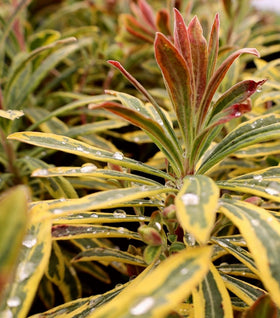

Bright spring color with year-round structure.
Euphorbia earns its place because it does more than bloom; it shapes a bed. The foliage often stays crisp and architectural, and the spring display of chartreuse bracts adds a fresh, high-contrast highlight that makes nearby greens look richer and nearby blooms look brighter. In practical landscape terms, that means your border looks intentional earlier in the season, even before summer flowers hit their stride.
This collection can include a range of cold-hardy, perennial euphorbias, some more upright and shrubby, others more mounding or groundcover-like, so you can use the same “design language” in different parts of the yard. That versatility is why euphorbia works for homeowners who want an easy win at the front door, and for landscapers who need repeatable performance across multiple sites.
In containers, euphorbia’s tidy form is a quiet superpower: it adds strong structure without demanding constant watering, as long as the pot drains well. In-ground, it’s especially valuable in hard-to-irrigate locations like banks, gravelly beds, and sunny edges where you want beauty without babysitting.
Sculpted foliage and chartreuse blooms.
Euphorbia “flowers” are really a combination of tiny true flowers and showy bracts, which is why the display looks so clean and long-lasting in the landscape. Many garden types bloom in spring and early summer, then transition back to foliage interest, so the plant continues to contribute even when the main color moment is over.
Mature size varies by species and cultivar, but most landscape euphorbias land in a design-friendly range—roughly 12 to 48 inches tall, with a similar or slightly narrower spread depending on habit. The key planning takeaway is that many forms clump or form structured mounds that get fuller over time rather than racing outward like aggressive groundcover.
Growth rate is typically steady, and the plant’s “look” improves as it settles in, with thicker clumps, more stems, and better presence. If a planting ever feels too large for the spot, many types respond well to post-bloom cutting or selective removal of older stems to keep the shape clean.
Best spots for sun and fast drainage.
Most euphorbias prefer sun to partial shade, but drainage is the real make-or-break. Aim for well-drained soil, avoid winter-wet sites, and you’ll see stronger growth and fewer issues, especially for types used in dry, sunny landscapes and xeriscaping.
For spacing, a practical range is about 18–30 inches apart for many perennial forms, with larger, more upright growers given more room and smaller mounders planted a bit closer for faster knit-in. That breathing room improves airflow and makes pruning safer and easier when it’s time to refresh plants after bloom.
Use euphorbia where it can do real work: sunny foundation beds, gravel borders, rock gardens, slopes, and “tough” zones with inconsistent irrigation. Once established, many types handle dry conditions well, making them a smart choice for landscapes designed to look great with less water.
Easy upkeep with smart sap safety.
Keep care simple: water regularly during establishment, then shift to a lighter hand once roots are set, especially in well-drained soils. Overwatering and poor drainage are common reasons euphorbia struggles, so if you want the lowest-maintenance result, solve for drainage first.
Pruning timing is straightforward. Many garden references recommend cutting back after flowering to encourage fresh growth, improve shape, and reduce unwanted self-seeding for certain types; then do an early-spring tidy to remove damaged stems and keep plants looking sharp.